




Derby Porcelain Statuette
A derby porcelain statuette brings sculptural figures from classical mythology, pastoral life and the stage into domestic interiors.
Derby Porcelain Statuette
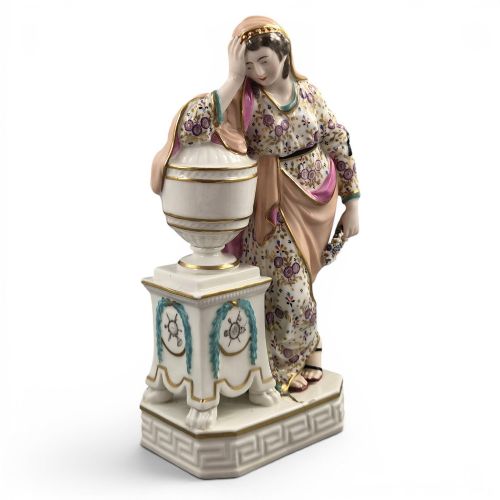
A derby porcelain statuette is a modelled ceramic figure depicting classical deities, literary characters, street vendors or pastoral scenes from the eighteenth and nineteenth centuries. These figures range from single allegorical representations such as continents and seasons to complex pairs and multi-figure groups.
The pieces appearing on this page span the Georgian and Victorian eras, taking the form of figurines, decorative statuettes and porcelain groups. Subjects vary from mythological figures like Diana, Mars and Zeus to character studies of bagpipers, flower sellers and shoemakers.
Most examples originate from the eighteenth century, including the patch period of production, alongside nineteenth-century pieces from the Bloor period and later continental interpretations in the Derby style. Collectors encounter both glazed and biscuit porcelain finishes across these varying eras.
Materials and technique
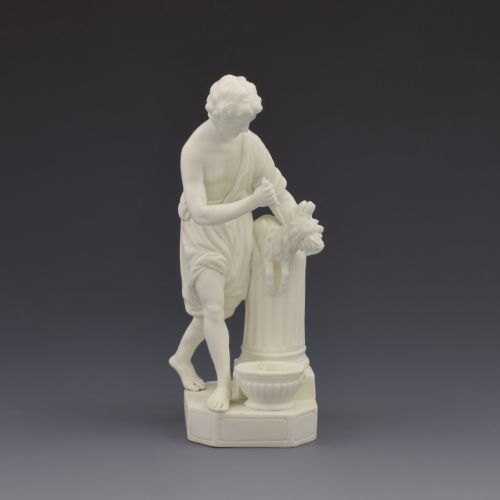
Gilding and enamel decoration provide the surface detail on glazed figures, while biscuit porcelain relies purely on the matt finish of fired body material to reveal modelling lines. Many eighteenth-century examples exhibit the characteristic patch marks left by kiln furniture during the firing process.
Listings include soft-paste porcelain, hard-paste porcelain and biscuit porcelain bodies across Georgian and Victorian periods.
Qualities of the work
Subtlety in the application of enamel colours and gold leaf separates superior painting from heavier decoration. The complexity of the subject, from single street vendors to elaborate multi-figure mythological groups, also influences the character of the piece.
William Duesbury Co·Bloor Derby·Samson Paris
The Derby Porcelain Statuette Glossary
- Biscuit porcelain
- Un-glazed ceramic body fired to a matt finish, used for neoclassical figures to resemble carved marble. This surface highlights the fine modelling of the clay without the distraction of a glossy glaze.
- Patch mark
- Small square unglazed blemish on the underside of early figures caused by the kiln supports used during firing. These marks are a key indicator of eighteenth-century production methods.
- Bloor period
- The era of production at the Derby works under the direction of Robert Bloor during the early nineteenth century. Pieces from this time often feature richer enamel palettes and heavier gilding.
- Enamel
- Low-melting coloured glass fused to the porcelain surface during a secondary low-temperature kiln firing. This technique allows for detailed facial expressions and vibrant clothing designs.
- Soft-paste porcelain
- An artificial porcelain mixture containing glass frit and white clay, used extensively in early English factories. It produces a warm, creamy body that interacts distinctively with glazes.
Derby Porcelain Statuette: Frequently Asked Questions
How do I identify a patch period derby figure?
Look for the small square unglazed marks on the base left by the refractory spacers used in the kiln.
These early figures also display the lighter, thinner soft-paste porcelain body characteristic of eighteenth-century production before later factory changes.
What is the difference between glazed and biscuit porcelain?
Glazed figures feature a shiny, vitrified outer coating decorated with enamel colours and gilding.
Biscuit porcelain remains unglazed and matt, specifically chosen to mimic the appearance of carved white marble on neoclassical figures.
Who made derby style figures outside of England?
Continental factories such as Samson in Paris produced porcelain figures in the Derby style during the nineteenth century.
German makers in Dresden also created pastoral figures and groups inspired by English eighteenth-century models.
How were these statuettes used in period interiors?
They served as decorative ornaments on mantelpieces, side tables and dining room garniture sets during the Georgian and Victorian eras.
Their subjects provided conversational topics drawn from classical mythology, theatrical performances and everyday street life.