


Demitasse Cup Saucer Set
A demitasse cup saucer set brings small-scale elegance to after-dinner coffee, combining fine porcelain and precious metal detailing.
Demitasse Cup Saucer Set
A demitasse cup saucer set provides smaller vessels specifically designed for strong black coffee or liqueurs rather than standard morning tea. These compact services frequently appear in porcelain, bone china, and silver-mounted forms.
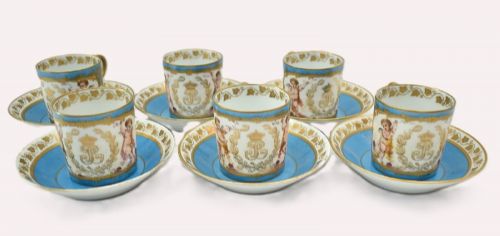
The selections span from early nineteenth-century Georgian and Regency examples to twentieth-century productions from major European factories. Many sets arrive complete with matching saucers, while others form part of larger coffee or liqueur services.
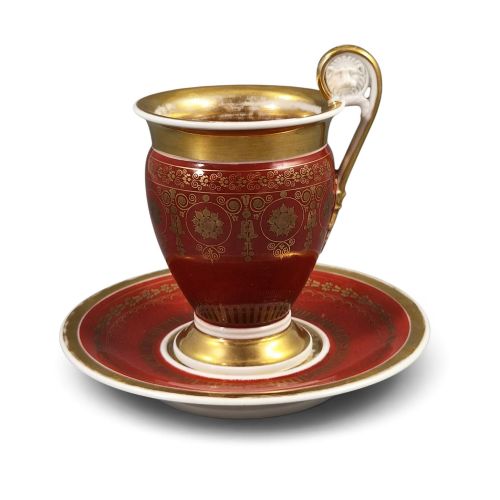
Buyers encounter decorative variations ranging from classical Empire motifs and hand-painted Dresden flowers to crisp Art Deco geometric designs. Individual cabinet cups and cased sets for multiple guests both appear within this category.
Materials and construction
Hard-paste and soft-paste porcelain form the primary bodies of these cups and saucers, supplemented by bone china and sterling silver or silver plate. Factories shaped these ceramics through traditional throwing and moulding techniques before applying detailed handles and pedestals.
Decoration relies upon skilled hand-painting, enamel work, and the application of gold leaf and gold gilt. Silversmiths added mounts, cans, and spoons to ceramic bodies, while cabinet pieces often feature intricate moulded motifs like lion masks.
Listings feature porcelain, bone china, sterling silver, and silver plate across periods spanning from Georgian and Regency to Art Deco.
Factors of quality
The refinement of the ceramic body and the precision of the hand-painted decoration distinguish superior examples from standard production. Artisans who painted detailed floral sprays or historical scenes achieved a level of artistry absent in plain wares.
The preservation of delicate gilt surfaces and enamel highlights significantly affects the overall standard of a set. Complete cased services with matching spoons demonstrate a higher degree of original preservation than mismatched or solitary cups.
Royal Worcester·Meissen·KPM Berlin·Minton·Spode Copeland·Elkington·Coalport·Royal Crown Derby·Hutschenreuther·Hirsch Dresden
The Demitasse Cup Saucer Set Glossary
- Demitasse
- A small cup used for serving strong black coffee after a meal. The term translates literally from French as half-cup.
- Coffee can
- A cylindrical coffee cup lacking the traditional curved handle found on standard teacups. These tall vessels resemble miniature mugs.
- Cabinet cup
- A decorative display piece made primarily for visual appreciation within a cabinet rather than regular service. These often feature elaborate painting and pedestals.
- Gold gilt
- A thin layer of gold applied to the surface of porcelain for decorative enrichment. This finish highlights rims, handles, and painted scenes.
Demitasse Cup Saucer Set: Frequently Asked Questions
What is the difference between a teacup and a demitasse?
A demitasse cup has a smaller capacity and a narrower profile, designed specifically for concentrated coffee such as espresso. Teacups feature a wider bowl to accommodate larger volumes of tea with milk.
Most demitasse items are paired with small saucers and sometimes accompanied by matching silver spoons in cased presentation sets.
How were antique coffee sets used historically?
These small services were utilised in formal dining rooms and drawing rooms for serving strong coffee or liqueurs at the conclusion of a meal. Wealthy households displayed them on silver trays or kept them stored in cabinets until required for guests.
Cased sets were frequently given as wedding gifts or presentation pieces during the nineteenth and early twentieth centuries.
Can I use antique porcelain cups for daily coffee?
Historic porcelain and gold leaf decoration require careful hand washing rather than automated cleaning. Many collectors prefer to reserve delicate cabinet cups for display or occasional use.
Robust twentieth-century sets handle regular use better than fragile early nineteenth-century porcelain.
How do I identify the period of a cup and saucer?
Makers' marks stamped or painted on the underside of the porcelain provide the most reliable indication of factory and date. Stylistic clues such as Empire shapes, Regency patterns, or Art Deco geometry also point toward specific decades.
Silver mounts often feature hallmarks that state the exact year and assay office of production.