


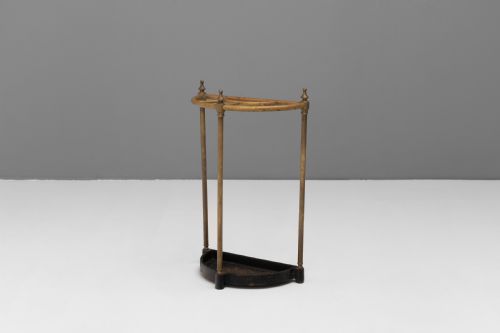


Demi Lune Umbrella Rack
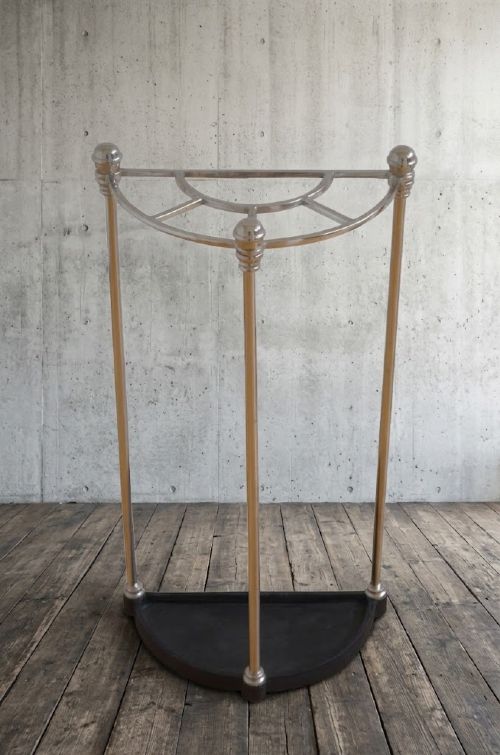
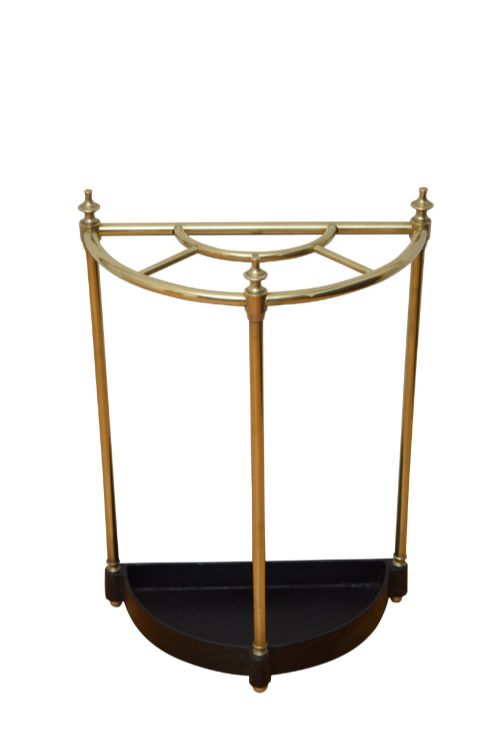
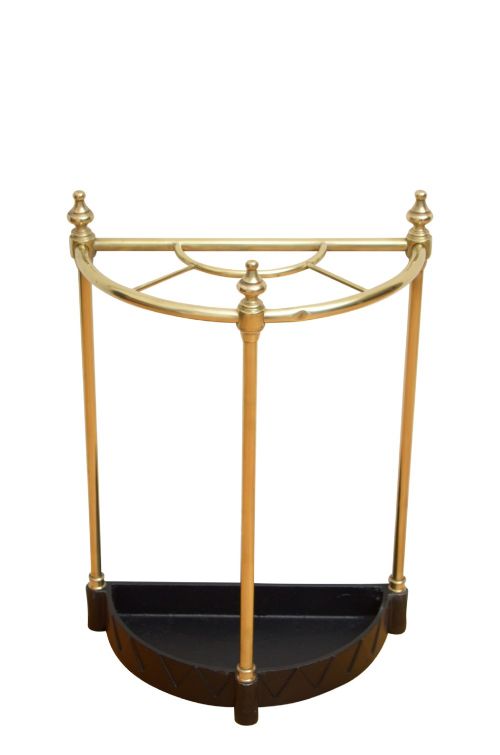
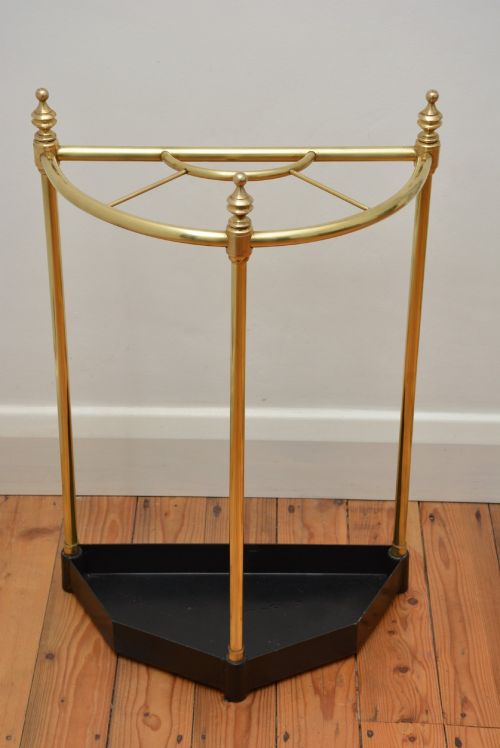
A demi lune umbrella rack is a semicircular hall furnishing designed to hold walking sticks and wet umbrellas against a wall.
Demi Lune Umbrella Rack
When you search for a demi lune umbrella rack, you are looking at semicircular hall furnishings designed to stand flush against a hallway or entrance wall. These pieces organise walking sticks, umbrellas and parasols while taking up minimal floor space.
The versions you are most likely to meet on this page span the Victorian, Edwardian and Art Deco periods, extending from eighteen ninety into the nineteen thirties. They appear in brass, cast iron, tubular metal, nickel plating and oak, often featuring divided sections or stick loops.
Originating largely from English and Scottish workshops, these hall stands combine utility with decorative metalwork or timber construction. Their half-moon profile makes them distinct from square or circular umbrella stands.
Materials and Construction
These stands rely heavily on cast iron and brass for their structural frameworks, utilising heavy metal bases and dog tooth trays to catch dripping water. Nickel plating also appears on later pieces to provide a bright, reflective finish.
Timber examples employ solid oak shaped into half-moon forms, sometimes incorporating hall stand backs or integrated stick loops. Metal components are cast, joined with mechanical fastenings, and combined with zinc liners or trays.
Listings feature items from the Victorian, Edwardian, Art Nouveau, and Art Deco periods, constructed in brass, cast iron, oak, and nickel plating.
Judging Quality
Quality rests upon the weight and integrity of the metalwork, where substantial cast iron frames and heavy gauge brass outlast thinner tubular metal alternatives. The presence of original drip trays, such as dog tooth patterns, elevates a piece.
Refinement in design distinguishes standard utilitarian racks from more decorative examples incorporating Art Nouveau stick loops or multiple divisions. The crispness of the casting and the retention of original plating or patination mark the better examples.
The Demi Lune Umbrella Rack Glossary
- Demi lune
- Half-moon shape designed to fit flat against a wall. This profile allows umbrella racks to sit in narrow hallways without blocking passage.
- Stick loop
- A metal divider or hoop that keeps individual walking sticks and umbrellas upright. These loops prevent items from tangling or falling sideways.
- Dog tooth tray
- A drip tray featuring a notched or sawtooth decorative border around the edge. It catches rainwater from wet umbrellas while adding a decorative flourish.
- Tubular metal
- Hollow metal piping used in the construction of framework and divisions. It offers a lighter alternative to solid cast components.
Demi Lune Umbrella Rack: Frequently Asked Questions
Where should I place a demi lune rack?
These semicircular stands suit narrow hallways and entrance passages where floor space is limited. Their flat back allows them to sit flush against the wall.
They function best near the front door to catch wet umbrellas and hold walking sticks as people enter the home.
How do I care for brass and iron stands?
Metal frames require regular dusting and occasional cleaning with a dry cloth to preserve the surface. Avoid abrasive polishes that can strip original patination.
Check that internal drip trays remain clean and dry to prevent moisture damage to the surrounding floor.
What periods do these umbrella racks span?
The pieces seen here range from the Victorian era through the Edwardian period and into the nineteen thirties. Styles shift from traditional brass and cast iron to Art Nouveau and Art Deco designs.
Earlier examples often feature heavy cast iron bases, while later pieces utilise nickel plating and tubular metal.
Are oak stands different from metal ones?
Oak examples bring the warmth of timber into a hallway, often taking the form of country house hall stands. They provide a heavier presence compared to open brass frameworks.
Metal versions rely on cast components and open divisions, whereas wooden pieces incorporate solid panels and constructed frames.