
Brass Cane Holder Stand
These brass cane holder stand pieces keep hallways tidy while bringing warmth and shine to entrance spaces.
Brass Cane Holder Stand
A brass cane holder stand serves the practical purpose of holding walking sticks, umbrellas and parasols in a hallway or porch. You will regularly encounter pieces from the Victorian and Edwardian eras, as well as the early twentieth century.
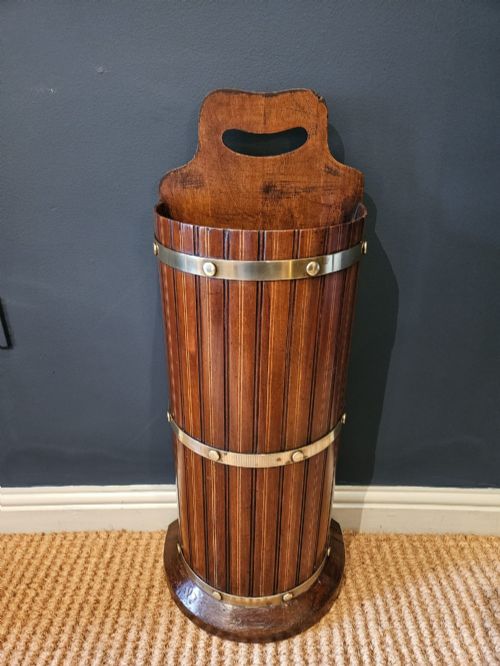
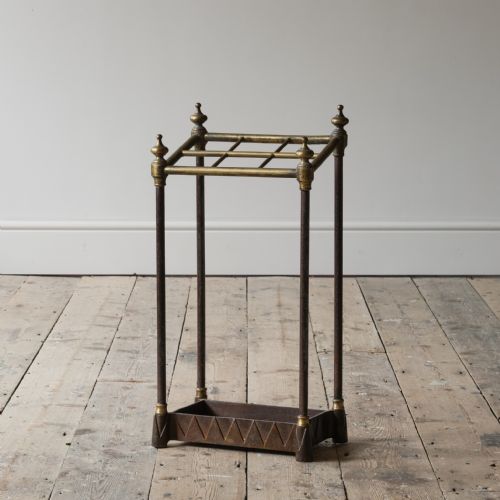
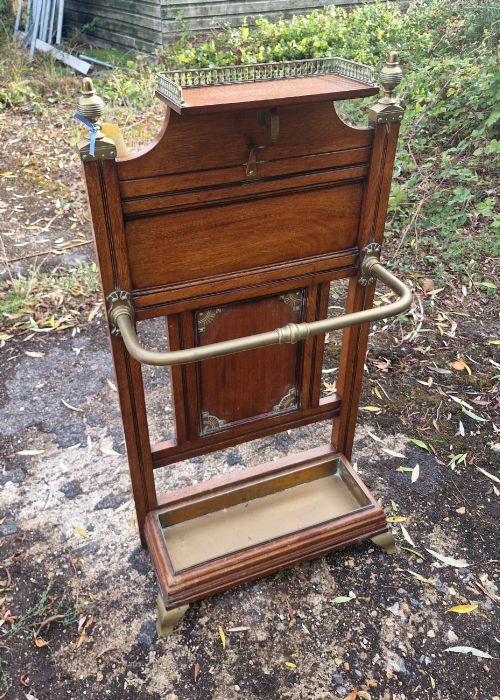
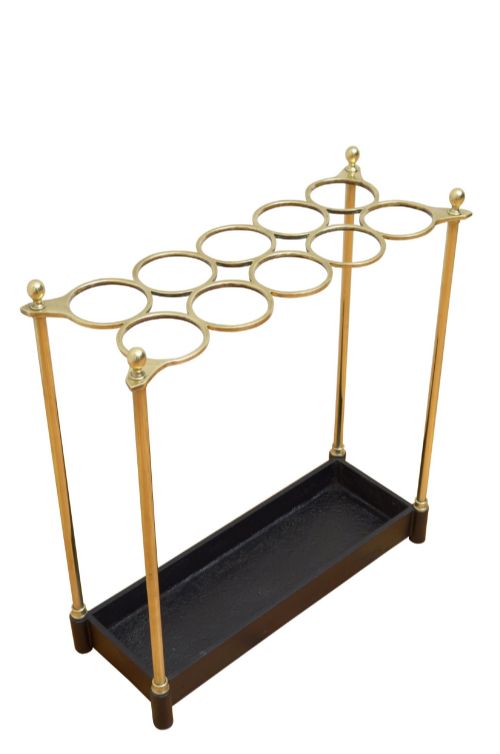
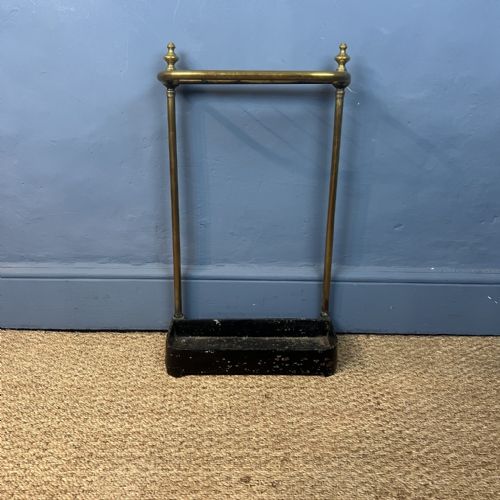
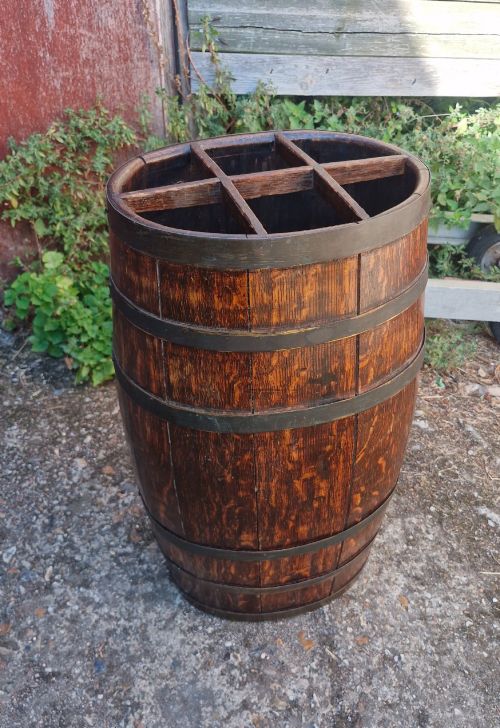
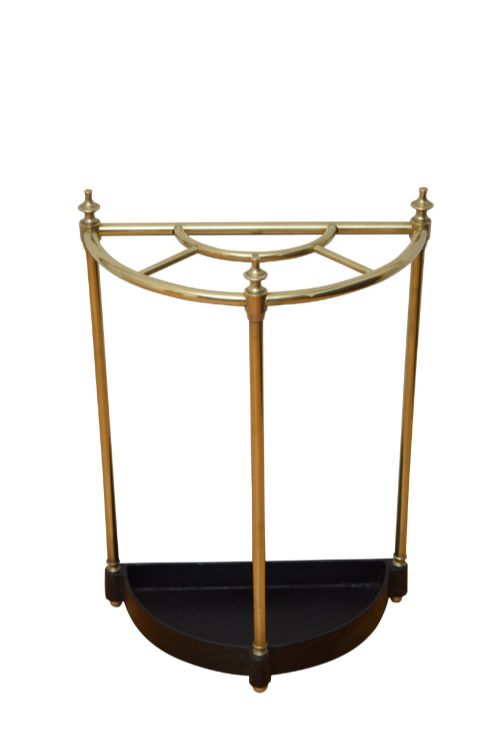
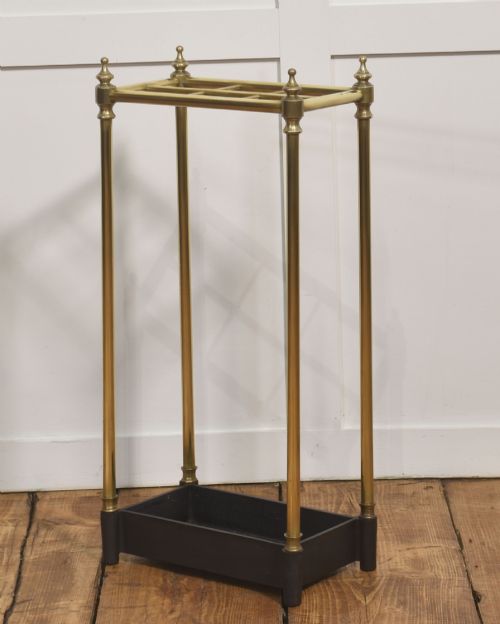
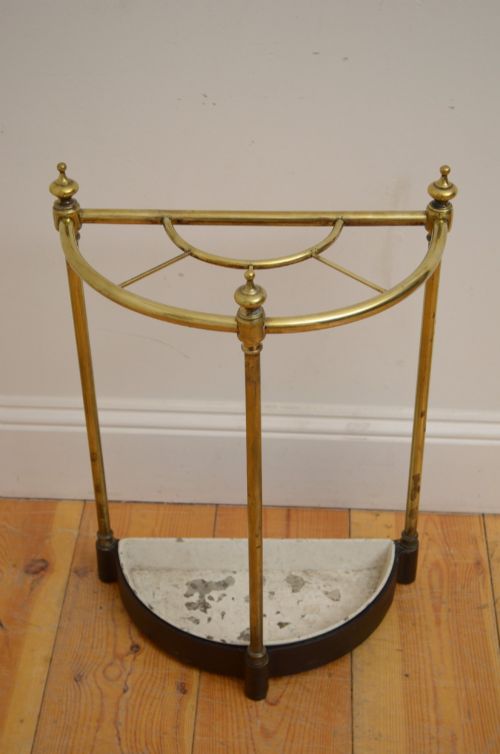
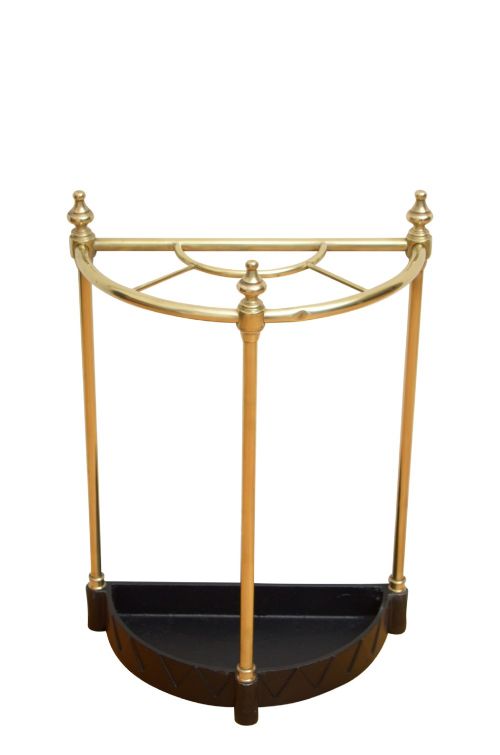
Many examples take a demi-lune or half-moon shape designed to sit flat against a wall, alongside barrel forms and upright rectangular frames. Materials frequently combine gleaming brass with sturdy cast iron bases, oak, mahogany and copper.
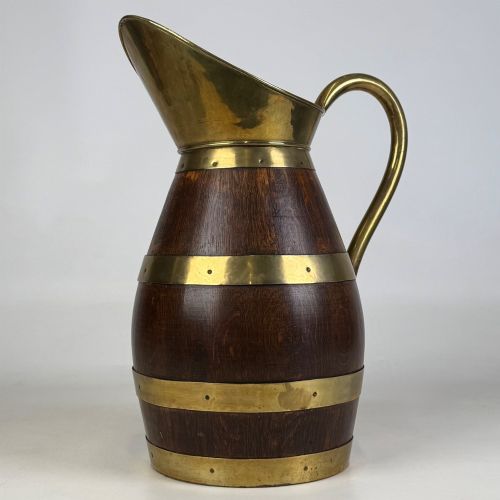
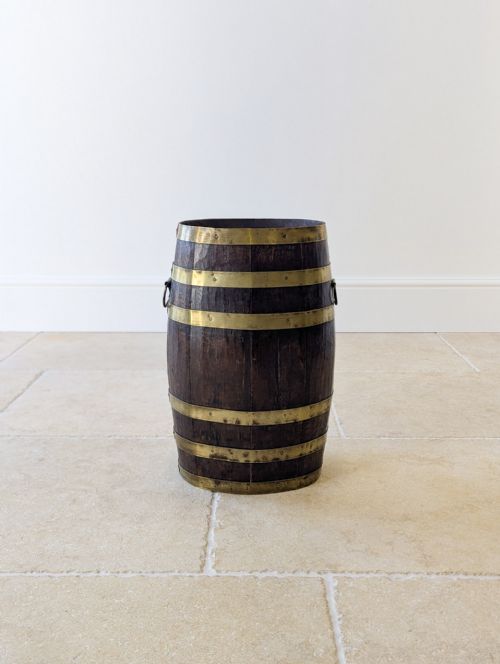
Origins stretch across English country houses and traditional Dutch workshops, reflecting domestic habits of the nineteenth and twentieth centuries. These furnishings range from small narrow stands for walking canes to large coopered oak barrels bound in heavy metal.
How they were made
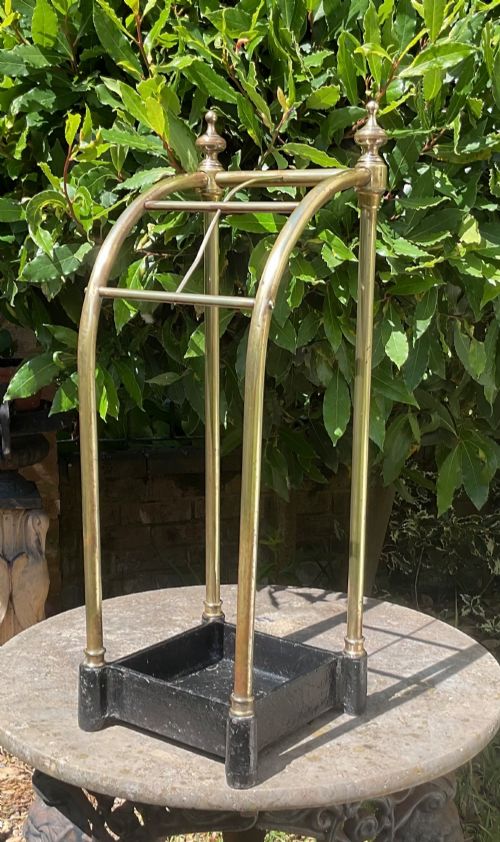
Makers utilised sheet brass, cast brass components and heavy iron bases to give these items stability against wet umbrellas and heavy walking sticks. Wood elements like oak and mahogany were often coopered into barrels or joined with metal bindings and decorative studs.
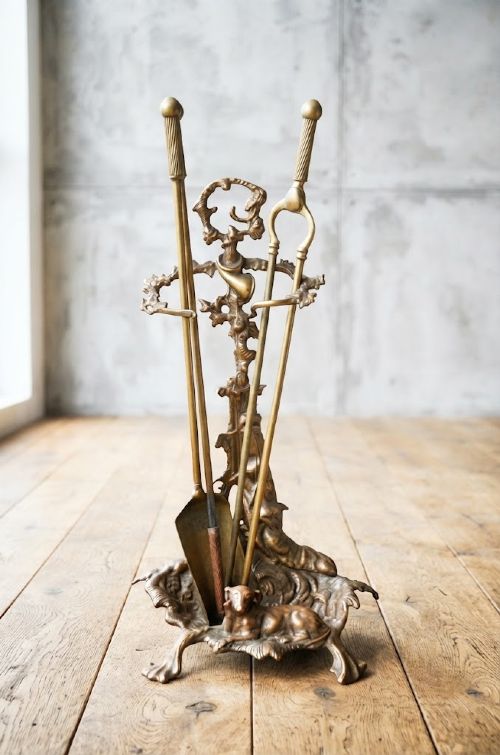
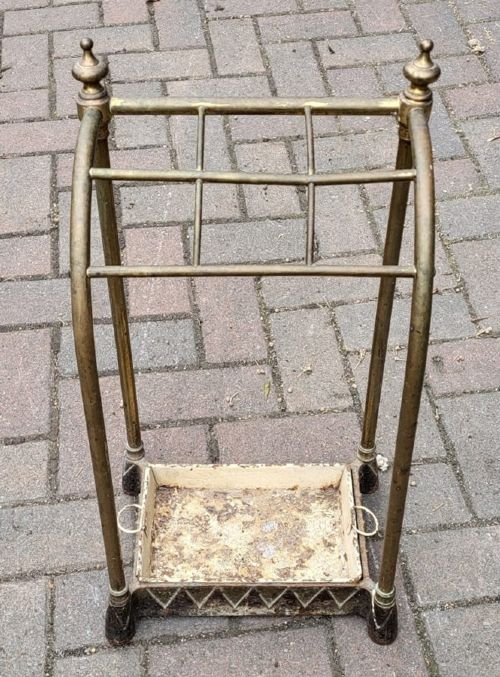
Finishes include ball finials, dog-tooth drip trays and embossed hunting scenes, showing varied metalworking techniques from spinning to casting. Structural integrity relied on robust internal frames and secure drip pans to catch water from daily use.
Some nineteenth-century models feature hunting scenes embossed into the brass, ready to supervise your muddy boots after a rainy stomp.
What varies in quality
The distinction between ordinary utility items and finer examples lies in the weight of the metal and the crispness of decorative detailing. Heavy cast iron bases and substantial gauge brass indicate superior production compared to lighter, thinner alternatives.
Design ambition separates basic cylinders from sophisticated demi-lune forms with decorative ball finials, applied crests or distinct stylistic movements such as Arts and Crafts. Original matching drip trays and intact structural joints elevate the standing of any piece.
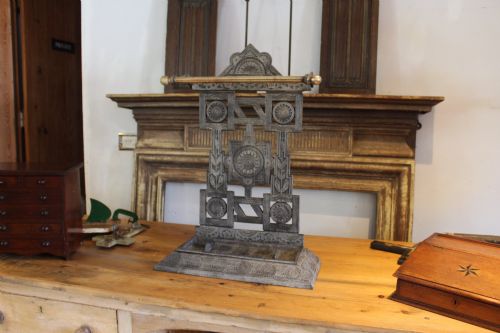
Thomas Jeckyll
The Brass Cane Holder Stand Glossary
- Demi-lune
- A half-moon shape designed to stand flat against an entrance wall to save floor space. This configuration is especially common in nineteenth-century brass examples.
- Coopered
- Constructed from wooden staves bound together with metal hoops, much like a traditional barrel. Oak and mahogany versions often use this technique.
- Drip tray
- A removable metal or ceramic base placed underneath the holder to catch rainwater from wet umbrellas. These trays protect hallway floors and prevent water damage.
- Finial
- A decorative ornament fixed to the top corners or posts of a stand. Ball finials frequently top Victorian and Edwardian brass frames.
- Gothic Revival
- A nineteenth-century design style drawing inspiration from medieval architecture. Pieces in this aesthetic incorporate pointed arches and heavy geometric motifs.
Brass Cane Holder Stand: Frequently Asked Questions
Where should I place a brass cane holder stand?
These stands belong in a hallway, boot room or entrance lobby where coats and outdoor gear gather. Their compact footprints, particularly demi-lune shapes, allow them to sit snugly against narrow corridor walls.
Positioning them near the main entrance ensures wet umbrellas and walking canes have an immediate home as soon as you step inside.
How do I clean polished brass?
Dust the surface regularly with a soft dry cloth to prevent grime buildup. Avoid harsh chemical cleaners that strip away historic patination.
If polishing is necessary, use a mild brass cleaner applied sparingly with a cloth, taking care not to stain adjacent wood or iron parts.
Can these stands hold heavy walking sticks?
Most pieces combine heavy cast iron bases or sturdy timber frames with metal rims designed to take the weight of daily walking aids. The robust construction ensures they remain stable when loaded.
Heavier nineteenth-century examples provide exceptional balance, making them well suited for sturdy oak walking sticks and heavy umbrellas.
How do I distinguish Victorian from Edwardian stands?
Victorian examples often feature heavier cast iron elements, gothic revival touches or elaborate ornamentation like embossed hunting scenes. They frequently date from the mid to late nineteenth century.
Edwardian pieces tend toward lighter, cleaner lines, sometimes incorporating oak barrel bodies with simpler brass bands and geometric drip trays from the early 1900s.