

Metal Hallway Umbrella Holder
A metal hallway umbrella holder organises heavy walking sticks and wet canes efficiently while anchoring a period hallway with structural weight.
Metal Hallway Umbrella Holder
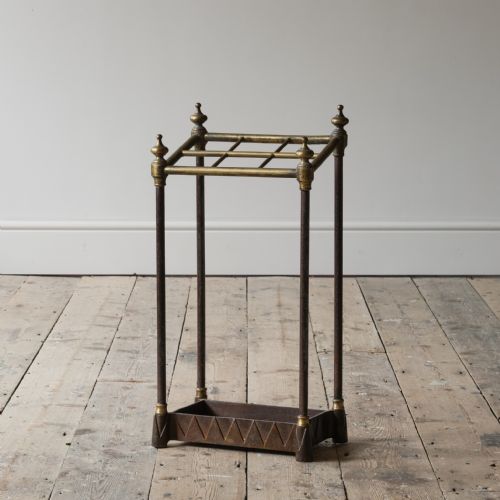
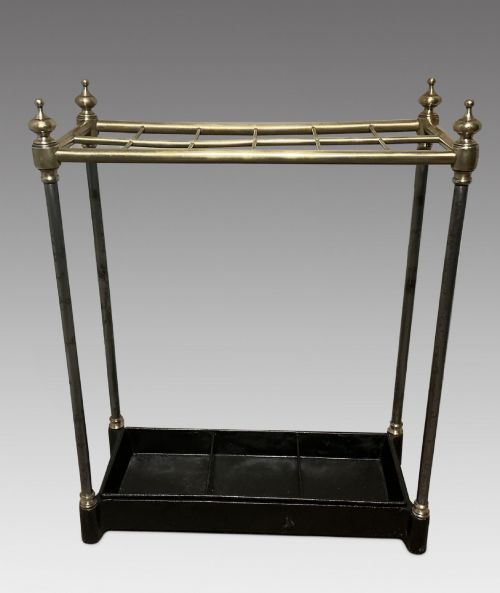
When you search for a metal hallway umbrella holder, you are looking at practical hallway furniture designed to store wet walking gear and canes. The pieces available here span from the nineteenth century through the Edwardian era and into the Art Deco period.
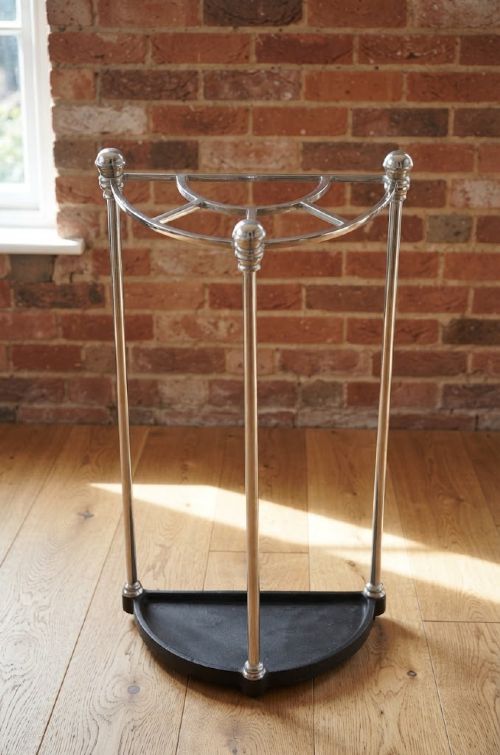
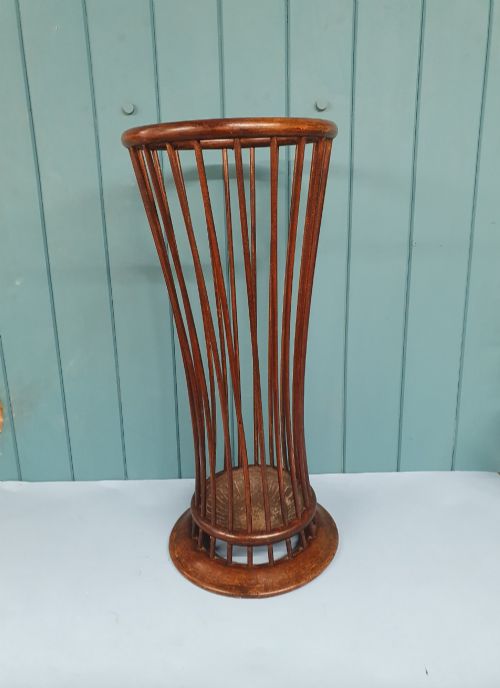
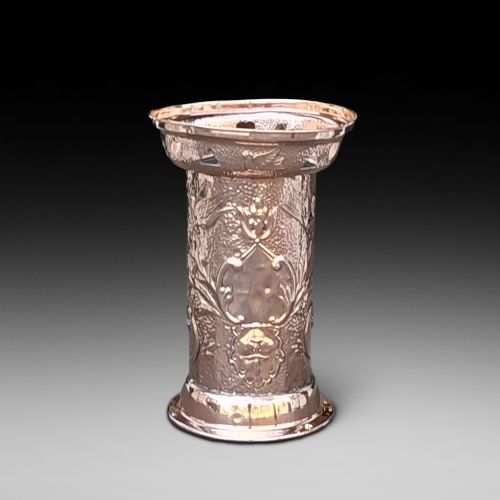
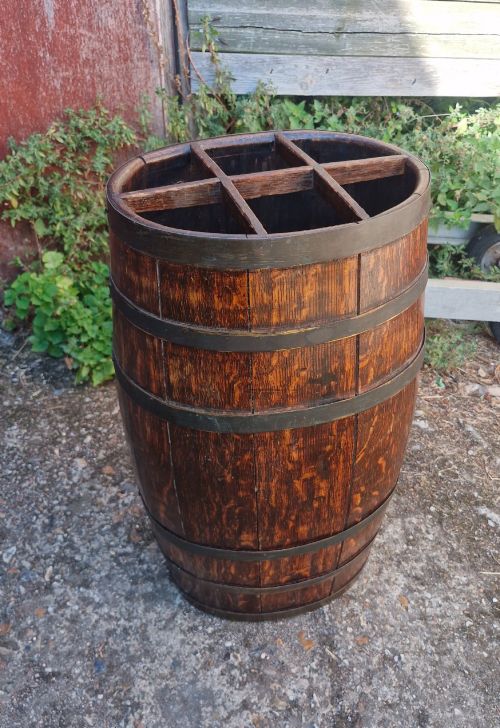
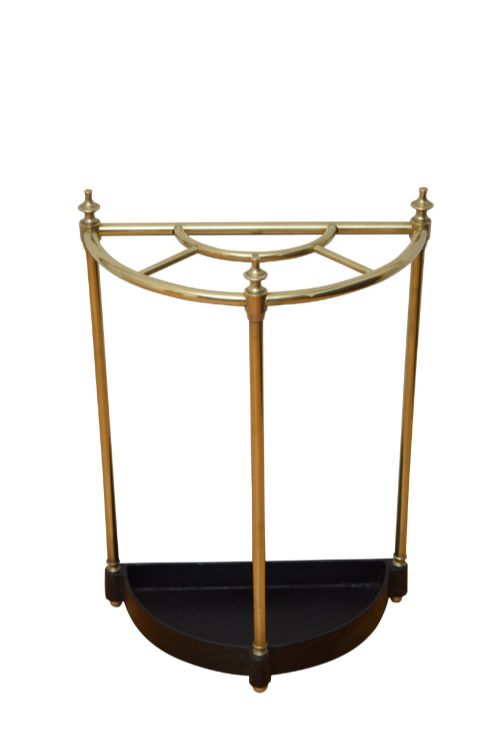
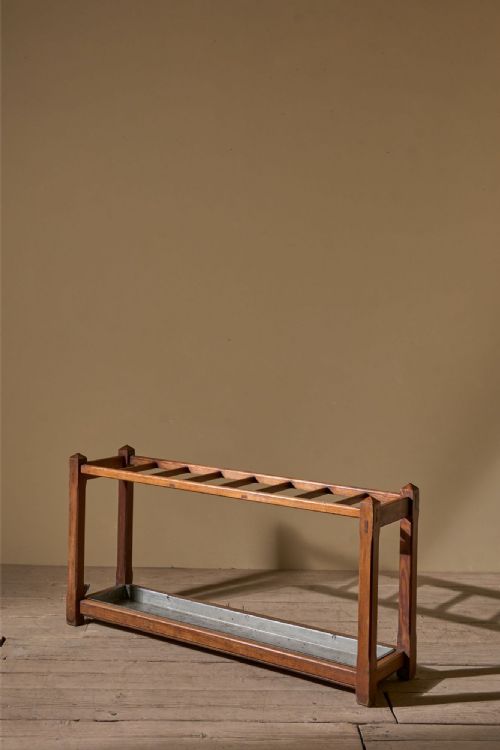
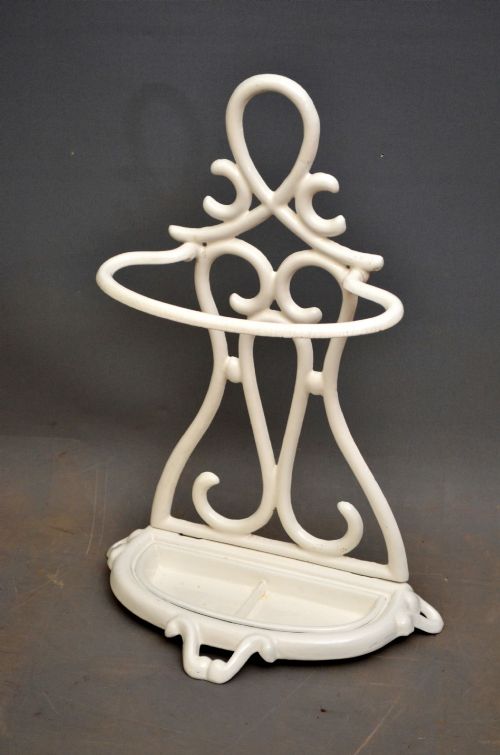
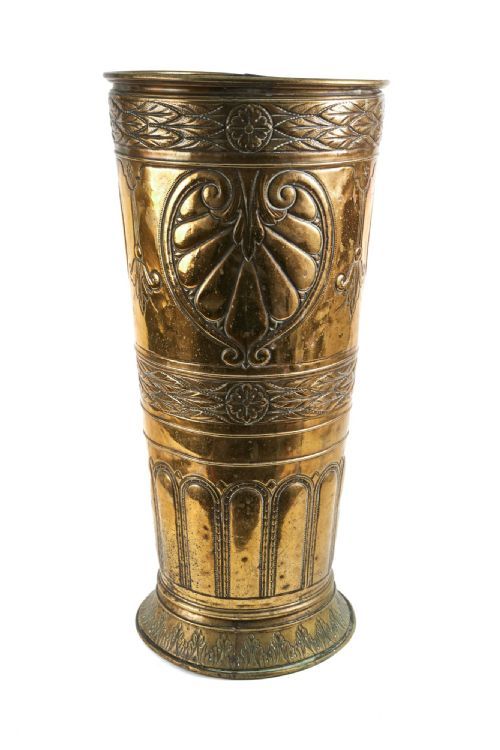
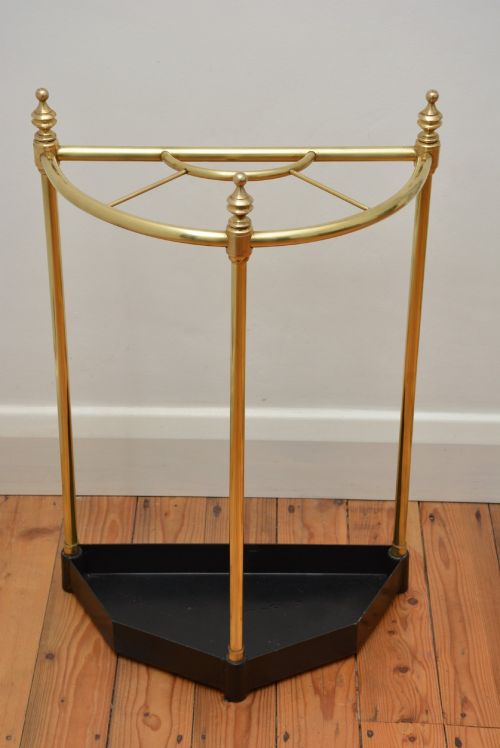
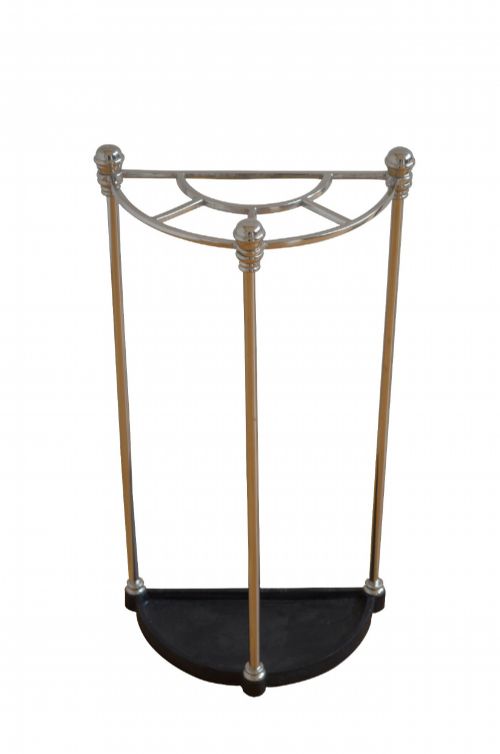
The most common form you will meet on this page is the demi-lune or half-moon design, which sits flat against a corridor wall. Other variations include barrel shapes, cylindrical stands, and larger hall stands incorporating integrated umbrella loops.
Origins range across English, French, Dutch, and Belgian workshops. Makers utilised sturdy metals to withstand daily domestic wear in busy entrance halls.
Materials and construction techniques
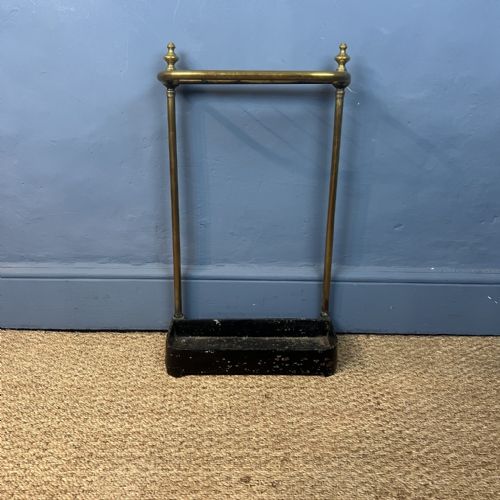
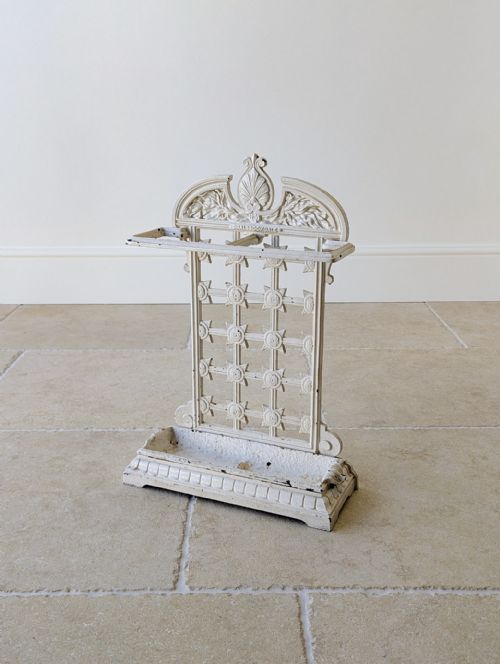
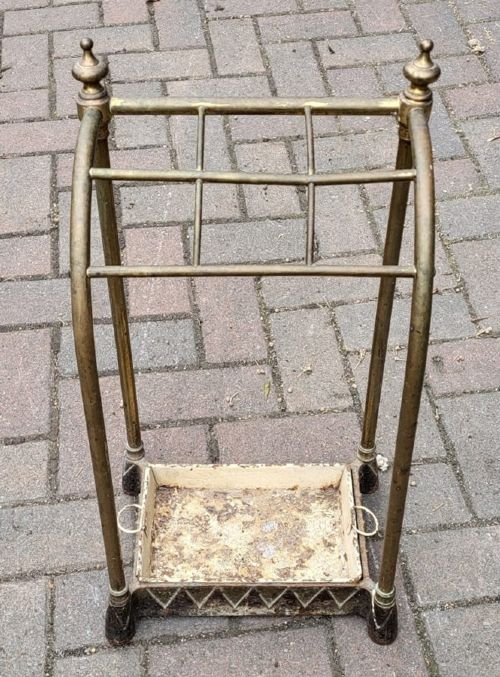
Makers constructed these stands primarily using cast iron, brass, and copper, frequently pairing heavy metals with original internal metal drip trays to catch rainwater. Iron components often received painted finishes or white enamel linings to protect against rust.
Designers incorporated decorative elements such as faux bamboo shaping, nickel plating, and pierced or moulded patterns in the Gothic Revival, Art Nouveau, and Art Deco styles.
Listings feature items spanning the nineteenth century, Edwardian period, and nineteen-thirties, constructed from cast iron, brass, copper, and oak.
Distinctions in quality and execution
The standard of a metal hallway umbrella holder depends on the crispness of the casting and the structural integrity of the frame. Finer examples display cleanly defined moulded details and robust joints that support heavy loads of wet sticks.
Quality also shows in the presence of original components like drip trays and the complexity of decorative motifs, such as floral Art Nouveau whiplash lines or structured geometric Art Deco divisions.
Coalbrookdale·Falkirk Ironworks
The Metal Hallway Umbrella Holder Glossary
- Demi-lune
- A half-moon shape designed to stand flush against a hallway wall. This profile saves floor space in narrow corridors.
- Drip tray
- A removable metal basin placed at the base to catch water from wet umbrellas. Original trays are specific to the individual stand.
- Cast iron
- An iron-carbon alloy poured into moulds to create rigid forms. It provides the heavy weight required for stability in umbrella holders.
- Faux bamboo
- A decorative treatment carved or moulded into metal or wood to imitate natural bamboo stalks. It appears frequently on Victorian pieces.
- Nickel plated
- Coated with a thin layer of nickel to prevent corrosion and provide a bright metallic sheen. This finish is typical on Art Deco designs.
Metal Hallway Umbrella Holder: Frequently Asked Questions
What metals were used for these holders?
Makers relied heavily on cast iron, brass, and copper for structural durability and decorative appeal.
Some examples also incorporate steel, zinc, or enamel finishes to protect against moisture.
How do I identify a Victorian stand?
Victorian pieces often feature heavy cast iron construction, gothic revival motifs, or faux bamboo detailing.
They generally date from the mid-nineteenth century through to about nineteen hundred.
Why are demi-lune shapes common?
Demi-lune or half-moon stands sit flat against corridor walls, occupying minimal floor space in narrow hallways.
This practical layout allowed homeowners to store multiple walking sticks without blocking passage.
What is the purpose of the drip tray?
The internal metal tray catches rainwater dripping from wet umbrellas, protecting hallway flooring from moisture damage.
Finding a stand with its original tray is an important detail for collectors.