

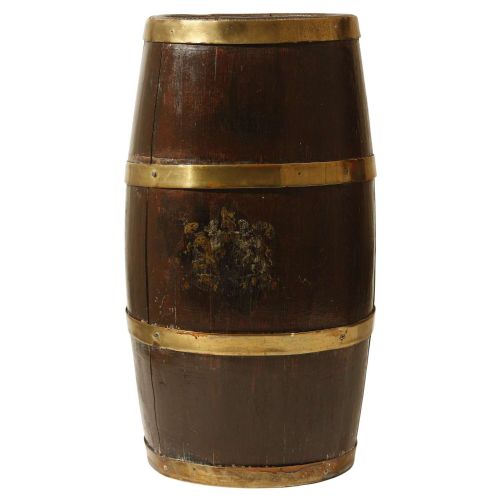


English Hallway Stick Holder
An English hallway stick holder keeps entranceways tidy while bringing tactile warmth and industrial history straight to your front door.
English Hallway Stick Holder
An English hallway stick holder serves as a practical entranceway receptacle for walking canes, umbrellas, and parasols. These pieces organise daily walking gear while anchoring the aesthetic of a traditional hallway.
The selections on this page span the Victorian and Edwardian periods, stretching from the mid-nineteenth century into the early twentieth century. You will encounter forms ranging from copper buckets and brass demi-lune frames to oak barrels.
Makers drew on diverse design vocabularies, producing objects influenced by Arts and Crafts principles, Gothic Revival proportions, and Art Nouveau curves. Country house utility shares space here with ornate town hall presentation pieces.
Materials and Construction
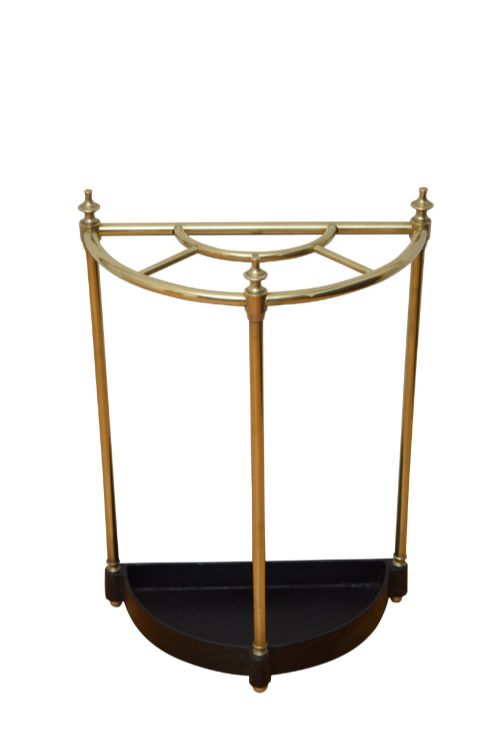
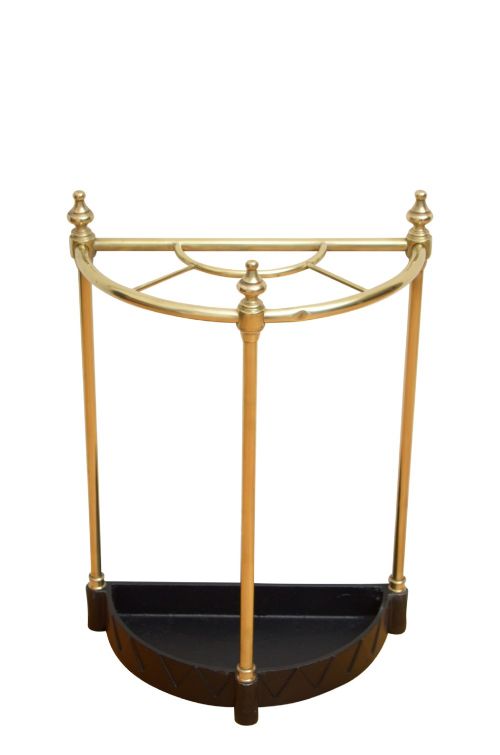
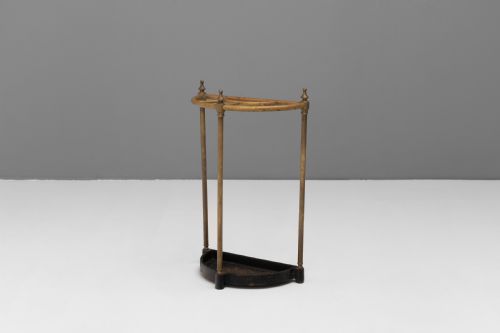
Metal versions utilise cast iron, brass, and copper, often formed into demi-lune racks or heavy portico stands with integrated drip trays to catch rainwater. Brass and copper components are frequently shaped with pierced details or mounted on stable iron bases.
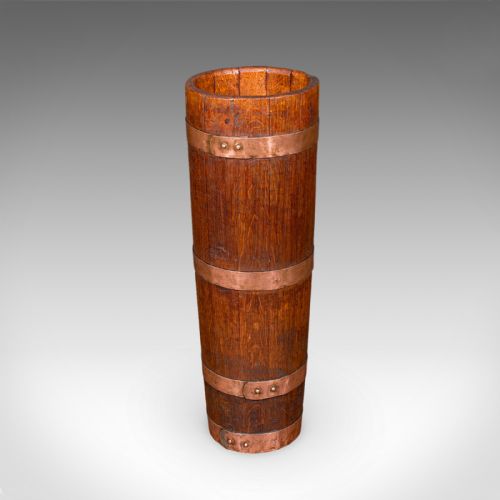
Wooden examples rely on coopered construction, utilising oak, walnut, or mahogany staves bound with brass or metal braces. These barrel-form designs employ traditional stave-and-hoop techniques borrowed from maritime and brewing trades to withstand damp umbrella tips.
The styles represented span Victorian, Edwardian, Arts and Crafts, Art Nouveau, Gothic Revival, and English Country traditions.
Judging Quality
Quality rests in the integrity of the materials and the crispness of the secondary details, such as cast brass coats of arms, dog-tooth drip trays, and secure stave bindings. Heavier metal gauge and robust timber selection distinguish utilitarian items from finer country house commissions.
Proportion and decorative ambition separate standard hall containers from exceptional examples. Pieces displaying specific stylistic references, such as Arts and Crafts ceramic inserts or detailed ironwork cast after known foundries, command greater visual presence.
The English Hallway Stick Holder Glossary
- Demi-lune
- A half-moon shape used to describe wall-hugging stick stands that save floor space in narrow corridors. This semicircular footprint allows the rack to sit flush against wainscoting.
- Coopered
- A method of construction where tapered wooden staves are joined side by side and secured with metal hoops, identical to barrel-making. This technique ensures the wood handles moisture without splitting.
- Stick loop
- The metal frame or upper divider that separates individual umbrellas and walking canes to prevent them from tangling. These loops are commonly cast in brass or iron.
- Drip tray
- A removable base pan positioned beneath the stick holders to catch water runoff from wet umbrellas. These trays protect hallway floors from moisture damage.
- Arts and Crafts
- A design movement prioritising honest construction, local materials, and visible handcraft. Pieces from this tradition often emphasise natural wood grains and simple metalwork.
English Hallway Stick Holder: Frequently Asked Questions
Where should I place a stick stand?
Position your stand in the main entrance hall close to the front door for everyday convenience when entering or leaving the house.
Ensure there is adequate clearance around the piece so wet umbrellas can be deposited without dampening nearby walls or furniture.
How do I protect wooden stands from water?
Most wooden barrel designs feature metal linings or internal drip trays designed to contain moisture from wet umbrella tips away from the staves.
Empty accumulated water promptly and wipe the interior dry to preserve the oak or mahogany timber.
How do I date an antique stick stand?
Examine the materials, fastening methods, and stylistic cues, such as Victorian Gothic elements or Edwardian brasswork.
Construction marks, patination on copper and oak, and fastener types help narrow down the period of manufacture.