


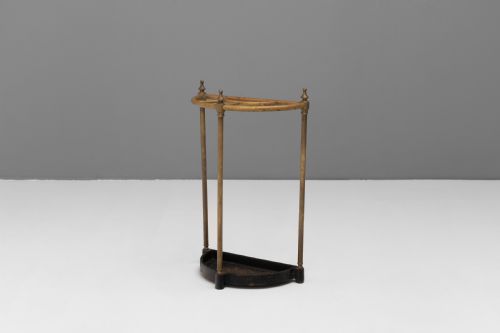


Demi Lune Stick Holder
A demi lune stick holder organises hallway clutter with a half-moon footprint that sits flush against the wall.
Demi Lune Stick Holder
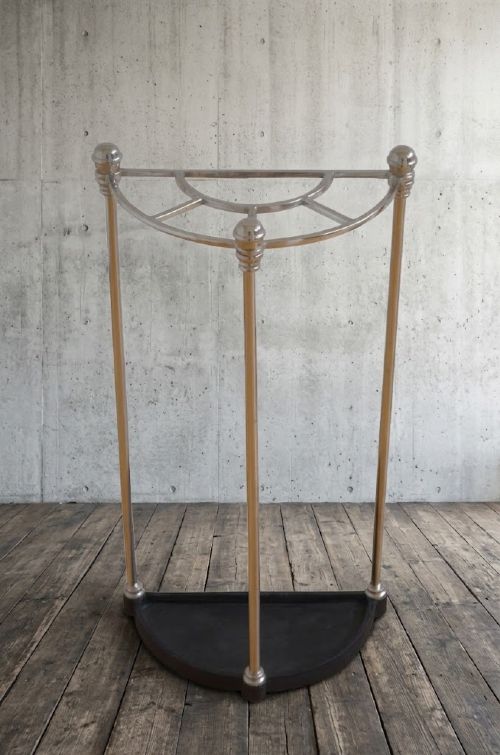
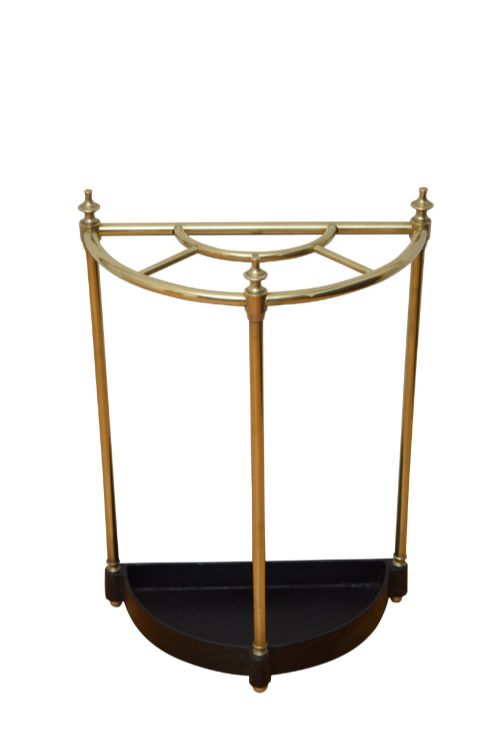
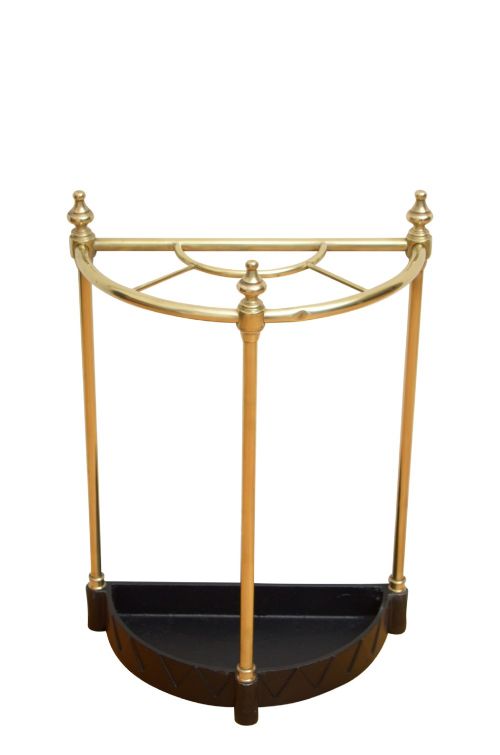
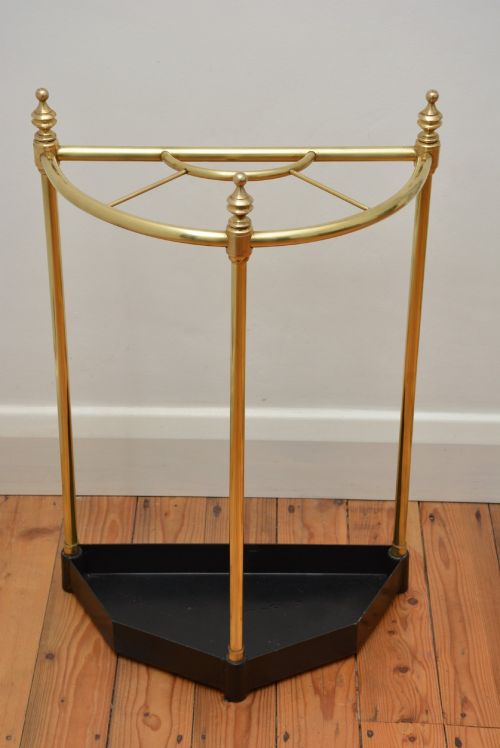
A demi lune stick holder brings a distinct half-moon silhouette to the hallway, designed to fit tightly against vertical wall space while holding walking sticks and umbrellas. These hall furnishings appear across Victorian, Edwardian, and Art Deco periods, translating functional entryway storage into shaped metal or timber design.
The versions met most often on this page take the form of brass or nickel plated frames with division bars and drip trays. Examples span from eighteen ninety through nineteen thirty, with frequent appearance of Edwardian and nineteen hundred pieces constructed from brass, cast iron, and oak.
How they were made
Makers utilised cast iron and heavy brass for structural rigidity, forming semi-circular frames that withstand the daily weight of wet umbrellas and heavy walking sticks. Tubular metal components often join cast bases to create multiple division loops for individual stems.
Surface finishes involve polished brass, nickel plating, and patinated oak wood combined with zinc drip trays to catch moisture. Country house hall stands incorporate turned timber alongside metal stick loops, merging joinery with metalwork.
Listings feature periods spanning from Victorian and Edwardian eras through Art Deco nineteen thirty.
What varies in quality
Distinction across the range lies in the complexity of the division framework and the integrity of the base tray. Integrated dog tooth trays and multi-division loops indicate higher design ambition than plain semicircular rails.
Material choice dictates longevity, where solid cast iron and heavy gauge brass outlast thinner tubular constructions. Original zinc trays and intact structural joints separate substantial hall furniture from lighter utilitarian pieces.
The Demi Lune Stick Holder Glossary
- Demi-lune
- A half-moon shape used to describe furniture that curves flat on one side to sit against a wall. This profile saves floor space in narrow hallways.
- Stick loop
- An individual metal ring or division within the stand that keeps walking sticks and umbrellas separated. These divisions prevent damp items from tangling.
- Dog tooth tray
- A base tray featuring a serrated or patterned edge design beneath the stick holder. This catches rainwater while adding decorative detail to the floor level.
- Tubular metal
- Hollow cylindrical metal rods used to form the uprights and rails of the stand. This technique provides structural strength without excessive weight.
Demi Lune Stick Holder: Frequently Asked Questions
Where do you place a demi lune stick holder?
These half-moon stands belong in entrance halls and narrow entryways where floor space is limited. Their flat back rests directly against the wall.
Positioning them near the front door catches wet umbrellas and walking sticks the moment people enter the home.
How do these stands manage rainwater?
Built-in trays sit at the base of the metal or wooden frame to catch water running off wet umbrellas. Zinc liners and catch plates protect hallway flooring from dampness.
Keeping the base tray clean prevents moisture from damaging the lower structure over decades of daily use.
What materials make up these holders?
Construction relies heavily on brass, cast iron, and nickel plating combined with tubular metal components. Some country house examples incorporate oak frameworks.
Metal finishes range from polished brass surfaces to patinated Victorian designs that show decades of handling.
How do I identify an Edwardian stand?
Edwardian pieces often feature bright brasswork, dog tooth trays, and refined division loops dating around nineteen hundred. They reflect the lighter decorative tastes of the early twentieth century.
Comparing the manufacturing style and metal gauge helps distinguish these from heavier Victorian hall stands.