
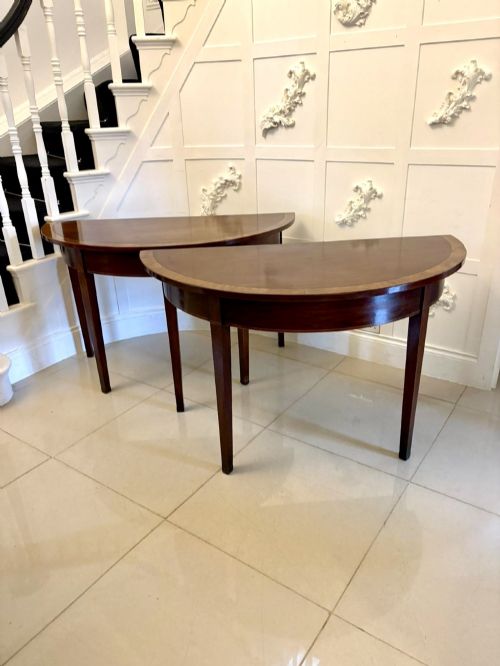
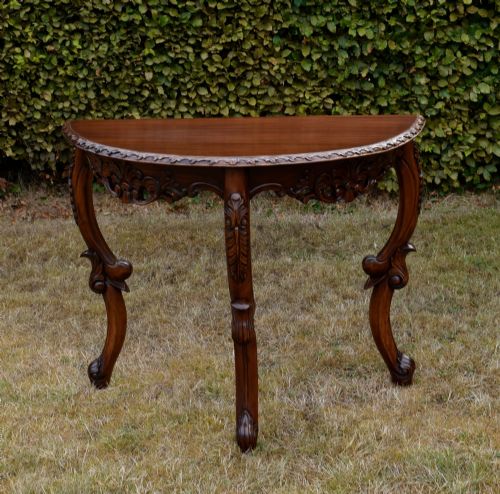
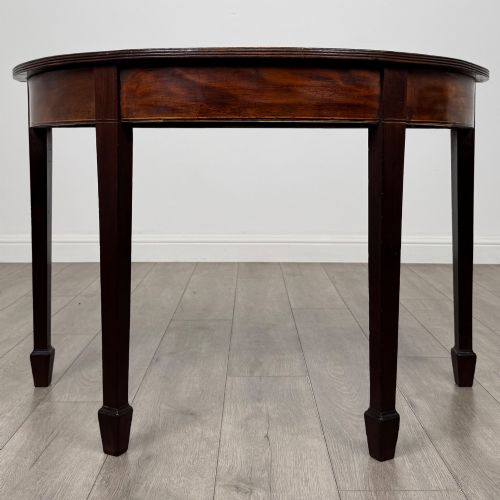
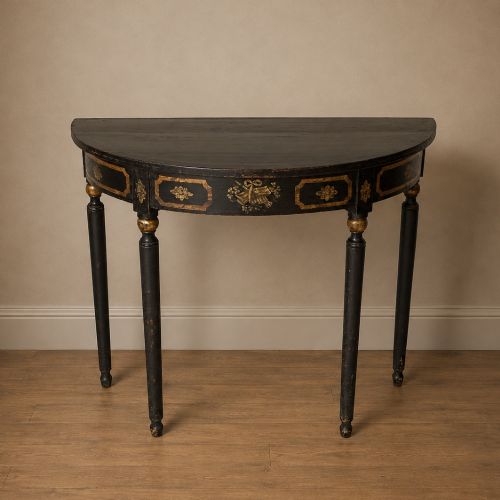
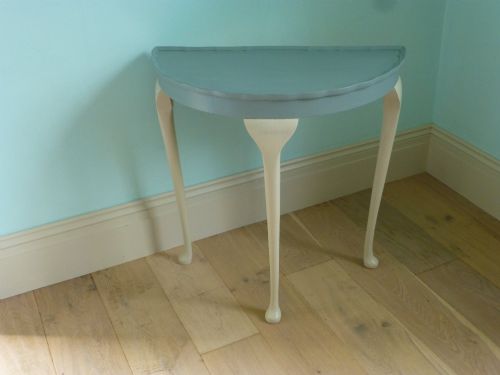

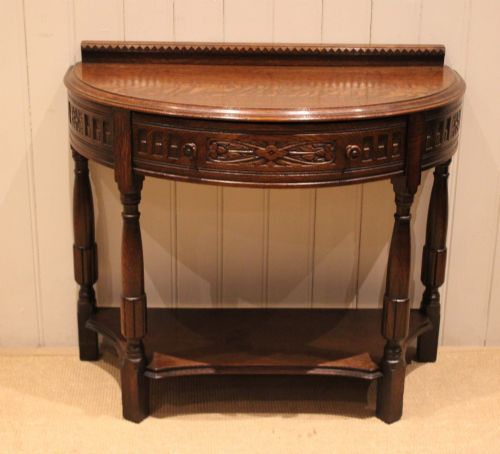


Demi Lune Entry Table
A demi lune entry table brings a graceful half-round silhouette to narrow spaces, offering a functional surface without blocking the walkway.
Demi Lune Entry Table
Materials and construction
Cabinetmakers utilised rich timber veneers such as figured mahogany, burr walnut, and satinwood over sturdy pine or oak carcases. Figured grains were carefully selected and matched symmetrically across the curved top to catch the light.
Surface ornamentation ranges from subtle string inlay and brass mounts to intricate hand-painted motifs and parcel gilding. Joinery techniques ensured the curved rails and delicate tapered legs maintained structural integrity over centuries of daily use.
Distinctions in quality
Quality rests in the selection of the timber veneers, the crispness of any carving or inlay, and the structural stability of the curved apron. Superior examples display thoughtful grain matching across the half-round top and refined proportions in the legs.
Maker attribution and the integrity of the original painted surface or polish elevate certain pieces above standard utility furniture. Lesser examples rely on simpler pine construction with plain timber or later applied finishes.
Maple and Co
The Demi Lune Entry Table Glossary
- Demi-lune
- A half-moon shape used for furniture designed to stand flat against a wall. This profile maximises floor space in narrow hallways.
- Console table
- A table supported by wall brackets or console legs, traditionally standing against a vertical surface. They often serve decorative rather than heavy load-bearing purposes.
- Parcel gilt
- Partially gilded with gold leaf or paint to highlight specific carved details or mouldings. This technique adds contrast against painted or dark timber grounds.
- Satinwood
- A durable, lustrous hardwood with a yellowish sheen, popular in fine cabinetry for stringing and decorative veneers. It provides a bright contrast to darker woods like mahogany.
- Stringing
- Thin inlaid lines of contrasting wood used to outline geometric panels on tabletops and drawer fronts. This linear detail defines the edges of the form.
Demi Lune Entry Table: Frequently Asked Questions
Where should a demi lune table go?
These tables find their natural home in entrance halls, narrow corridors, or against living room walls where depth is limited. Their flat back allows them to sit securely against the plaster while the curved front softens the geometry of the room.
They also work well beneath mirrors or artwork, providing a compact surface for keys, post, or decorative objects without obstructing passage.
How do I date an antique console table?
Dating relies on examining the timber species, secondary woods used in the carcase, construction methods, and stylistic cues. Eighteenth-century pieces often show hand-cut dovetails and period-specific leg forms, while nineteenth-century revivals borrow earlier motifs.
Hardware, fixings, and the nature of the polish or painted finish offer further clues to the decade of manufacture. Comparing the piece against documented examples from similar periods helps confirm its age.
Are these tables sturdy enough for daily use?
Most console tables are built with stable leg frames and robust joints designed for everyday domestic duty. However, delicate examples with slender tapered legs or intricate inlaid tops require sensible placement away from heavy traffic.
Wall-fixing brackets are occasionally used on antique console tables to ensure absolute stability, particularly if the piece supports heavy lamps or ceramic items.
What is the difference between a console and a hall table?
The terms often overlap, but a console table traditionally implies a design intended to sit against a wall, sometimes with structural support from brackets. A hall table is simply any small table designated for an entrance space.
Demi lune tables frequently span both categories, functioning as decorative consoles in reception rooms or practical drop-zones in front hallways.