



Delftware Earthenware Pitcher
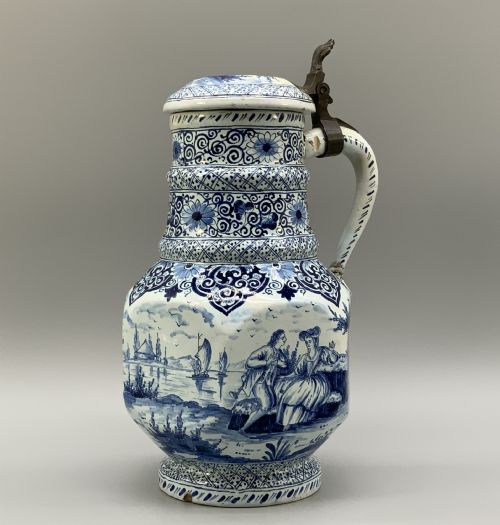
These delftware earthenware pitcher examples bring hand-painted tin-glazed ceramic character to a room, offering collectors rich historical blue and white or polychrome form.
Delftware Earthenware Pitcher
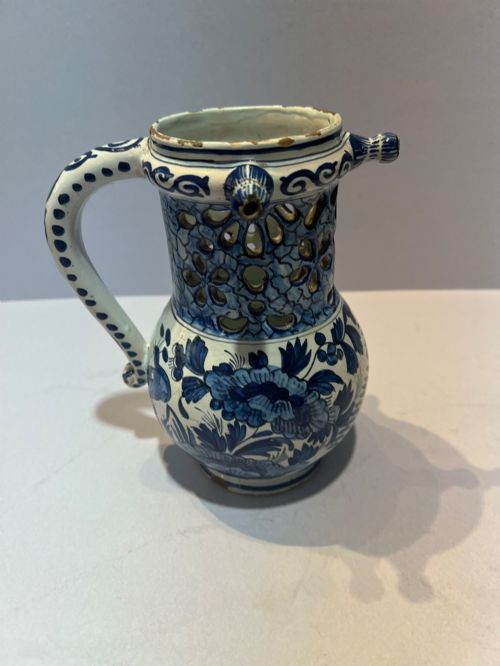
A delftware earthenware pitcher encompasses tin-glazed ceramic jugs, ewers, and puzzle vessels originating predominantly from Dutch and English kilns across the seventeenth, eighteenth, and nineteenth centuries. Buyers searching this phrase seek hand-shaped earthenware vessels featuring either cobalt blue floral motifs, intricate chinoiserie scenes, or vibrant polychrome palettes.
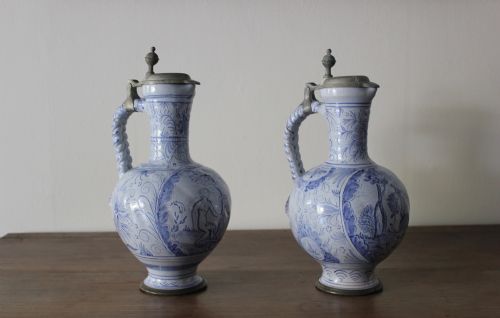
The pieces appearing on this page most commonly take the form of eighteenth-century Dutch blue and white jugs, often fitted with pewter lids, alongside occasional nineteenth-century Toby jugs and manganese-decorated coffee pots. Collectors also encounter matched pairs of tin-glazed vessels and specialised puzzle jugs designed for eighteenth-century taverns.
How these pieces were made
Potters shaped these vessels from common earthenware clay before coating the dry body in an opaque white tin glaze that provided a smooth canvas for painting. Artisans then applied metallic pigments directly onto the porous surface, utilising cobalt for traditional blue designs or various mineral oxides for polychrome and manganese effects.
Many historical examples incorporate fitted pewter mounts and hinged lids secured to the ceramic rims by contemporary metalworkers. Once painted and mounted, the pieces underwent kiln firing to fuse the metallic oxides into the glossy tin-glaze layer.
Delftware Earthenware Pitcher Retail Price Guide 2026
Typical asking prices for delftware earthenware pitcher among the pieces listed under this phrase on Sellingantiques today, from the lower quarter to the upper quarter. They describe what is for sale here now, not the wider market.
Several monkeys appear dressed in seventeenth-century waistcoats, staring blankly from the sides of antique Toby jugs.
Variations in quality
The refinement of the painted decoration dictates much of the distinction between ordinary vessels and superior examples. Crisp, fluid brushwork in the cobalt pigment or well-rendered polychrome details elevates a jug well above standard production wares.
The survival and originality of components such as pewter lids also influence a piece's standing. Intact tin glazes showing minimal chipping around the rims demonstrate superior preservation over centuries of use.
Pieter Verburg
The Delftware Earthenware Pitcher Glossary
- Tin Glaze
- An opaque white ceramic glaze containing tin oxide that absorbs painted pigments into its surface during firing. This coating gives delftware its characteristic milky background.
- Chinoiserie
- European decorative motifs inspired by Chinese art, commonly featuring pagodas, figures, and imaginary landscapes. Artisans frequently painted these designs in blue pigment on early vessels.
- Polychrome
- A multi-coloured decorative scheme utilising several mineral pigments rather than a single colour. These palettes often include yellow, green, orange, and manganese alongside blue.
- Puzzle Jug
- A drinking vessel featuring a hollow perforated rim and intricate spouts designed to confound drinkers. Users had to cover hidden holes with their fingers to drink without spilling.
- Toby Jug
- A pottery jug shaped as a jovial seated person holding a mug of beer or a pipe. These figural forms gained popularity during the late eighteenth and nineteenth centuries.
Delftware Earthenware Pitcher: Frequently Asked Questions
Were these pitchers used for serving liquids?
Many historical jugs and pitchers served practical functions in households and taverns for pouring water, beer, or coffee. Pewter-lidded variants kept contents covered during daily use.
Some specialised forms, such as puzzle jugs or purely decorative cabinet pieces, served more social or ornamental roles rather than everyday service.
How can I tell seventeenth-century delftware apart from later pieces?
Early pieces from the seventeenth and early eighteenth centuries frequently display distinct chinoiserie painting styles and thinner tin-glaze applications. The weight and clay density of the earthenware body also shift across different manufacturing decades.
Later nineteenth-century examples often introduce broader polychrome palettes and heavier ceramic bodies, sometimes incorporating pseudo-factory marks on the base.
What causes the glaze flaking on these jugs?
Tin glaze is essentially a glass layer bonded to a porous earthenware base, making it vulnerable to impacts and moisture fluctuations. Minor knocks over centuries can cause the brittle glaze to chip along the rims and handles.
Environmental humidity changes can also exert stress on the underlying clay body, leading to historical crazing and flaking across the surface.