



Antique Dutch Pottery Pitcher
An antique dutch pottery pitcher brings tactile warmth and hand-painted artistry to a room, offering genuine historic character.
Antique Dutch Pottery Pitcher
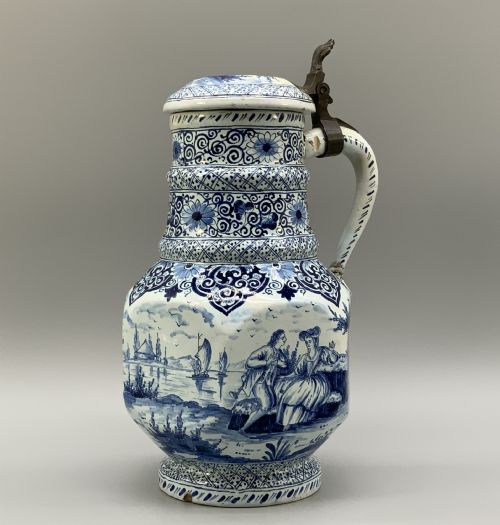
An antique dutch pottery pitcher encompasses hand-thrown vessels shaped for utility and display across several centuries of ceramic production. The selection leans heavily toward seventeenth-century and eighteenth-century examples decorated in blue and white, alongside robust slipware variants.
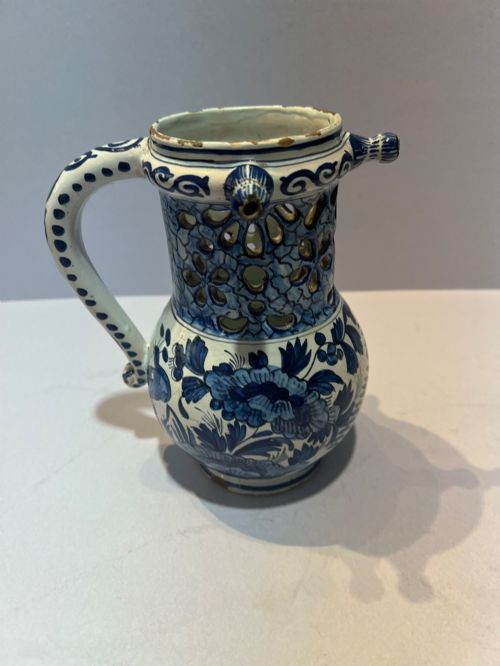
Buyers encounter forms ranging from lidded vessels mounted in pewter to puzzle jugs and figural Toby jugs. Tin-glazed earthenware dominates the offerings, capturing distinct Dutch aesthetic traditions from formal Chinoiserie scenes to folk art expressions.
Materials and construction methods
Potters shaped these vessels from earthenware clay, applying tin glaze to create an opaque white surface suitable for cobalt blue painting. Lead glaze also appears on earlier slipware pieces, providing a glossy protective coating over earthen bodies.
Many finer specimens feature pewter lids attached directly to the handle and rim, combining ceramic bodies with metalwork mounts typical of the period. Artisans painted motifs by hand directly onto the unfired or biscuit-fired glaze before a final kiln firing.
Antique Dutch Pottery Pitcher Retail Price Guide 2026
Typical asking prices for dutch pottery pitcher among the pieces listed under this phrase on Sellingantiques today, from the lower quarter to the upper quarter. They describe what is for sale here now, not the wider market.
Assessing quality in historical ceramics
Quality rests upon the crispness of the hand-painted decoration, where confident brushwork distinguishes superior artistic output from hasty execution. The complexity of the form also matters, as intricate puzzle jugs or figural Toby designs demand greater skill from the potter.
The survival of original pewter mounts and the stability of the tin glaze significantly influence desirability. Pieces that retain their structural integrity without extensive restoration represent the pinnacle of this ceramic tradition.
Pieter Verburg
The Antique Dutch Pottery Pitcher Glossary
- Tin-Glazed Earthenware
- Pottery covered with a glaze containing tin oxide, which fires to an opaque white finish. This surface acts as a canvas for painted pigments.
- Slipware
- Earthenware decorated with liquid clay diluted to the consistency of cream, applied to a contrasting body before firing. It creates bold linear or marbled patterns.
- Puzzle Jug
- A drinking vessel with a hollow, perforated rim that forces the user to solve a liquid puzzle to drink without spilling. These interactive pieces tested the ingenuity of guests at taverns and banquets.
- Chinoiserie
- European artistic styles reflecting Chinese motifs and decorative schemes, popular during the seventeenth and eighteenth centuries. Painters adapted these exotic themes onto domestic pottery forms.
- Faience
- European tin-glazed earthenware, particularly that imitating Chinese porcelain or Italian majolica styles. It defines much of the refined Dutch output from this era.
Antique Dutch Pottery Pitcher: Frequently Asked Questions
What is a puzzle jug?
A puzzle jug is an interactive historic vessel featuring a perforated neck and multiple spouts that challenge the drinker to imbibe without spilling.
These pieces were popular social objects in seventeenth and eighteenth century taverns, designed to amuse and test guests.
Are pewter mounts original?
Many seventeenth and eighteenth century pitchers feature hinged pewter lids attached directly to the ceramic rim and handle by contemporary metalworkers.
These mounts protected the pouring edge and secured the contents, forming an integral part of the vessel's original construction.
How do I date a tin-glazed jug?
Dating relies upon stylistic markers such as the evolution of blue and white painting, the presence of Chinoiserie motifs, and the shape of the handle.
Comparing the potting technique and glaze characteristics against documented examples helps narrow down the period of manufacture.