








Delft Pottery Charger
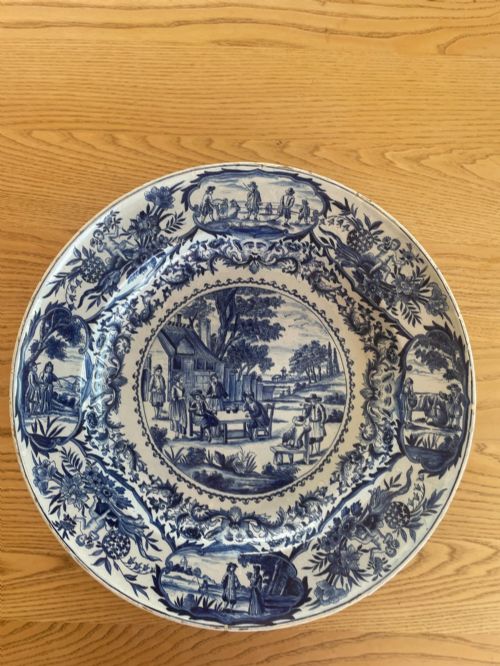
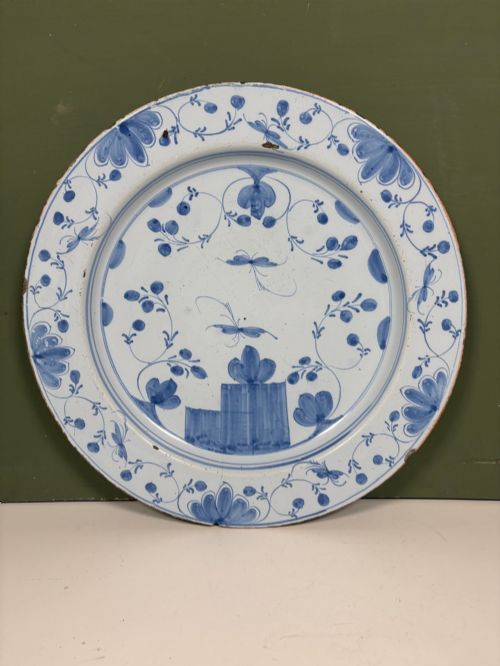
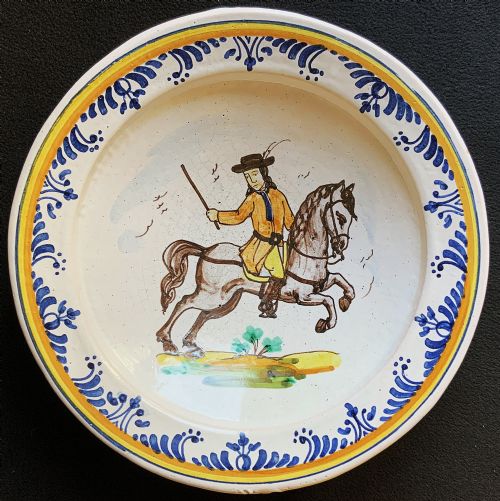
These delft pottery charger examples offer broad tin-glazed earthenware surfaces painted in blue and white or polychrome pigments.
Delft Pottery Charger
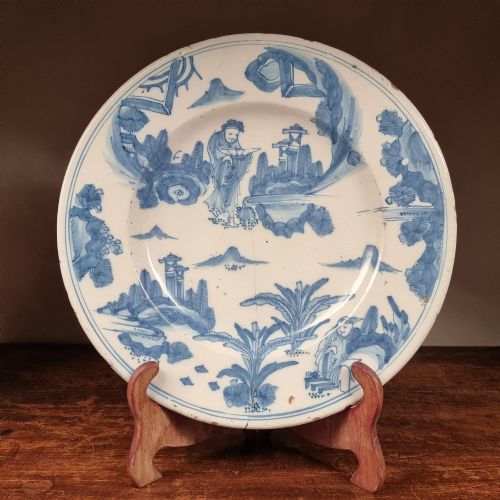
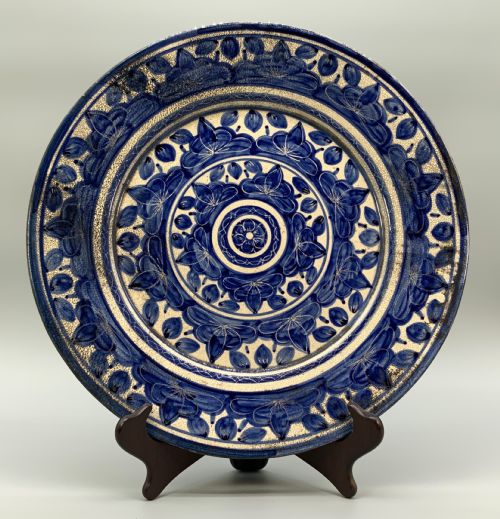
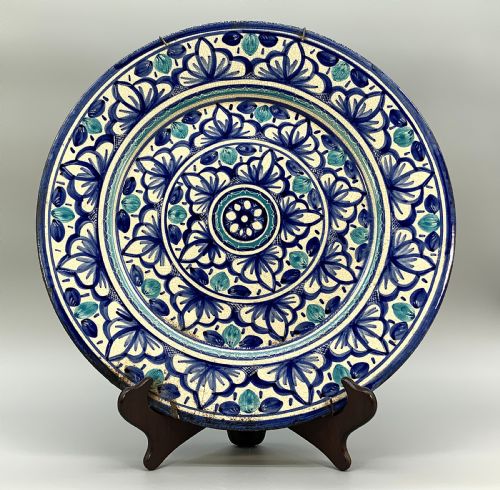
A delft pottery charger is a large circular decorative dish produced primarily during the seventeenth and eighteenth centuries across England, the Netherlands, and Spain. These substantial earthenware plates served decorative display purposes on walls and dressers rather than everyday dining use. The versions most commonly encountered on this page date from the eighteenth century, featuring characteristic blue and white painted pictorial scenes or floral motifs.
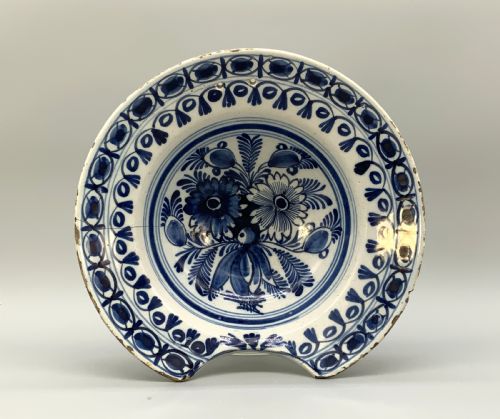
Makers shaped these wares from common clay before dipping them into an opaque tin glaze that provided a smooth white ground for painting. Beyond standard chargers, the category encompasses related forms such as barber's bowls, bleeding dishes, lobbed dishes, and smaller plates reflecting Dutch Delftware, English traditions, and Moorish revival styles.
Materials and construction
Potters formed the body using basic earthenware clay, shaping plates, bowls, and chargers on a potter's wheel before firing the raw clay base. Once shaped, the dried biscuit body received a liquid tin-glaze coating that dried to an opaque white surface ready to absorb applied pigments.
Painters applied cobalt pigment, manganese, and polychrome oxides directly onto the porous unfused tin glaze, a technique requiring immense skill because the pigment sank permanently into the surface upon contact. A subsequent kiln firing fused the metallic oxides into the glaze, fixing the cobalt blue or multi-coloured designs permanently.
Delft Pottery Charger Retail Price Guide 2026
Typical asking prices for delft pottery charger among the pieces listed under this phrase on Sellingantiques today, from the lower quarter to the upper quarter. They describe what is for sale here now, not the wider market.
Listings feature tin-glazed earthenware objects spanning the seventeenth, eighteenth, and nineteenth centuries, alongside twentieth-century Moorish revival examples.
Assessing visual quality
Quality in these earthenware chargers rests upon the crispness of the painted brushwork and the complexity of the design, whether depicting Chinese-inspired motifs or European floral arrangements. Superior examples display confident, fluid brush strokes in the cobalt pigment or manganese without excessive blurring in the glaze.
The purity and gloss of the tin glaze itself distinguish finer pieces, as does the proportion and symmetry of the thrown clay body. Early seventeenth-century specimens and intricate polychrome pieces with controlled firing demonstrate superior workshop execution compared to simpler provincial wares.
The Delft Pottery Charger Glossary
- Tin-Glazed Earthenware
- Pottery covered with a lead glaze made opaque by the addition of tin oxide. This white surface served as the canvas for painted decoration.
- Cobalt Pigment
- A metallic blue colourant derived from cobalt oxide used extensively under the glaze. It maintained its deep blue hue under high kiln temperatures.
- Polychrome
- Decoration employing multiple distinct colours painted onto the ceramic surface. Artisans utilised various metal oxides to achieve hues beyond standard blue.
- Barber's Bowl
- An oval or crescent-cut earthenware dish used for shaving procedures. These vessels often included specific indents to fit against a customer's neck.
- Grand Feu
- A ceramic firing technique where painted glazes underwent high-temperature kiln firing together. This method bonded the metallic pigments deeply into the molten tin glaze.
Delft Pottery Charger: Frequently Asked Questions
What is a delft pottery charger?
A delft pottery charger is a large decorative ceramic dish finished with an opaque white tin glaze and painted decoration. Potters designed these substantial plates for ornamental display rather than practical dining functions.
Most surviving examples date from the seventeenth and eighteenth centuries, originating primarily from workshops in England, the Netherlands, and continental Europe.
How were these chargers displayed historically?
Historically, owners hung these large dishes on walls or arranged them on dresser shelves to showcase their painted cobalt and polychrome designs. Their generous diameters made them prominent visual elements within domestic interiors.
Displaying them in this manner also protected the soft earthenware bodies and tin glazes from the wear associated with regular table service.
How do I care for a delft pottery charger?
Living with these antique ceramics requires gentle handling and placement away from areas prone to physical impact or extreme moisture fluctuations. Because the earthenware body and tin glaze can be porous or brittle, dusting with a dry, soft cloth is sufficient for maintenance.
Wall mounting requires secure, weight-tested hangers specifically designed for shallow ceramic plates to prevent accidental slips.
How do you tell seventeenth and eighteenth century pieces apart?
Seventeenth century pieces often display heavier thrown bodies, distinct foot rims, and influences from imported Kraak porcelain styles. The tin glaze on earlier pieces can exhibit different surface textures and thicker application.
Eighteenth century examples frequently transition toward lighter forms, refined Chinoiserie motifs, or broader polychrome palettes including manganese and detailed floral arrangements.