







Delft Painted Dish
A delft painted dish brings centuries of tin-glazed earthenware and cobalt pigment into a room, offering historic blue and white or polychrome decoration on chargers and plates.
Delft Painted Dish
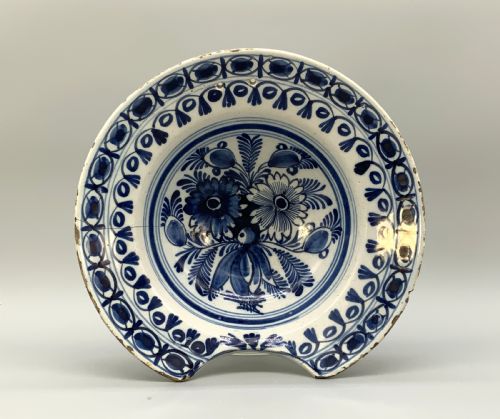
A delft painted dish encompasses chargers, shallow bowls, and plates shaped from earthenware during the seventeenth and eighteenth centuries, predominantly originating from English and Dutch potteries. These pieces served various domestic functions, from ceremonial display to specialised tasks such as barbering.
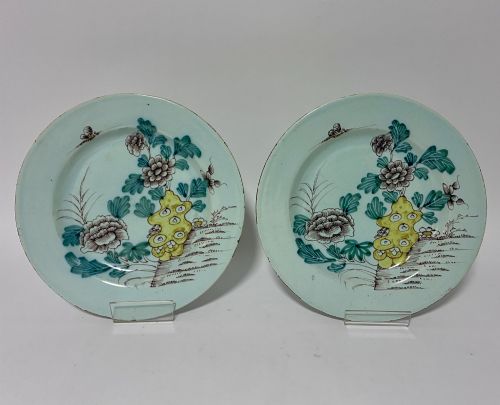
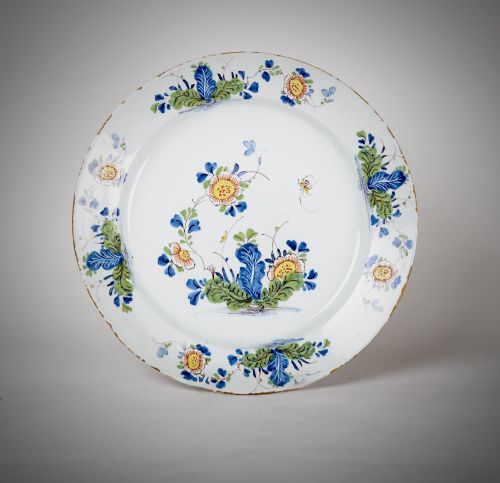
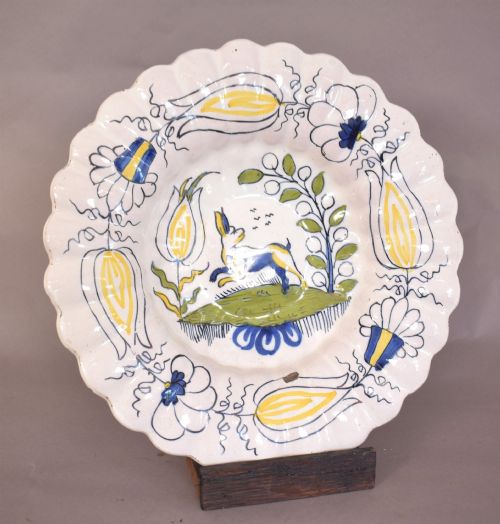
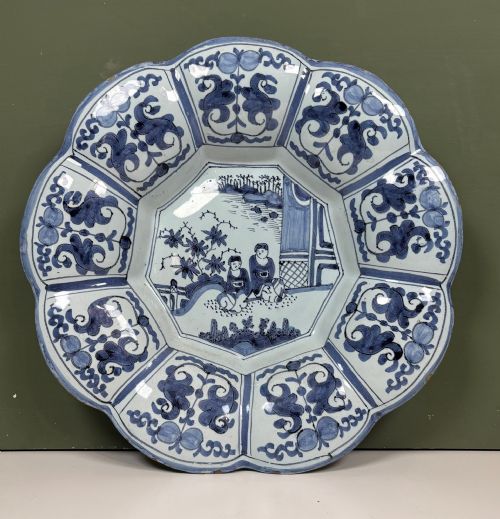
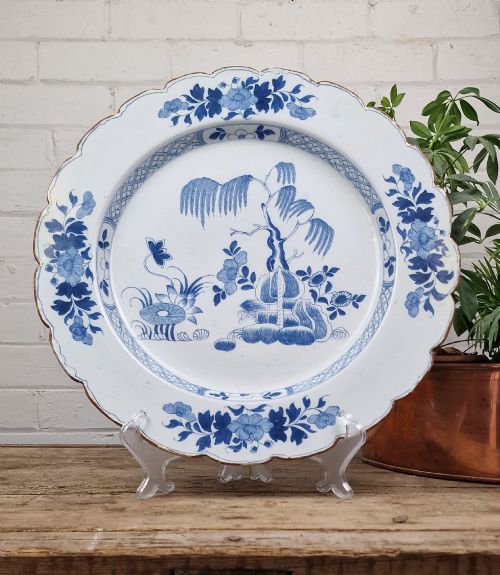
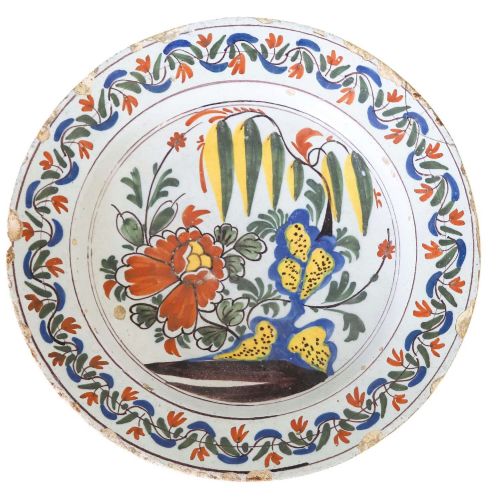
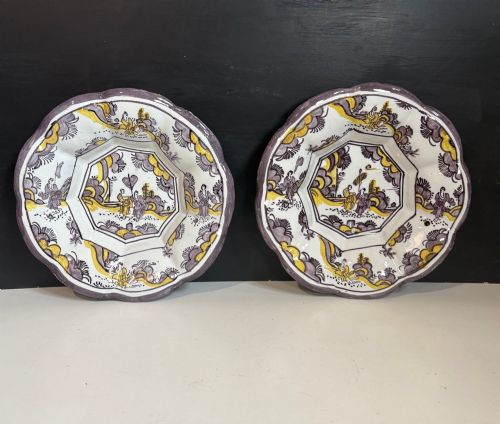
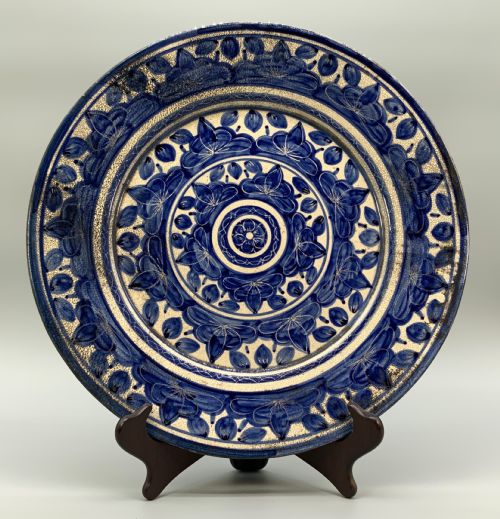
The version most commonly met on this page is the eighteenth-century charger or plate, painted in blue and white or polychrome pigments. Makers applied hand-painted floral, geometric, and chinoiserie motifs directly onto the absorbent tin-glaze surface.
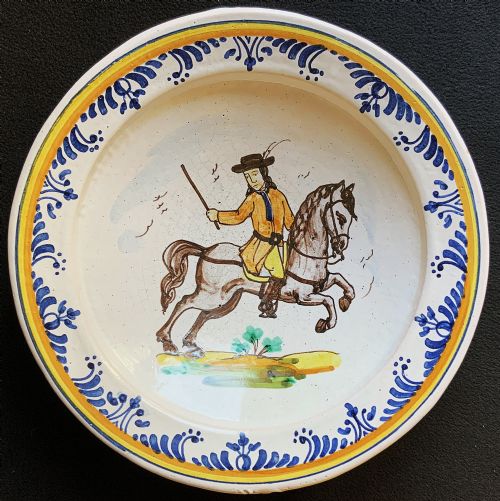
Regional variations appear across the selection, including Dutch Baroque examples, English productions from centres like Lambeth and Bristol, and occasional Continental pieces. Forms range from standard circular plates to lobbed dishes and sweetmeat presentiers.
Materials and construction
Potters formed these items from earthenware clay, coating the fired body in a white tin glaze that created an opaque, smooth canvas for the painter. Cobalt oxide and polychrome pigments were then brushed directly onto the raw glaze before a final firing fused the colours.
The application of pigments required swift precision, as the porous tin glaze absorbed moisture instantly, leaving no room for correction. Brushstrokes in cobalt blue or multi-coloured palettes display the direct hand of the decorator working within established eighteenth-century styles.
Delft Painted Dish Retail Price Guide 2026
Typical asking prices for delft painted dish among the pieces listed under this phrase on Sellingantiques today, from the lower quarter to the upper quarter. They describe what is for sale here now, not the wider market.
Barber's bowls include a curved notch to fit a customer's neck, turning a simple shave into an eighteenth-century balancing act.
Assessing quality and character
Quality rests in the crispness of the hand-painted decoration and the depth of the glaze, where confident brushwork distinguishes skilled studio output from repetitive work. The clarity of the cobalt pigment against the white tin-glazed surface shapes the visual impact of each charger or plate.
Proportion and the handling of the clay body also separate standard domestic items from ambitious display pieces. Well-potted rims and balanced geometric or floral compositions reflect the competence of the workshop that shaped and fired the earthenware.
Lambeth·Bristol
The Delft Painted Dish Glossary
- Tin-glazed earthenware
- Earthenware pottery covered with an opaque white glaze containing tin oxide. This coating provided a smooth ground for painted decoration before the glaze was fired.
- Charger
- A large decorative plate intended for display on a sideboard or wall rather than for dining. These sizeable dishes often feature elaborate floral or chinoiserie scenes.
- Polychrome
- Decoration employing multiple colours rather than a single pigment. On these pieces, colours typically include iron red, yellow, and green alongside cobalt blue.
- Chinoiserie
- European artistic styles reflecting Chinese motifs and decorative patterns. Potters adapted these fantastical landscapes and figures onto eighteenth-century plates and dishes.
- Cobalt pigment
- A metallic oxide used to produce deep blue painted decoration under the glaze. It remained stable at high kiln temperatures, yielding intense blue tones.
Delft Painted Dish: Frequently Asked Questions
How were delft plates used?
Large chargers were primarily hung on walls or displayed on sideboards to show off painted floral or geometric scenes. Smaller plates and bowls saw use in dining and domestic routines.
Specialised forms, such as barber's bowls with cut-out rims, fulfilled specific grooming tasks in seventeenth and eighteenth-century households.
What colours appear on these pieces?
The palette relies heavily on cobalt blue applied to a white tin-glazed background, reflecting the influence of imported Chinese porcelain. Many examples also incorporate polychrome pigments including yellow, green, and iron red.
Pigment combinations often help indicate whether a piece originated from an English kiln or a Dutch workshop.
How do I tell English and Dutch pieces apart?
English and Dutch pieces share tin-glazed earthenware bodies and similar floral motifs, but subtle traits in the clay and glaze help distinguish them. Regional potteries developed distinct preferences in palette thickness and rim profiles.
Examining the foot ring and the tone of the tin glaze reveals manufacturing habits specific to different European centres.
Are these items suitable for daily dining?
Tin-glazed earthenware has a soft, porous ceramic body with a glaze that chips relatively easily over centuries. Using them for display preserves the hand-painted surfaces and the fragile edges.
Gentle handling ensures the historic tin glaze and cobalt pigments remain protected from modern wear.