



Deep Upholstered Ottoman
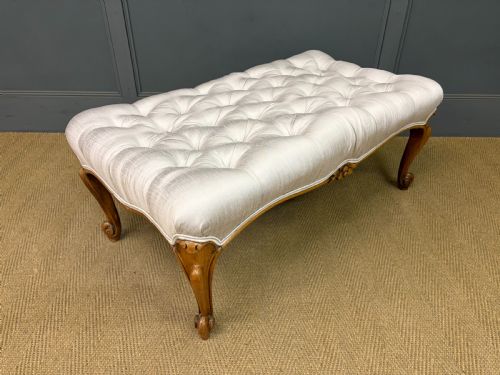
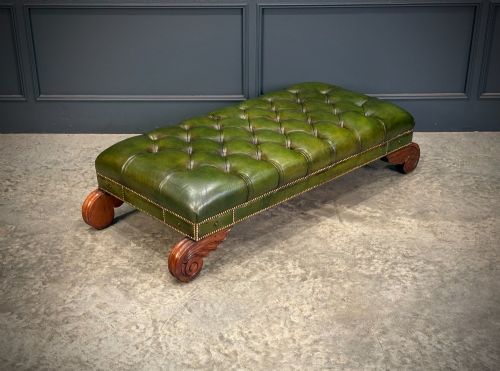
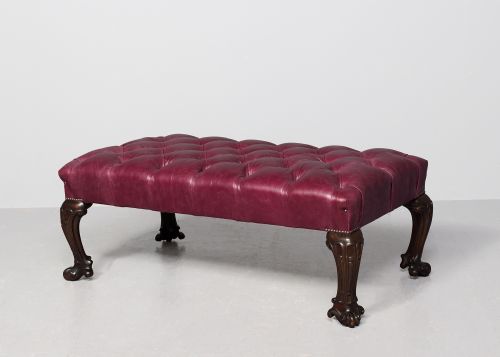
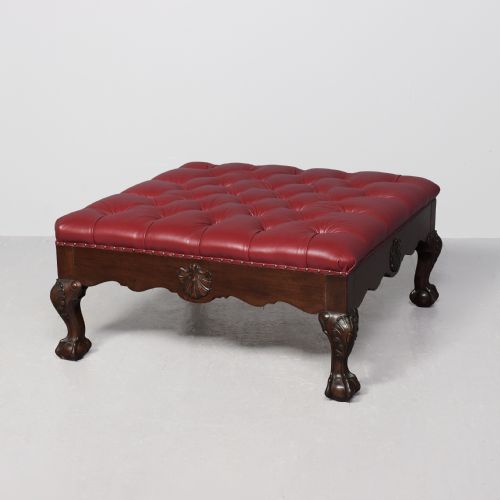
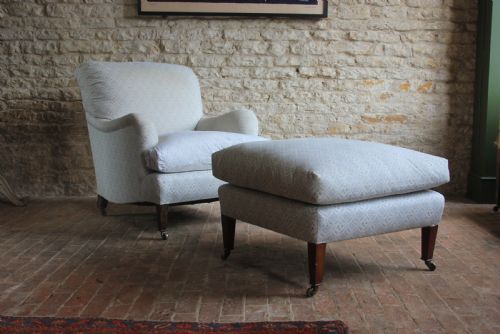
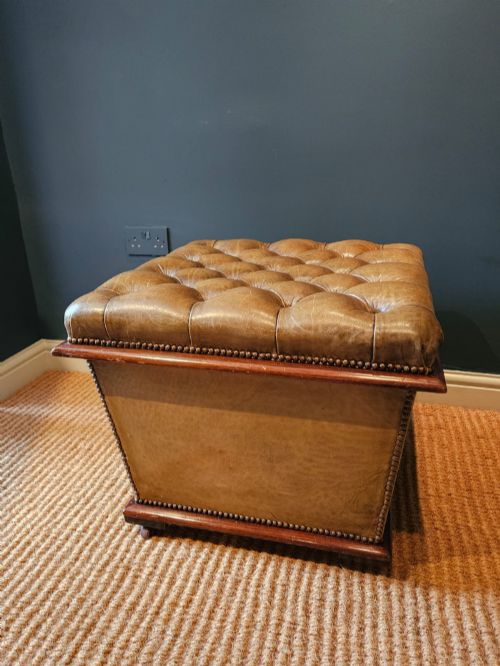
A deep upholstered ottoman offers generous seating or a resting place for feet, combining sturdy timber frames with plush buttoned hide or fabric.
Deep Upholstered Ottoman
A deep upholstered ottoman serves primarily as a footstool, window seat, or low resting platform within a traditional interior space. When searching for a deep upholstered ottoman, buyers encounter pieces stretching from the Regency era through the Victorian period and Edwardian decades. Large formats dominate the selection, often featuring low wooden frames beneath heavily padded tops.
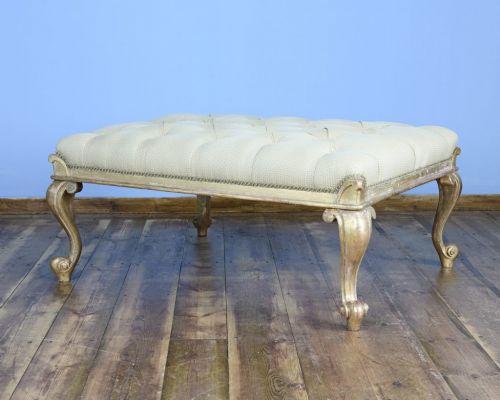
The majority of surviving examples date from the nineteenth century, reflecting Victorian and Georgian styles with substantial proportions. Footstools, window seats, and long stools make up the core forms available in this category. Walnut, mahogany, and giltwood provide the structural support beneath leather, fabric, or silk upholstery.
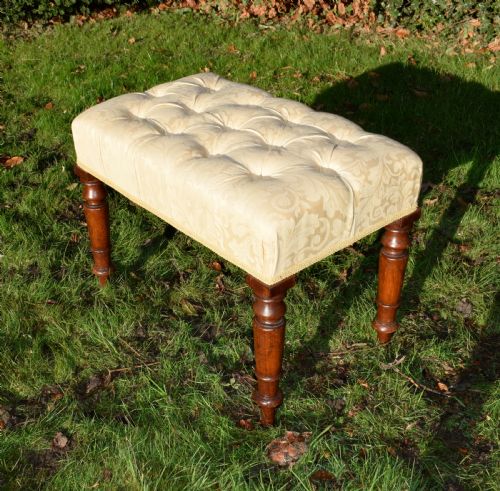
Makers from the past produced these items for libraries, drawing rooms, and large reception spaces where comfort matched formal decor. Modern placement relies on their generous scale to anchor seating arrangements or provide practical lounging utility. Each piece demonstrates the heavy padding and deep tufting characteristic of nineteenth-century upholstery techniques.
What varies in quality
The density and resilience of the internal stuffing separate standard production from exceptional examples. Superior pieces maintain firm tension across the buttoned surface without sagging through decades of use.
Frame selection dictates the structural longevity, with dense mahogany and walnut offering greater stability than softer secondary woods. Cabinetmakers who invested time in hand-turned legs and precise brass studding elevated the overall execution.
The choice of covering material reflects the original destination and budget of the commission. High-grade hide, supple leather, and fine silk command attention through their durability and tactile presence.
Listings feature items dated from the Regency period through to the Edwardian era, predominantly utilising mahogany, walnut, and leather.
Howard and Sons·James Shoolbred
The Deep Upholstered Ottoman Glossary
- Buttoned
- An upholstery technique where twine pulls the surface fabric deep into the stuffing to create a patterned grid of tufts. This method secures internal padding while adding tactile texture.
- Castor
- A small wheel attached to the base of furniture legs to permit smooth movement across floors. They appear frequently on nineteenth-century footstools for ease of relocation.
- Hide
- Heavy animal skin used for durable upholstery on library and study seating. It ages with a distinct patina through regular contact.
- Giltwood
- Timber coated with a thin layer of gold leaf or gilt pigment for decorative brilliance. It appears on grander seating from the Regency and Victorian periods.
- Ottoman
- A low, upholstered seat or footstool without back or arms designed for communal lounging. Nineteenth-century versions frequently incorporate deep padding and internal wooden frameworks.
Deep Upholstered Ottoman: Frequently Asked Questions
How do I clean leather upholstery?
Wipe surfaces gently with a dry or slightly damp cloth to remove surface dust. Avoid harsh chemical cleaners that strip natural oils from antique hide.
Condition the leather periodically using specialist wax to maintain suppleness and prevent cracking. Test any product on an unseen area first to ensure colour stability.
Where should I place an ottoman?
Position these substantial pieces in front of a sofa to serve as a generous footrest. They also function well beneath large windows as occasional seating.
Ensure adequate walking clearance around the perimeter since nineteenth-century proportions tend to be expansive. Library and drawing room settings suit their traditional aesthetic best.
How do I date a Victorian footstool?
Examine the timber species and leg configuration for clues to the manufacturing decade. Mahogany and walnut frameworks paired with deep buttoning typically point towards the middle or late nineteenth century.
Castor design and internal webbing construction offer further evidence of age. Edwardian pieces often display lighter scaling compared to heavy mid-Victorian examples.
Can I use these for everyday seating?
Sturdy hardwood frames and deep internal padding allow these pieces to withstand regular daily use. The original webbing and springs provide comfortable support for resting feet or sitting.
Delicate silk or antique fabric coverings require more careful treatment than heavy leather hide. Consider the fragility of the outer material before placing items in high-traffic family spaces.