
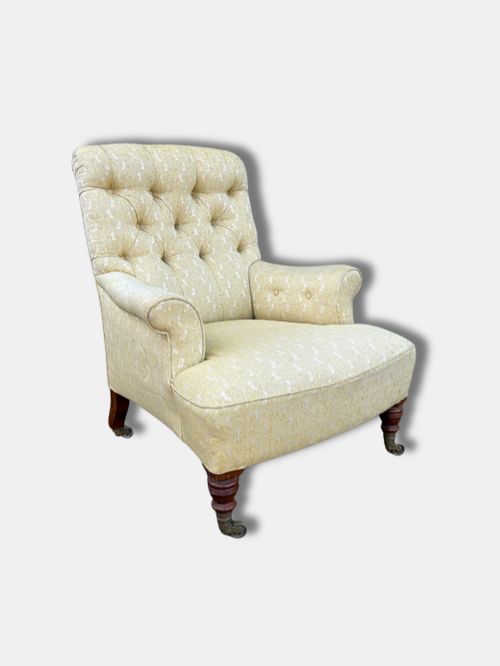
Deep Buttoned Easy Chair
A deep buttoned easy chair brings together sink-into-it comfort and nineteenth-century upholstery craft.
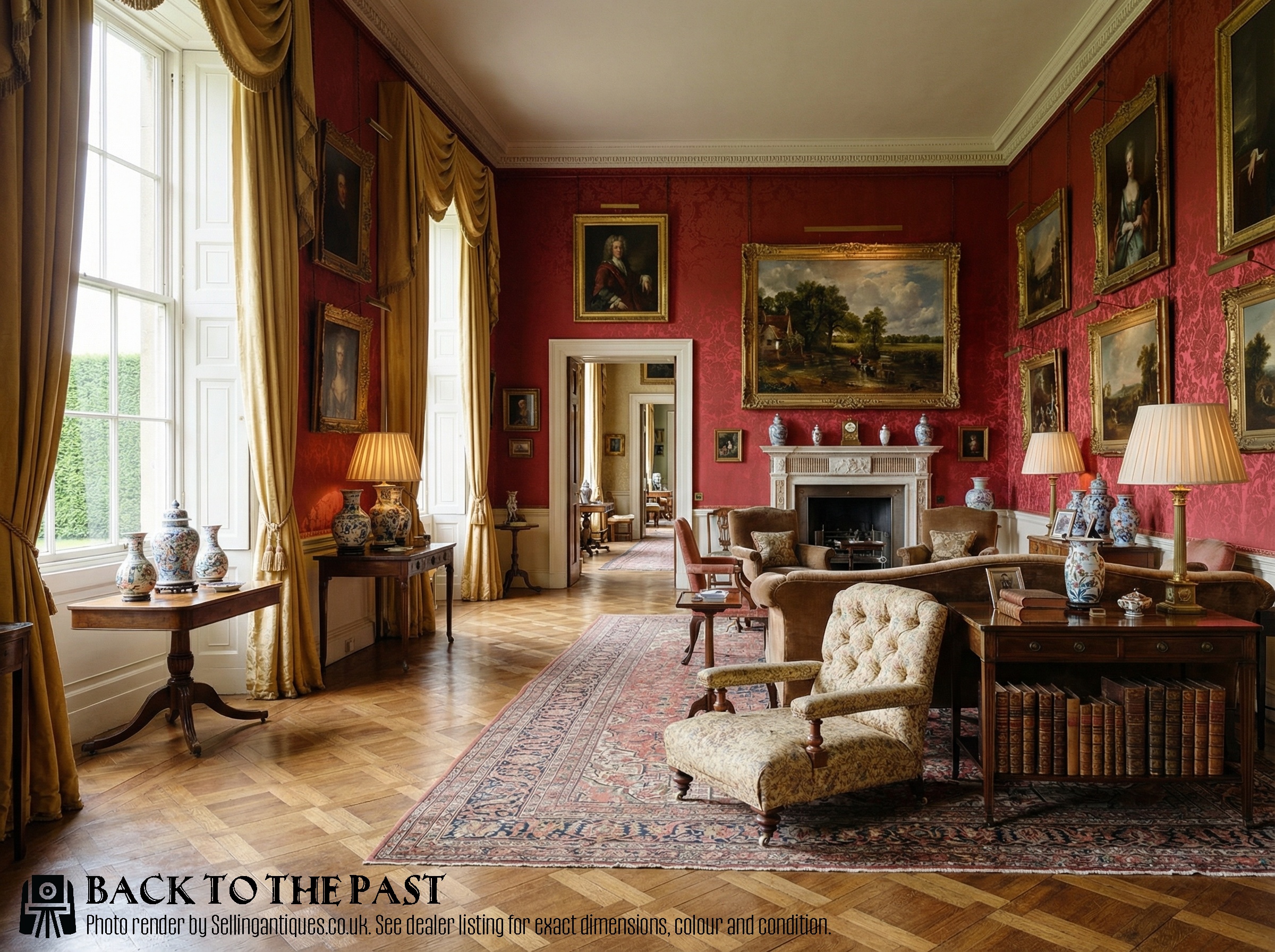
Deep Buttoned Easy Chair
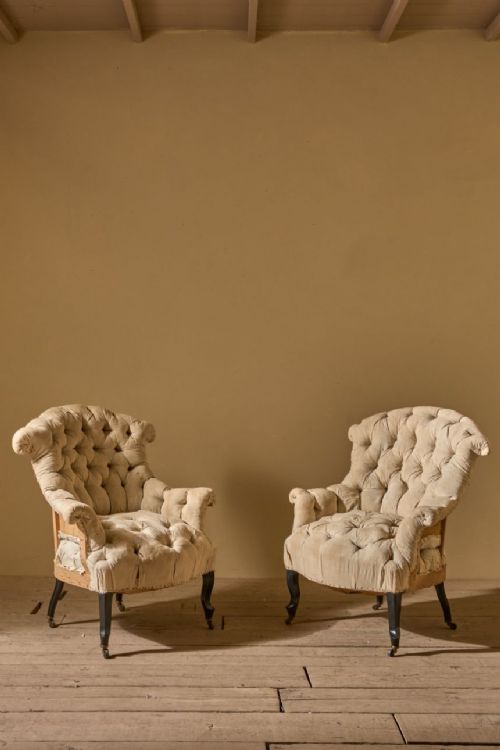
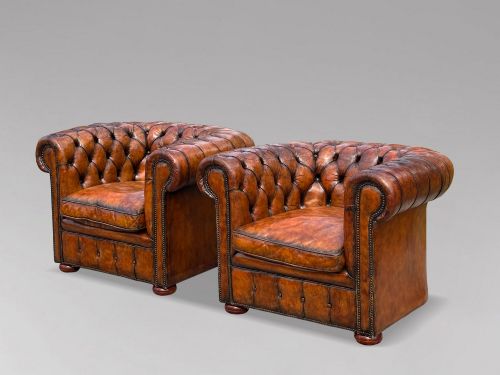
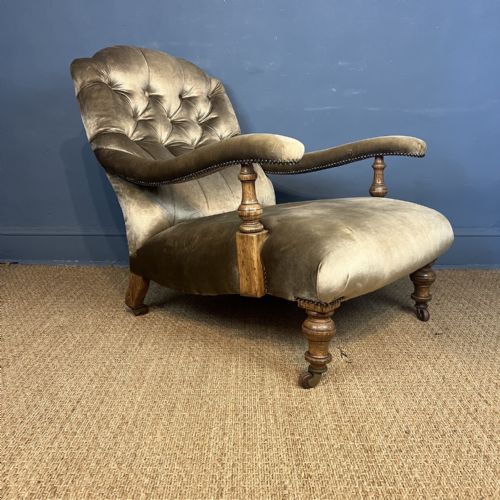
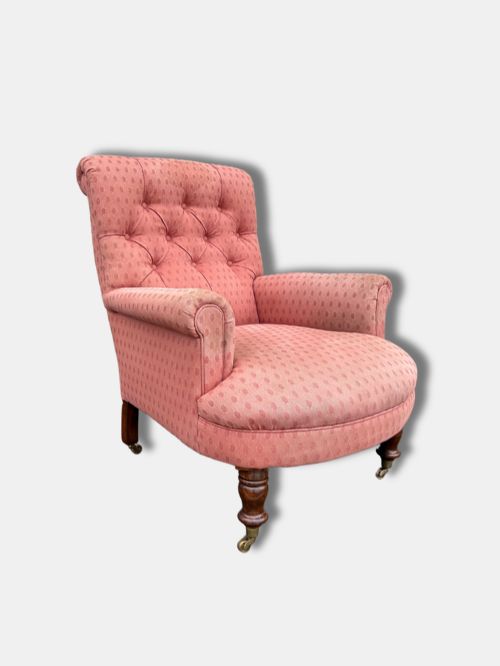
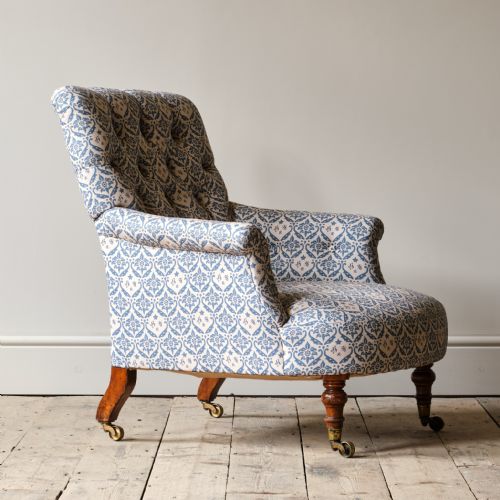
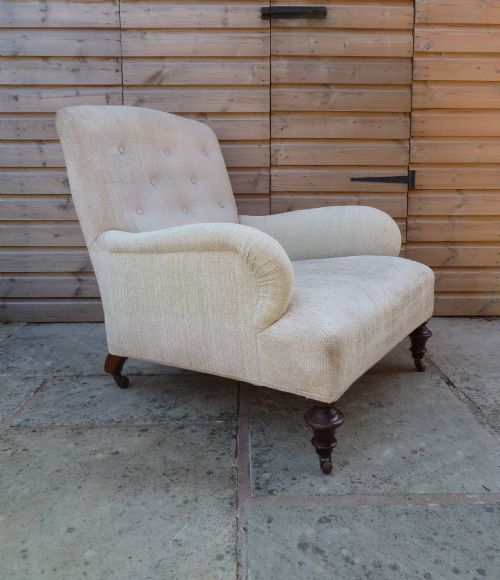
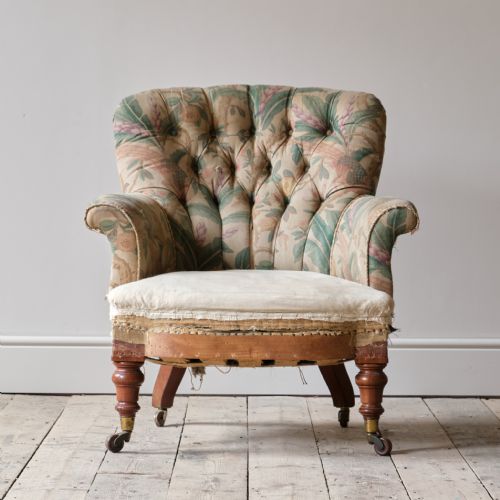
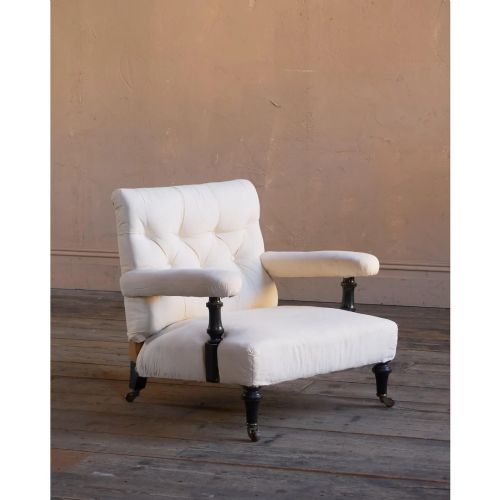
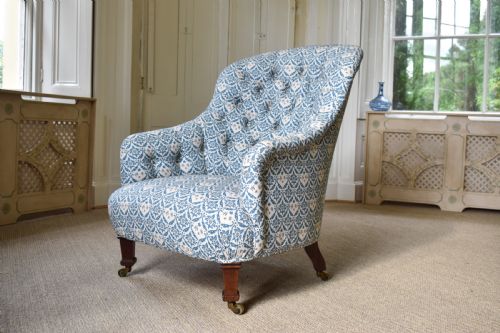
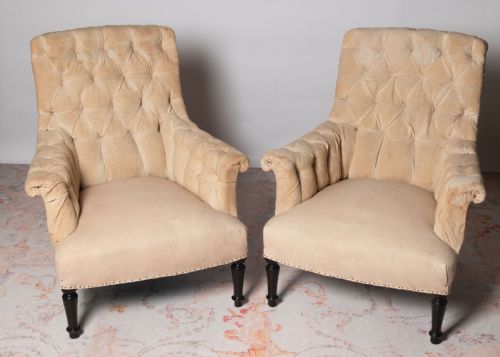
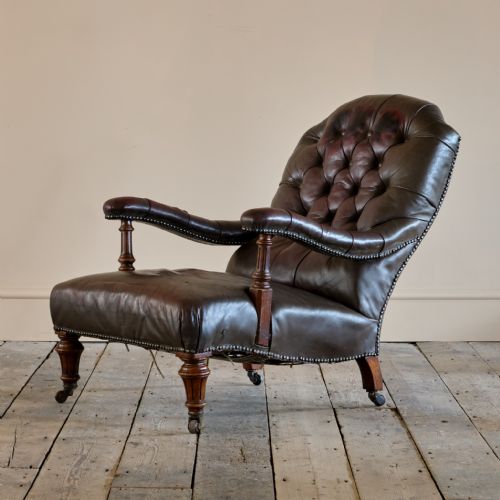
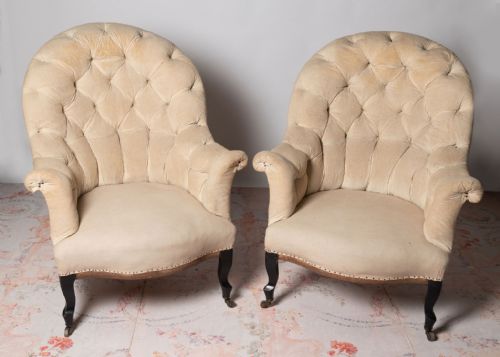
A deep buttoned easy chair is a low, upholstered seat built for relaxation, appearing frequently in Victorian country house styles and French Napoleon III designs. These pieces range from substantial leather club chairs to sprung armchairs upholstered in velvet or printed fabric.
Most examples found here date from the nineteenth century, spanning Victorian, Regency, and Edwardian periods. They serve as primary lounge seating, combining generous proportions with traditional sprung backs and arms.
How they were made
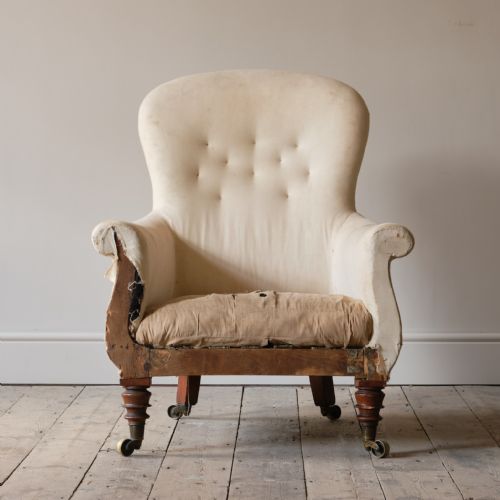
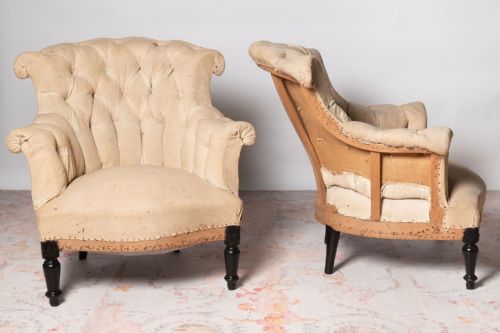
Makers built the foundational frames using sturdy hardwoods such as mahogany, walnut, oak, and occasionally iron. These skeletons supported complex internal coil springing and heavy padding.
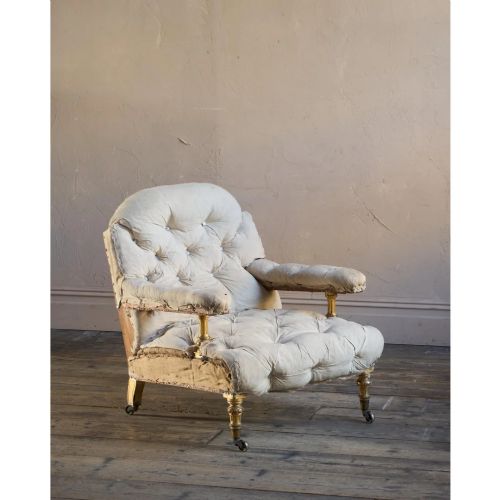
Upholstery involved durable covers of leather, velvet, calico, or heavy fabric secured with brass detailing. Deep buttoning was pulled tight to secure the internal stuffing and create the characteristic geometric pattern.
Mahogany, walnut, and oak dominate the wooden frames across these nineteenth-century listings.
What varies in quality
Quality rests in the integrity of the internal frame and the precision of the upholstery work. A superior piece maintains tight, even buttoning and robust frame construction without looseness in the joints.
The choice of covering material and the retention of original components, such as castors and branded stamps, further divide standard production from the finest maker-attributed examples.
Howard and Sons·Gillows·Hamptons and Sons·Mellier and Co
The Deep Buttoned Easy Chair Glossary
- Deep buttoning
- An upholstery technique where buttons are pulled deep into the padding at regular intervals to secure the filling and create diamond pleats.
- Club armchair
- A low, heavily upholstered seat traditionally covered in leather and built for deep comfort.
- Castor
- A small wheel attached to the base of furniture legs to allow smooth movement across floors.
- Calico
- A plain-woven cotton fabric often used as an underlying layer beneath top upholstery covers.
Deep Buttoned Easy Chair: Frequently Asked Questions
Are these chairs comfortable for daily use?
These armchairs were specifically engineered for lounging, featuring deep sprung seats and supportive padded backs that suit extended periods of sitting.
Many retain their original internal coil springs, which provide a balanced give that modern reproductions rarely replicate.
How do I identify a nineteenth-century piece?
Look closely at the construction materials, frame timbers like walnut or mahogany, and the style of the upholstery work. Nineteenth-century examples often feature hand-tied springs and traditional stuffing materials beneath the surface.
Maker stamps on the wooden frame or brass castors also help pinpoint the exact period and origin of the armchair.
What is the difference between club and country house styles?
Leather club chairs generally feature clean lines and robust hides designed for heavy daily wear in libraries or smoking rooms. Country house armchairs lean towards softer fabric upholstery and generous proportions suited for drawing rooms.
Both styles share deep buttoning and low centres of gravity intended for relaxation.
Can I place these chairs in a modern room?
Their classic forms and varied upholstery materials allow them to anchor both traditional and contemporary interiors. A leather or velvet armchair adds immediate texture and weight to a minimalist space.
They work well as standalone reading seats or paired with matching footstools.