



Victorian Floral Open Armchair
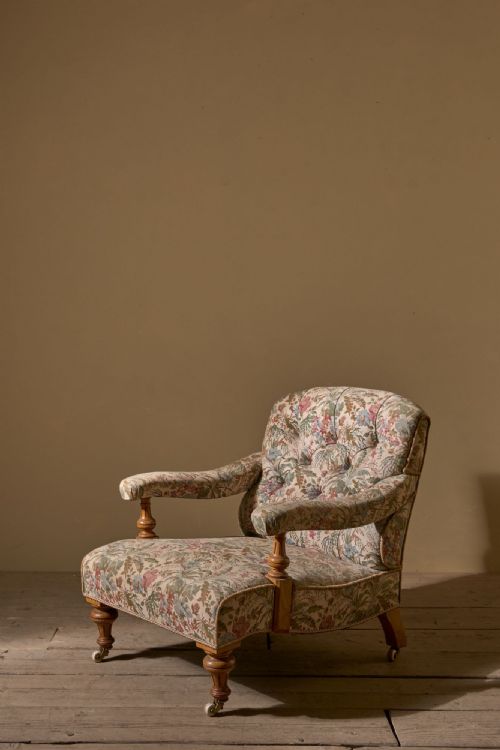
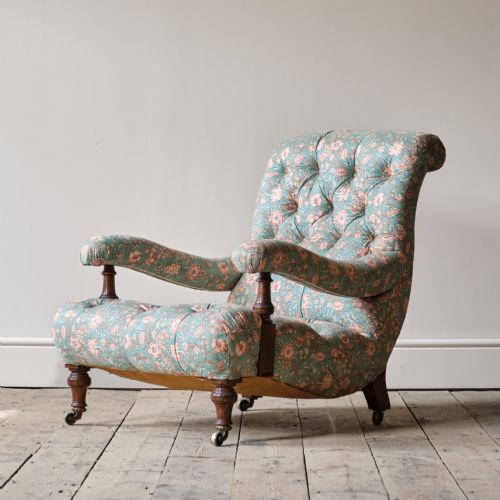
A victorian floral open armchair brings rich nineteenth-century upholstery and exposed timber frames into a modern room with ease.
Victorian Floral Open Armchair
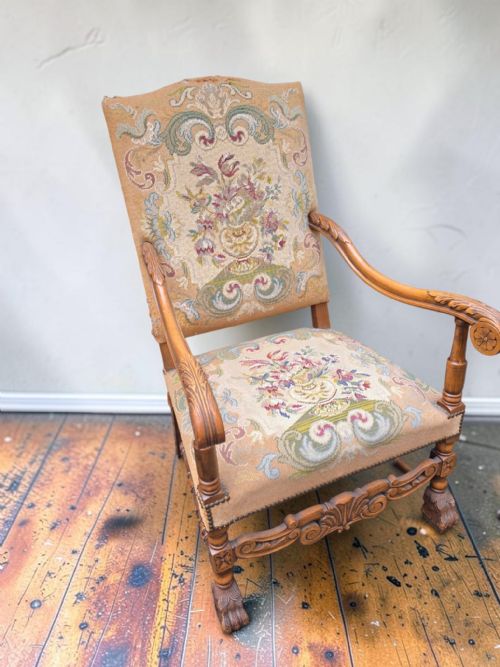
A victorian floral open armchair combines nineteenth-century seating forms with upholstered covers featuring botanical, needlework, or tapestry textiles. These pieces range from country house seating to sophisticated salon chairs with exposed wooden frames.
The most common examples on this page date from the nineteenth century and the Edwardian period, often utilising walnut, mahogany, or ebonized wood. Makers such as Holland & Sons and Howard & Sons appear alongside Scottish country house pieces and French revival designs.
Buyers encounter various stylistic influences, including Victorian Rococo Revival, Louis XV Revival, and Sheraton Revival forms. Open arms define the structure, revealing carved woodwork alongside floral fabric, tapestry, or needlework covers.
Materials and construction
Frames rely principally on hardwoods like walnut and mahogany, carved or shaped to form the structural skeleton of each chair. Giltwood and ebonized finishes appear on select salon pieces, while brass elements provide subtle structural or decorative accents.
Upholstery techniques involve traditional textile applications, utilising heavy tapestry fabric, needlework, woven textiles, and specific maker-associated patterned cottons like William Morris designs. These covers are secured directly to the padded open-arm frames.
Victorian Floral Open Armchair Retail Price Guide 2026
Typical asking prices for victorian floral open armchair among the pieces listed under this phrase on Sellingantiques today, from the lower quarter to the upper quarter. They describe what is for sale here now, not the wider market.
Materials documented across these armchairs include walnut, mahogany, brass, ebonized wood, and various floral tapestry textiles.
Judging quality and character
Quality rests in the crispness of the timber carving and the structural integrity of the open-arm framework. Finer pieces demonstrate superior joinery in walnut or mahogany, whilst lesser examples show simpler turnings and standard pine or mixed secondary woods.
The textile selection defines the upper tier of pieces, where hand-worked needlework or distinguished maker-stamped frames elevate the chair. Plain or later replacement fabrics paired with basic frame construction sit at the simpler end of the range.
Holland & Sons·Howard & Sons·William Morris
The Victorian Floral Open Armchair Glossary
- Open armchair
- A chair with un-upholstered wooden arms that expose the structural frame. These pieces typically feature padded armrests supported by carved wooden pillars.
- Walnut
- A dense, dark hardwood utilised extensively for nineteenth-century furniture framing. It permits fine carving and develops a deep patina over time.
- Tapestry
- A thick, heavy textile woven with pictorial or botanical designs. Used for durable upholstery on nineteenth-century seating.
- Ebonized
- Wood treated with a chemical or finish to imitate ebony. This dark, formal surface treatment appears frequently on late nineteenth-century salon furniture.
- Needlework
- Hand-stitched textile covers worked in wool or silk on a canvas ground. These floral and botanical patterns form the primary decorative surface on many period chairs.
Victorian Floral Open Armchair: Frequently Asked Questions
How do I identify a Howard and Sons armchair?
Look for specific maker attribution through stamped woodwork, casters, or signature ticking lining the interior upholstery.
These chairs also feature distinctive low-slung proportions and deep-sprung comfort that set them apart from standard nineteenth-century seating.
Where should I place an open armchair?
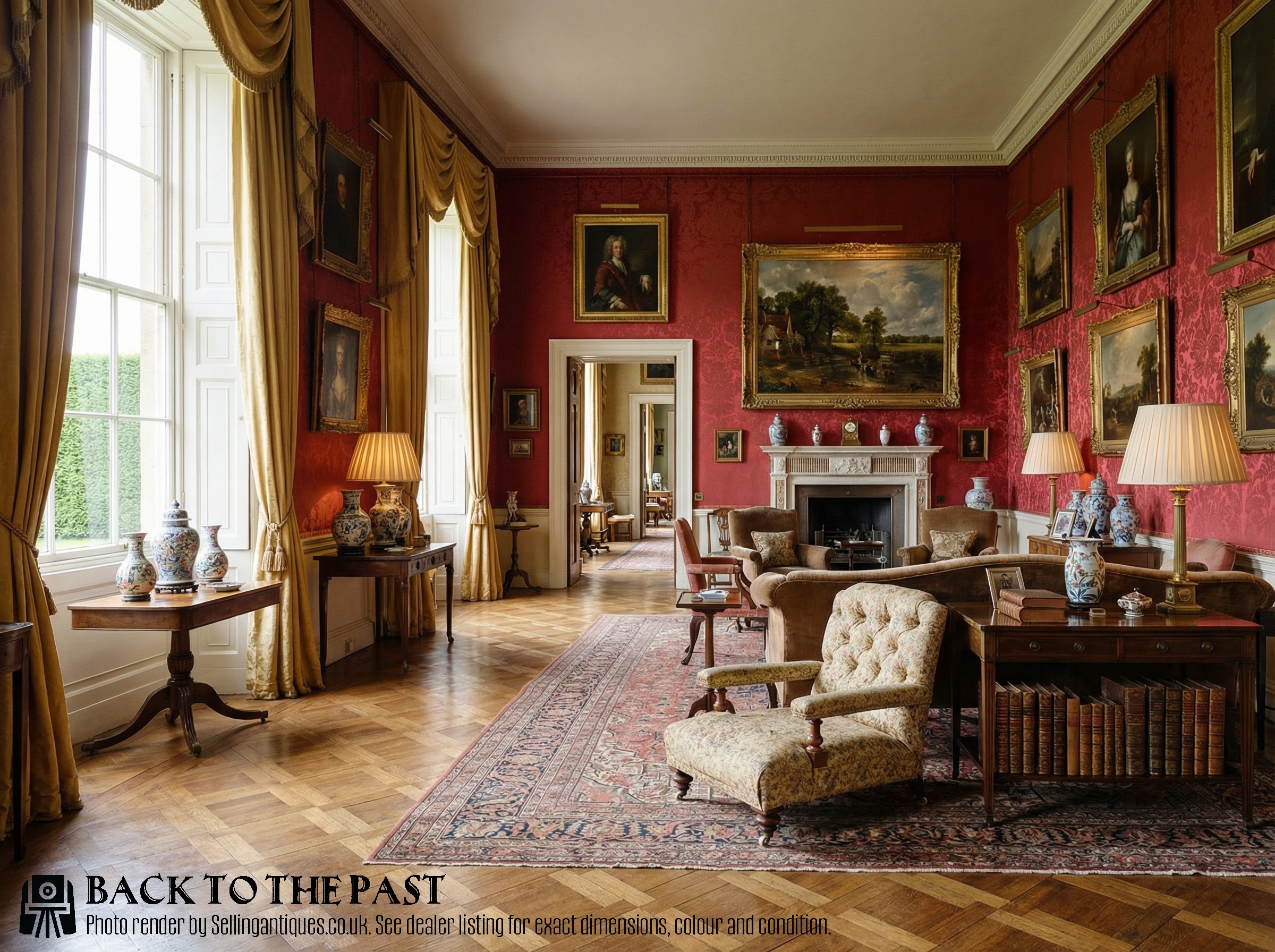
An open armchair works well in a drawing room, bedroom corner, or beside a fireplace where the profile remains visible.
Because the arms are open, the chair occupies less visual weight in a room than a fully upholstered armchair.
Are tapestry covers original to these chairs?
Many nineteenth-century chairs retain period tapestry or needlework covers applied during the Victorian or Edwardian eras.
Some pieces have been reupholstered later in historical patterns like William Morris cottons to suit modern interiors.
What is the difference between salon and country house chairs?
Salon chairs often feature ebonized finishes, giltwood, or delicate revival styling suited for formal reception rooms.
Country house chairs lean towards sturdy walnut frames and heavier floral tapestry fabrics designed for everyday domestic use.