


English Howard Style Chair
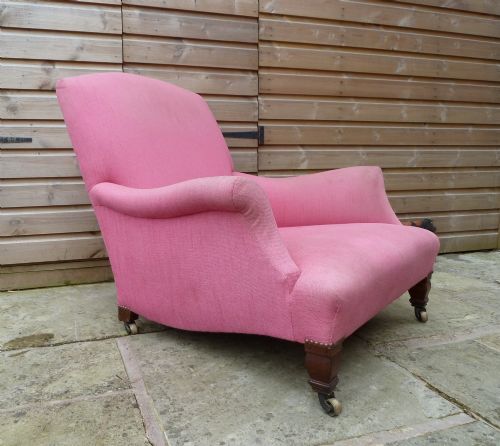
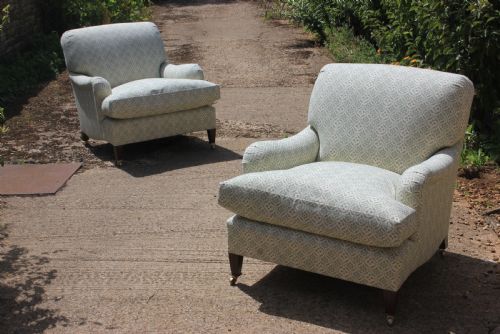
These comfortable english howard style chair examples bring relaxed country house seating into the room with generous proportions and deep seats.
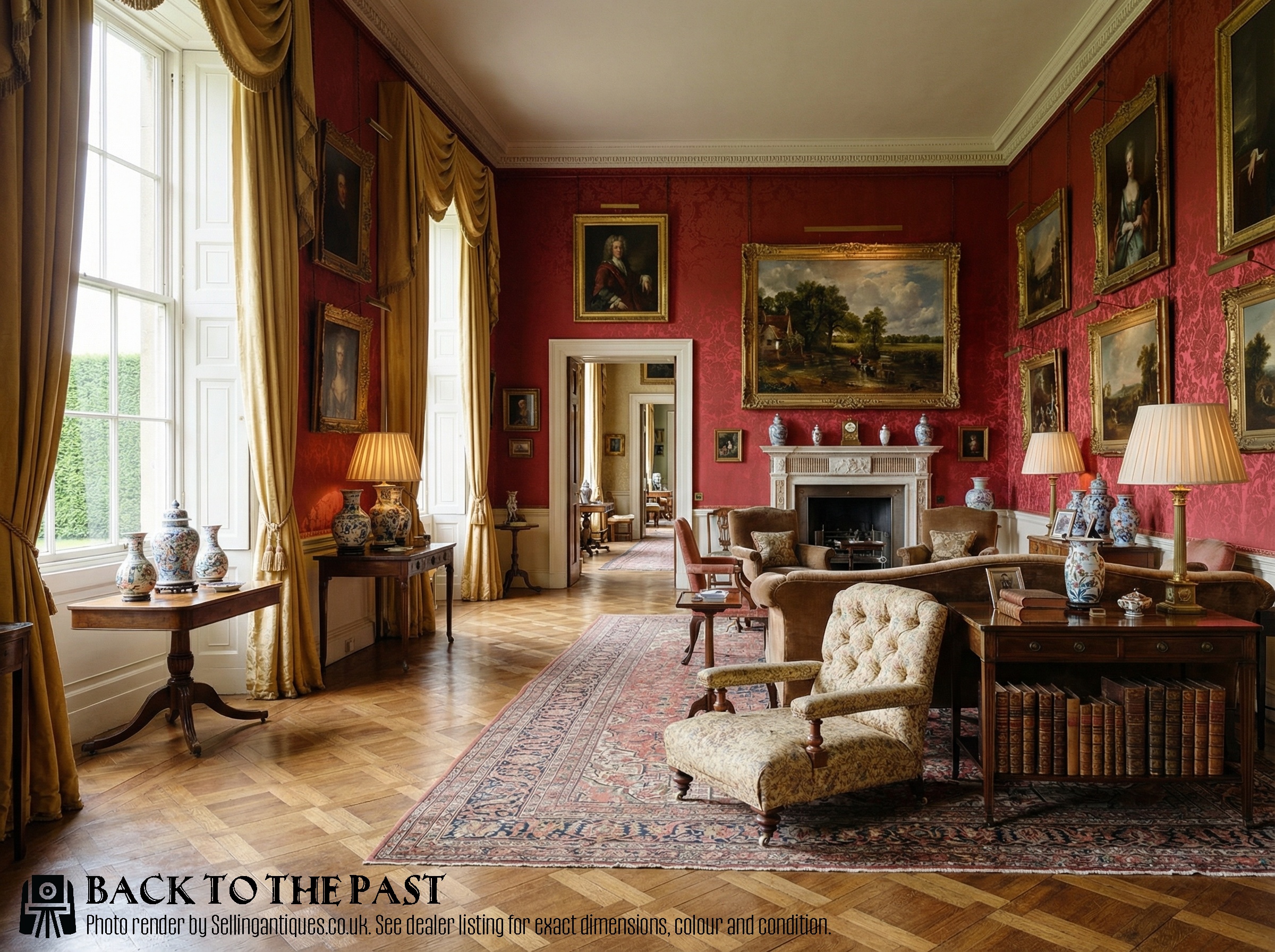
English Howard Style Chair
An english howard style chair represents deep and generous upholstered seating rooted in nineteenth century and early twentieth century traditions. These pieces often appear in forms such as club armchairs, tub chairs, and bridge-water models.
The aesthetic bridges formal nineteenth century Victorian rooms and relaxed English country house interiors. Buyers frequently find pieces originating from the Victorian and Edwardian eras alongside later twentieth century interpretations.
Makers and design houses of the period established specific proportions including low arms and deep seats. This selection includes named models such as the Grafton, Willoughby, and Bridgewater.
How They Were Made
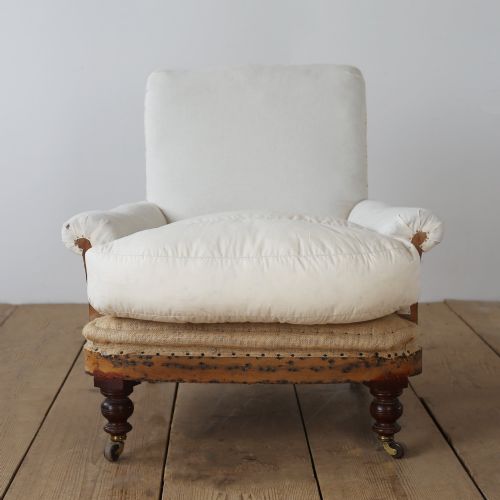
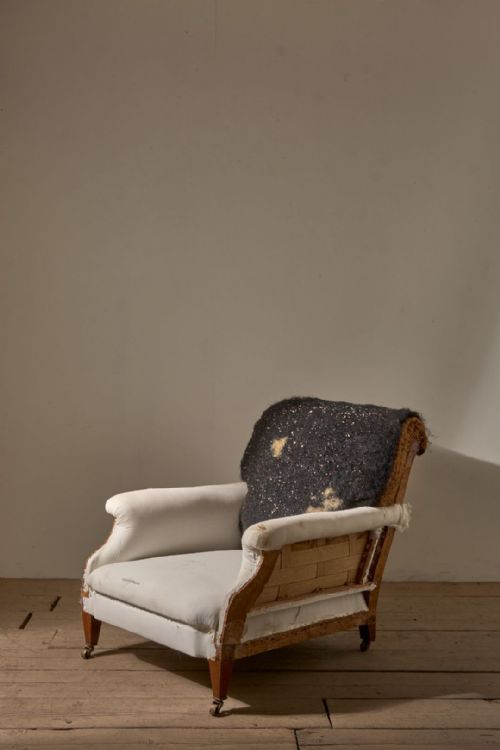
Frames rely upon sturdy timbers including walnut, mahogany, oak, and general hardwood to provide a solid structural foundation. Wood and timber components support the heavy internal springing required for deep seating.
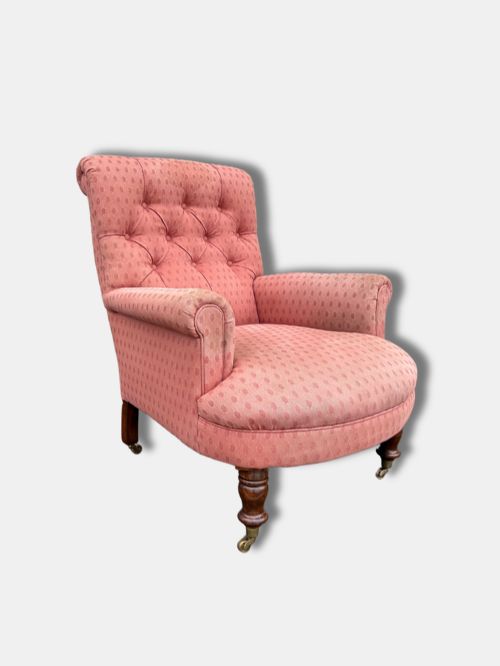
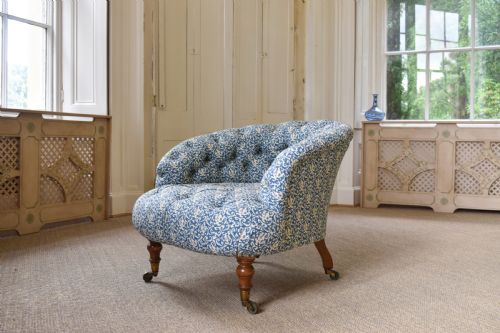
Upholstery techniques utilise calico undercovers, ticking, and fabric layers over traditional stuffing. Outer surfaces feature finishes in velvet, kilim, printed cottons like William Morris designs, and button-backed detailing.
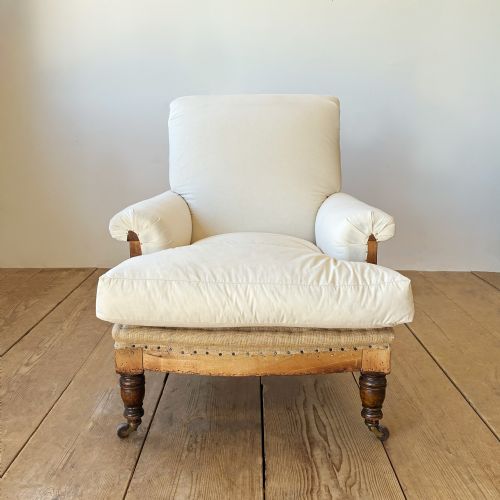
Visible legs frequently incorporate brass castors to allow smooth movement across heavy carpets. Exposed woodwork on open armchairs showcases polished hardwood frames.
The archive and active listings span Victorian, Edwardian, and later twentieth century production dates.
What Varies in Quality
The integrity of the internal wooden frame and the precision of the original joinery dictate the foundational standard. Firmer springing systems and robust timber subframes separate substantial pieces from lighter alternatives.
The distinction between original maker stamps and later interpretations influences historical interest. Fully stamped maker pieces command greater attention from collectors compared to generalised style pieces.
Upholstery execution and fabric selection alter the final presence of the chair. Traditional materials such as ticking and stamped ticking contrast with later decorative coverings.
Howard and Sons·James Shoolbred·Trollope and Sons
The English Howard Style Chair Glossary
- Bridgewater armchair
- A specific comfortable armchair form characterised by low arms and deep loose cushion seating. This model is frequently associated with nineteenth century London workshops.
- Tub chair
- A compact upholstered seating form featuring a curved enclosing back that flows continuously into the arms. These pieces offer a neat footprint while maintaining deep comfort.
- Ticking
- A tightly woven heavy cotton or linen fabric traditionally used as a durable undercover for upholstery. Grey ticking remains a signature finish for country house seating.
- Castor
- A small wheel attached to the base of furniture legs, often rendered in brass. These additions facilitated movement across heavy nineteenth century carpets.
English Howard Style Chair: Frequently Asked Questions
How do I identify an original chair?
Original pieces often feature maker stamps on the castors, legs, or internal webbing frames. Examining the timber construction and traditional stuffing methods also helps determine the period.
Matching the proportions and specific model names like Grafton or Bridgewater provides further clues to authenticity. Surviving records and stamps remain the most reliable indicators.
What is a Bridgewater model?
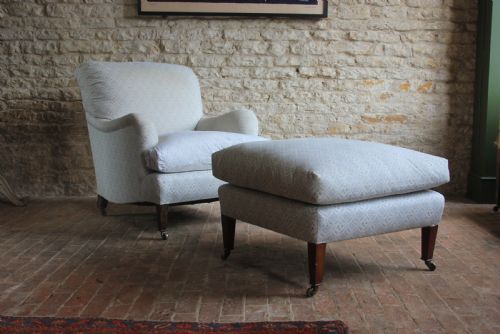
The Bridgewater is a classic armchair shape defined by low rolled arms and exceptionally deep proportions. It was designed primarily for relaxation in country house libraries and drawing rooms.
These chairs prioritise comfort through generous padding and low seating heights. They represent a specific blueprint developed during the Victorian era.
Where should I place this seating?
These comfortable chairs suit sitting rooms, studies, and bedrooms where deep seating is desired. Their generous scale allows them to anchor a room as a central reading chair.
Pairing them with matching footstools enhances their utility for relaxation. They integrate naturally into both traditional and relaxed modern interior schemes.
What fabrics were originally used?
Traditional upholstery often involved heavy ticking, calico undercovers, and durable wool or velvet top covers. Printed cottons, including designs by William Morris, were also utilised for distinctive country house interiors.
Many surviving pieces retain neutral ticking or have been reupholstered in patterned textiles. The choice of fabric frequently reflects the period of the piece or subsequent restoration work.