


Deep Buttoned Accent Chair
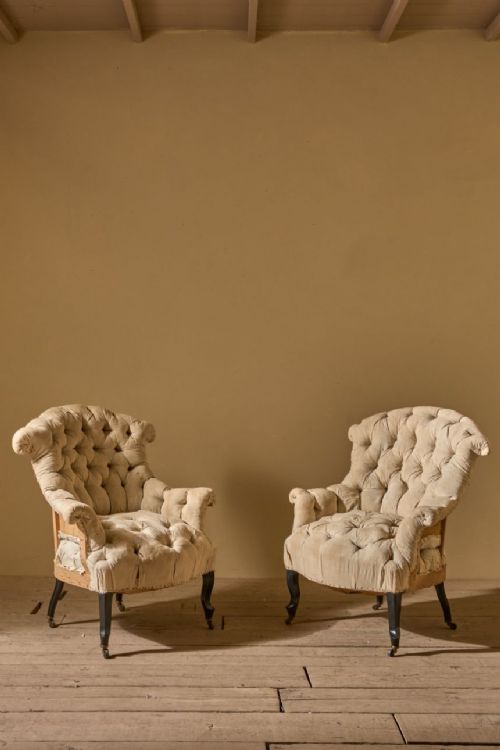
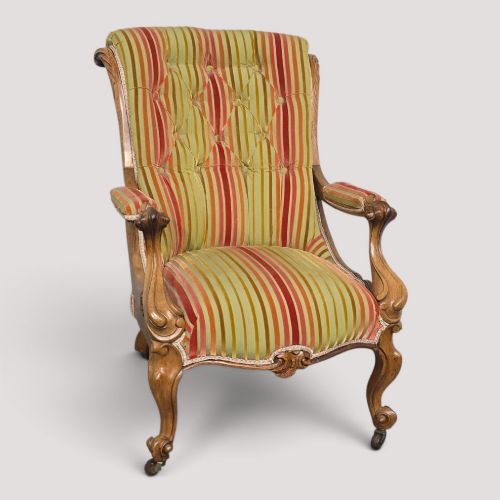
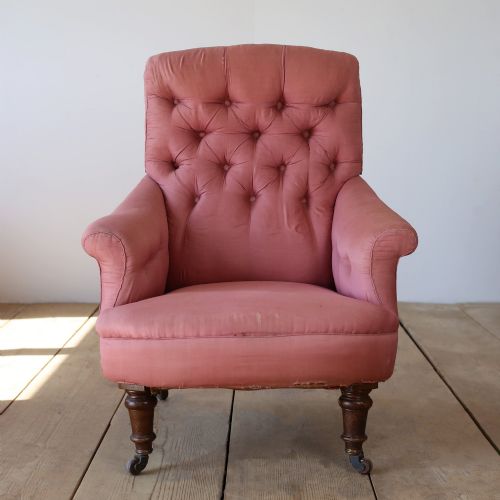
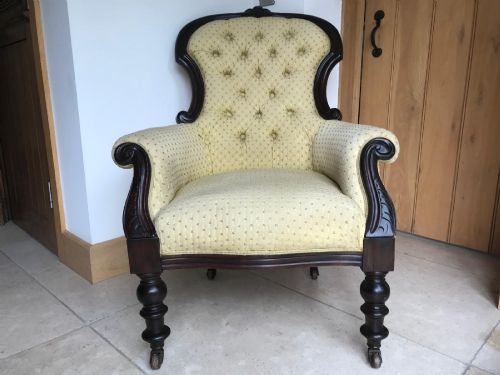
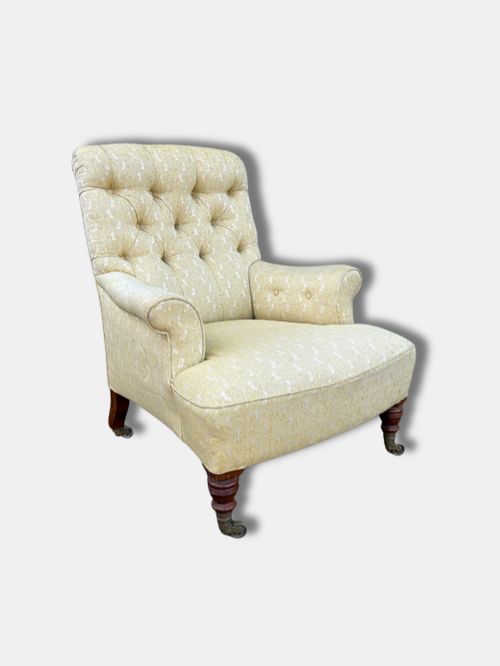
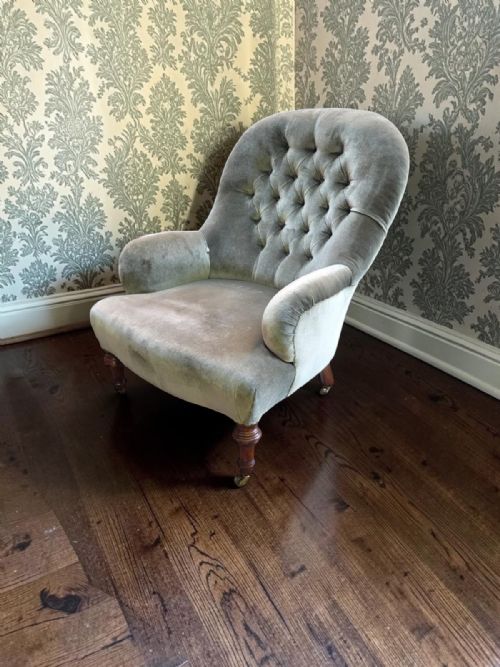
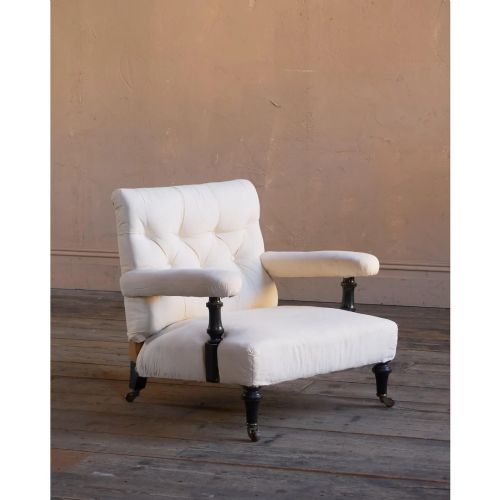
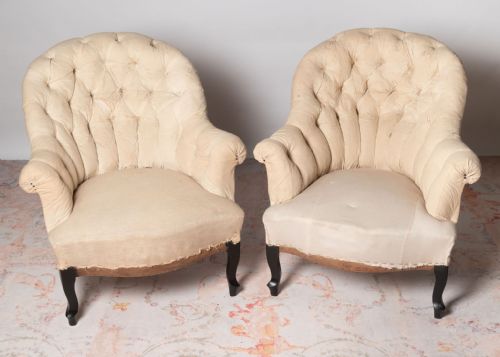
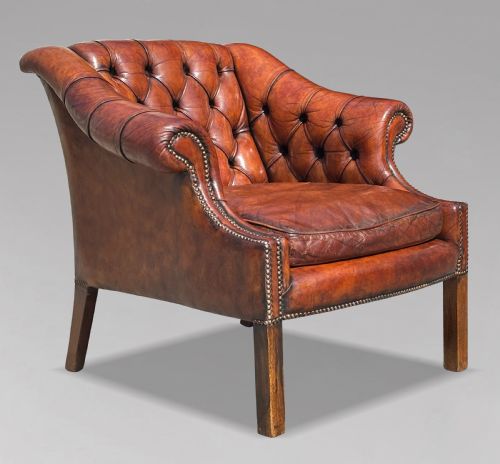
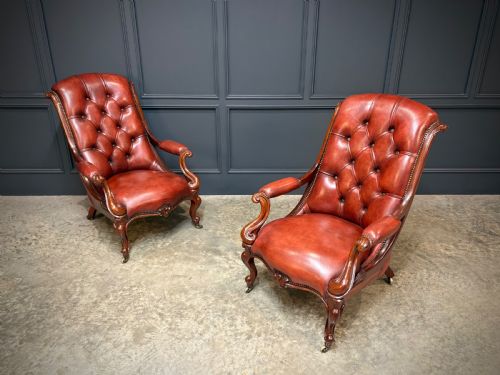
These deep buttoned accent chair examples bring rich Victorian character and comfortable low seating to a room.
Deep Buttoned Accent Chair
A deep buttoned accent chair offers low, supportive seating designed for bedrooms, libraries, and parlours, originating primarily from the nineteenth century. These pieces combine functional upholstery with decorative forms, appearing across Victorian, Edwardian, and Regency periods.
Most examples found here span armchairs, slipper chairs, and nursing chairs featuring characteristic tufted upholstery and turned or swept wooden frames. Makers varied the heights of the backs and the depth of the seats to suit different domestic spaces, from grand libraries to intimate dressing rooms.
Materials and construction methods
Frames rely on solid hardwoods like mahogany, walnut, and rosewood, carved or turned to support heavy sprung upholstery. Artisans shaped these timbers to create robust armchairs, slipper chairs, and library seating designed for daily use.
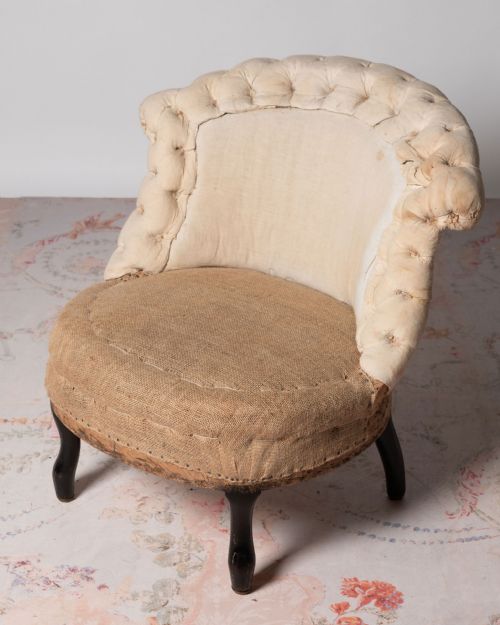
Upholstery combines traditional stuffing with durable leather, velvet, silk, or linen, secured by deep tufting and finished with brass detailing. This method pulls the fabric into dense folds that hold their shape over decades of use.
Listings feature eighteenth and nineteenth century periods, utilising mahogany, walnut, rosewood, leather, velvet, and brass across various armchair and slipper chair forms.
Factors determining quality
Quality rests in the integrity of the underlying hardwood frame and the precision of the spring suspension. A superior piece maintains its structural rigidity without wobble, whilst finer upholstery work shows even tufting tension across the entire back.
The choice of covering material and the finesse of the timber carving set exceptional examples apart from standard workshop production. Original leather or fine silk velvet upholstery reflects the higher tier of nineteenth-century manufacture.
Howard and Sons·Mellier and Co
The Deep Buttoned Accent Chair Glossary
- Button back
- An upholstery technique where indentations are formed in the padding by pulling twine tightly through to the frame and securing it with fabric-covered buttons. This method creates a diamond pattern across the backrest.
- Slipper chair
- A low-seated upholstered chair designed originally for a lady's bedroom or dressing room. The low frame made it easier to put on shoes.
- Library armchair
- A sturdy, comfortable seat designed for reading rooms, typically featuring upholstered arms and substantial padding. These pieces often utilise mahogany, walnut, or leather.
- Nursing chair
- A low chair traditionally used by mothers when nursing infants, usually featuring a buttoned back and an open frame without high arms. Victorian examples often pair this form with walnut or mahogany structures.
- Wingback armchair
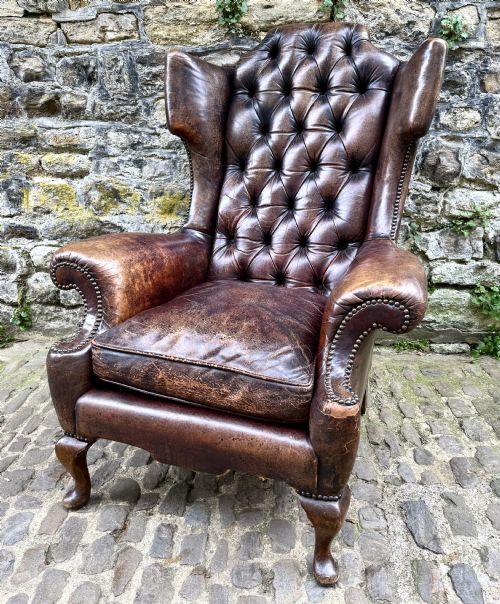
- A seat featuring projecting side panels designed originally to shield the sitter from draughts. The wings extend from the upholstered back down to the armrests.
Deep Buttoned Accent Chair: Frequently Asked Questions
What is a deep buttoned accent chair?
A deep buttoned accent chair is a low, upholstered seat featuring tufted upholstery pulled tight with buttons to create a textured diamond pattern across the backrest. These pieces encompass armchairs, slipper chairs, and nursing chairs from the nineteenth and early twentieth centuries.
They serve as decorative and functional seating in parlours, bedrooms, and libraries, combining turned wooden frames with sprung upholstery.
How do I date a Victorian button back chair?
Dating relies on examining the timber species, frame style, and upholstery construction methods used in the piece. Victorian examples frequently employ mahogany or walnut with turned legs and sprung interiors.
Later Edwardian iterations often feature lighter frames and specific upholstery fabrics like linen or velvet, reflecting the shift in interior tastes around nineteen ten.
Where should I place a slipper chair?
A slipper chair suits bedrooms, dressing rooms, and smaller parlour spaces due to its low seat height and compact proportions. Originally designed for comfort near a hearth or dressing table, it functions well as an occasional seat.
Pairing it with a desk or placing it in a corner provides functional seating without overwhelming the room.