


Decorative Wrought Iron Gates
These decorative wrought iron gates bring immediate architectural presence to a garden or entrance, offering heavy structural weight and enduring boundary definition.
Decorative Wrought Iron Gates
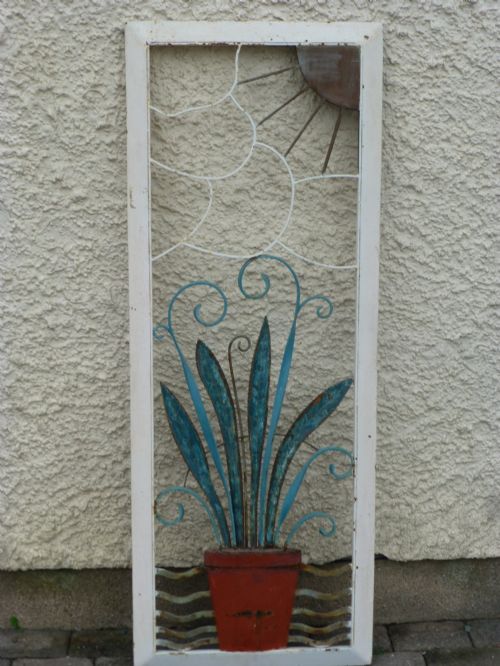
When you search for decorative wrought iron gates, you encounter substantial architectural salvage designed to secure and frame garden entrances and estate boundaries. The selection spans robust nineteenth-century strapwork estate gates alongside lighter twentieth-century forms bearing distinct stylistic influences.
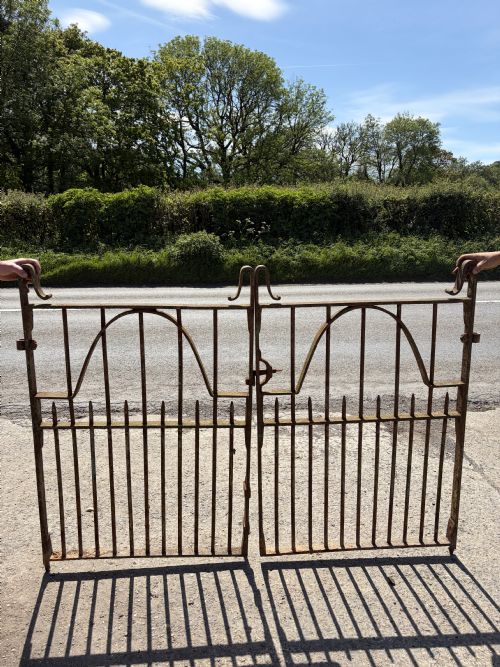
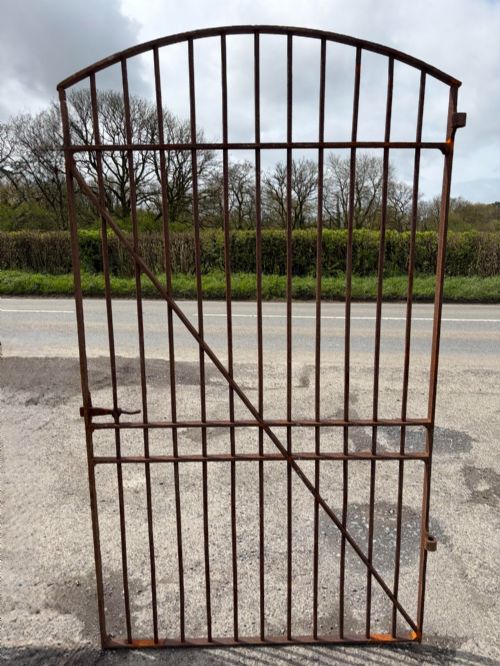
You are most likely to meet tall nineteenth-century arched examples and paired garden gates featuring scrollwork or trident details. Pieces from this range frequently show the marks of age through weathered patination on iron and steel surfaces.
How they were made
Blacksmiths forged these barriers using heavy wrought iron and steel, often incorporating riveted joints for structural rigidity. Bronze elements occasionally appear on specific twentieth-century screens alongside traditional ironwork.
Makers shaped the metal through hot forging, hammering strapwork into scrolls and geometric patterns to balance defensive strength with ornamental detail.
Some garden gates arrive equipped with sharp trident details, ensuring any trespassing medieval ghosts think twice.
What varies in quality
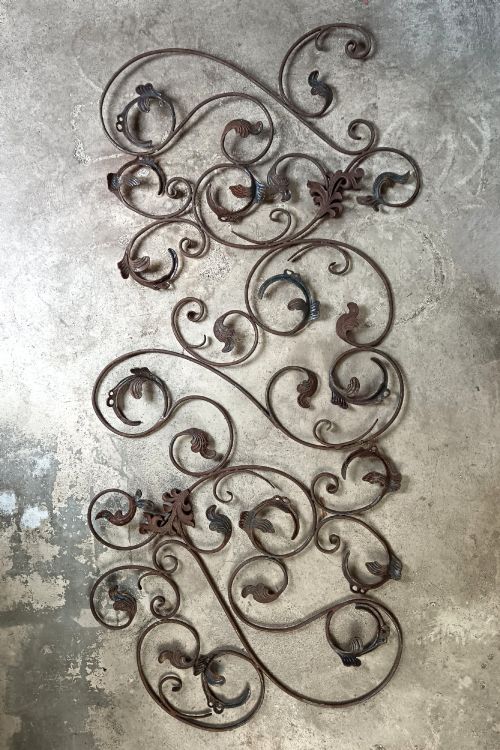
The distinction between standard examples and superior work lies in the complexity of the strapwork and the precision of the riveting. Elaborate scroll panels and distinctive hardware like trident motifs separate standard estate boundaries from exceptional architectural ironwork.
Proportion and scale dictate the visual impact, where taller arched designs and balanced pairs demonstrate greater architectural ambition than simpler utility barriers.
Raymond Subes
The Decorative Wrought Iron Gates Glossary
- Strapwork
- Flat strips of metal interwoven or riveted together to form structural patterns on gates. This technique provides both rigidity and decorative surface relief.
- Architectural salvage
- Building components rescued from older properties for reuse in new settings. These elements retain historical character and period manufacturing marks.
- Scroll panels
- Ornamental metalwork formed into spiral or curved motifs. They soften the heavy industrial nature of the iron.
- Riveted
- Joined together using metal bolts hammered flat while hot. This method ensures permanent, robust connections between heavy iron bars.
Decorative Wrought Iron Gates: Frequently Asked Questions
How do I hang heavy iron gates?
Hanging requires secure mounting directly into substantial brick or stone piers using heavy-duty adjustable hinges.
The considerable weight of nineteenth-century ironwork demands professional installation to prevent sagging over time.
Can I use these gates outdoors?
These pieces were originally built for exterior garden and estate use, enduring centuries of weathering.
Regular maintenance helps preserve the remaining historical surface against further oxidation.
How do I date a wrought iron gate?
Dating relies on identifying construction methods like riveting alongside stylistic clues such as Victorian strapwork or Art Deco motifs.
Heavier strapwork and arched tops typically point towards nineteenth-century production.
What is architectural salvage?
Architectural salvage encompasses reclaimed building elements rescued from older structures before demolition.
This practice preserves authentic period materials for contemporary gardens and restoration projects.