




Decorative Wooden Pedestals
These decorative wooden pedestals elevate sculpture, plants and lighting with the carved presence of Venetian, French and English workshops.
Decorative Wooden Pedestals
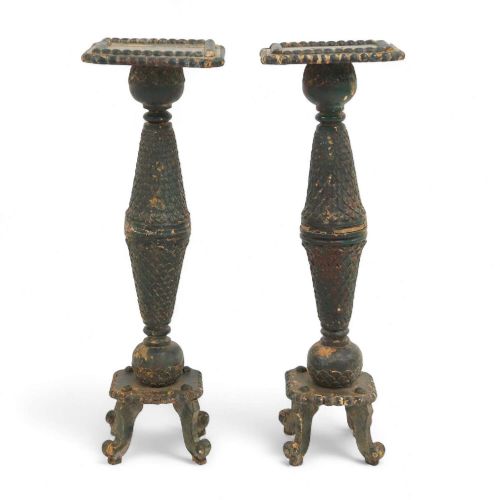
Decorative wooden pedestals serve to elevate figures, urns, planters and lamps within a room, drawing the eye upward through architectural form and surface ornament. When searching for decorative wooden pedestals, buyers encounter architectural columns, torcheres, figural stands and plant holders spanning multiple centuries.
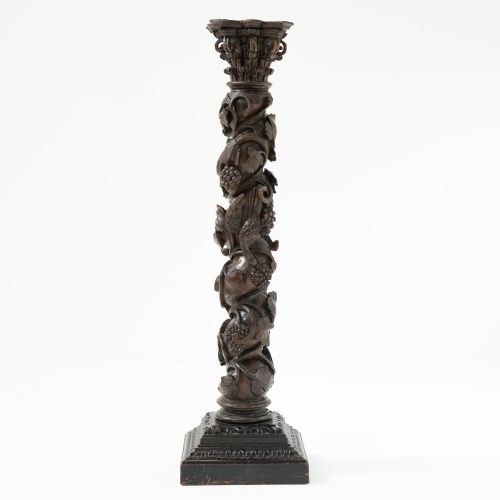
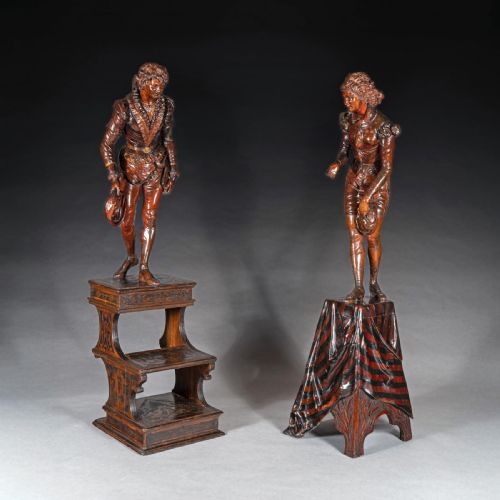
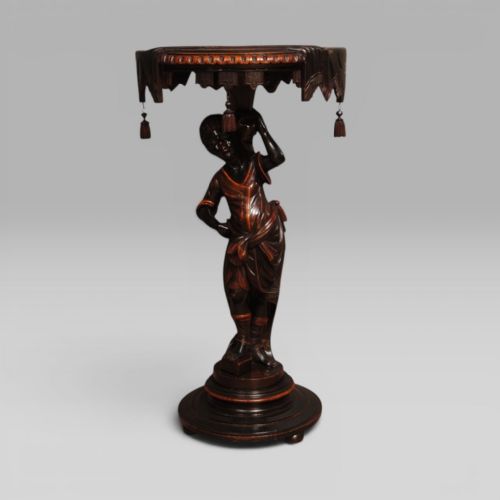
The selection ranges from eighteenth-century carved oak Solomonic columns and Italian parcel-gilt torcheres to nineteenth-century painted blackamoor figures, French chateau plant stands and twentieth-century art deco walnut columns. Many examples survive as matched pairs, designed to frame doorways, fireplaces or large artworks with balanced symmetry.
Origins stretch across European workshops, incorporating Venetian baroque carving, English oak coopered vessels, Scandinavian gilt finishes and French belle epoque planter stands. These pieces function simultaneously as independent sculptures and as sturdy platforms for displaying secondary objects of art.
How they were made
Maker's hands shaped these structures primarily from solid hardwoods such as oak, walnut, amboyna, satinwood and rosewood, often building up complex profiles with applied gesso and carved wooden elements. Structural stability required careful joinery, whether turning timber on a lathe for barley twist columns or cooperating staves for cylindrical planter stands.
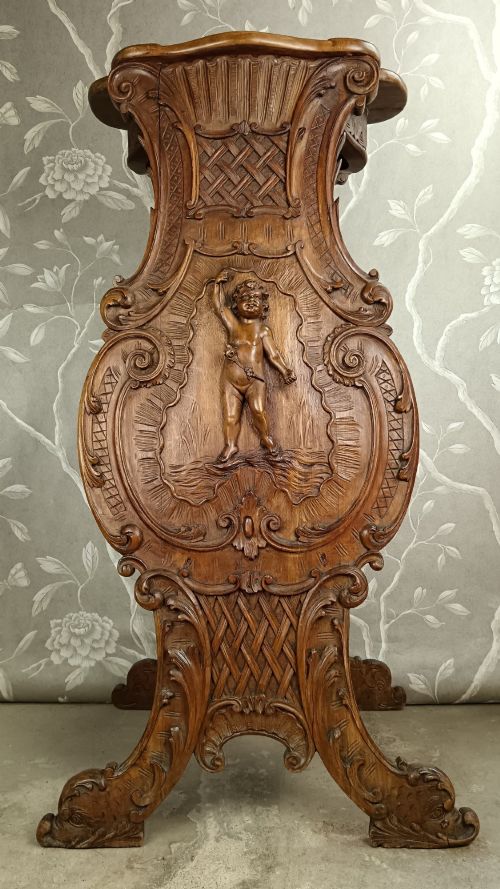
Surfaces received extensive decorative treatment rather than plain polish, utilising hand-mixed polychrome paint, oil gilding with gold leaf, ebonising and intricate marquetry inlays. Italian and French pieces frequently combined carved figures with gilt polychrome paint, whilst English and Scandinavian makers emphasised the natural grain of figured oak or walnut alongside painted highlights.
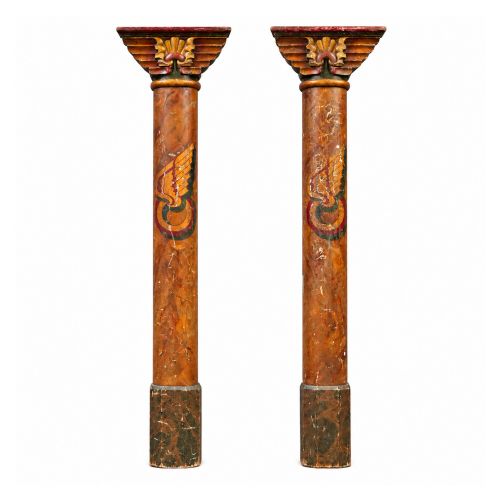
Edwardian fairground carousel columns stand ready to support home interiors with unexpected carnival energy.
What varies in quality
Quality rests upon the crispness of the hand-carved detail and the integrity of the original surface finish, distinguishing workshop masterpieces from standard production furniture. The depth of undercut carving on acanthus leaves, figures or Solomonic twists demonstrates the sculptor's mastery over the timber.
Originality of paint, gold leaf and polychrome decoration dictates the historical value, as later overpainting obscures the underlying hand of the maker. Proportions also govern the distinction between pieces, where grand scale columns maintain balanced weight distribution and structural rigidity beneath heavy loads.
Valentino Besarel·Marguerite
The Decorative Wooden Pedestals Glossary
- Torchere
- A tall stand designed specifically to support a lamp or candleholder. These slender columns often feature elaborate carved decoration and circular tops.
- Solomonic
- A column type characterised by a helical twist running down the shaft. This dynamic form creates strong vertical movement and catches light across carved wooden ridges.
- Polychrome
- Decorated in multiple colours. This paint technique brings life to carved wooden figures and architectural details.
- Gesso
- A plaster-like mixture applied to wood surfaces to provide a smooth base for gilding and painting. Artisans carve fine details directly into this layered preparation before applying gold leaf.
Decorative Wooden Pedestals: Frequently Asked Questions
What were decorative wooden pedestals used for?
These pieces served to elevate sculptures, candelabras, floral arrangements and ceramic planters above floor level to improve visibility within grand rooms. They functioned as permanent architectural furniture that anchored heavy decorative objects.
In domestic settings, paired columns framed doorways or focal points, whilst figural stands acted as independent pieces of art that held lamps or tables.
How do I tell an 18th century pedestal apart from a 19th century one?
Eighteenth century examples often display deep, hand-chiselled oak construction with classical architectural proportions such as Solomonic twists or simplified gilt wood profiles. Their carving shows the irregularities characteristic of pre-industrial hand tools.
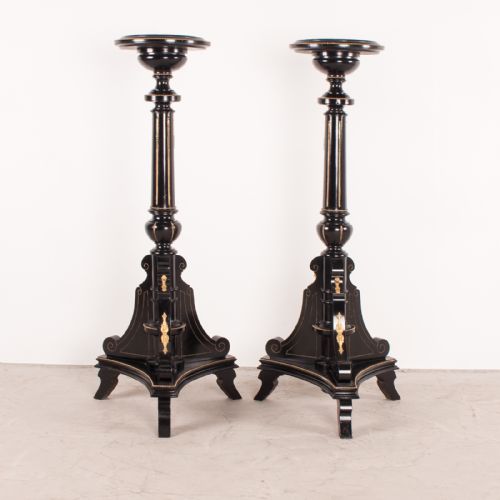
Nineteenth century pieces tend towards more complex revival styles, incorporating ebonised finishes, amboyna veneers, or elaborate polychrome figural work associated with Venetian and French workshops.
Are these pedestals strong enough to hold heavy plants?
Most antique pedestals and plant stands were built from solid hardwoods to support heavy lead or ceramic planters without flexing. Their internal structure is designed to bear significant downward vertical weight.
However, delicate figural stands or slender torcheres require careful placement on level flooring to prevent top-heavy tipping when carrying heavy items.