



Painted Wooden Columns
These painted wooden columns bring architectural weight and decorative presence into a room, shaped by hands across the nineteenth and twentieth centuries.
Painted Wooden Columns
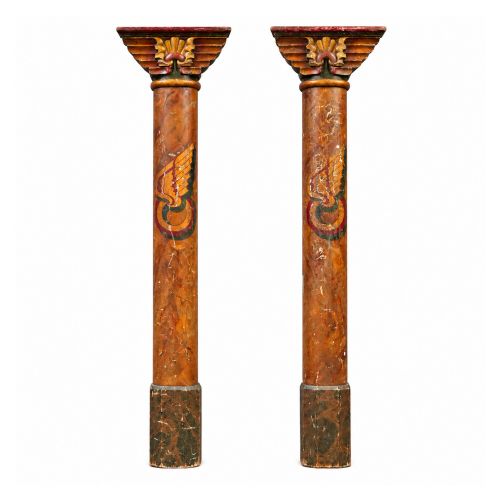
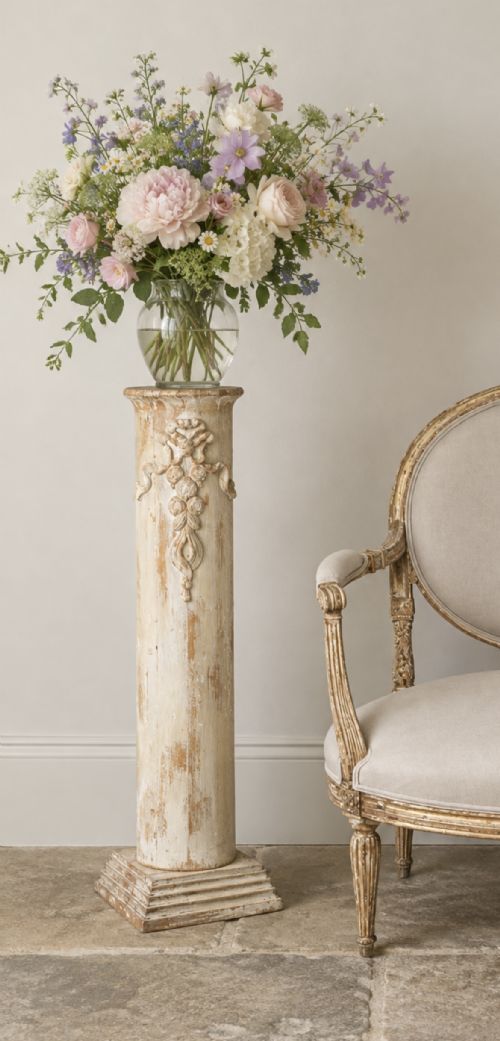
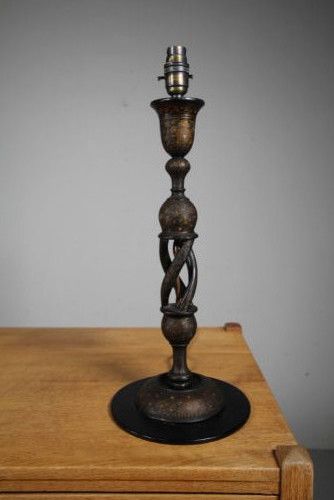
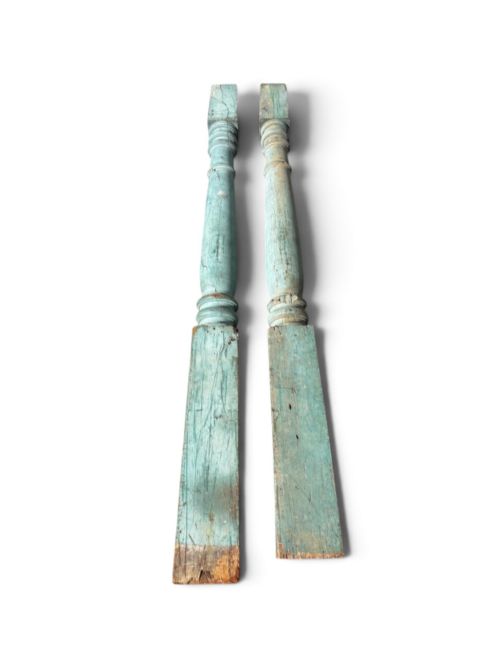
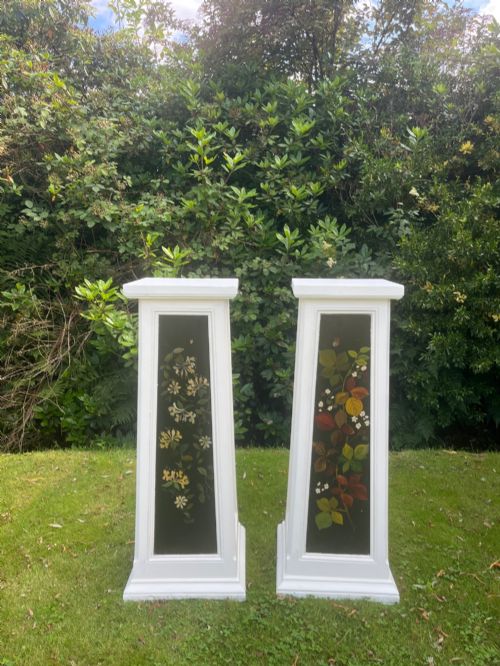
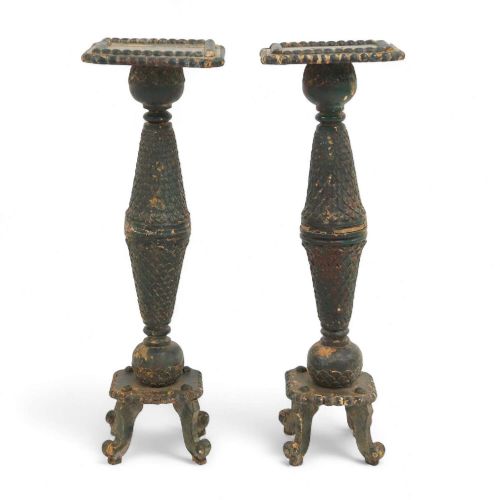
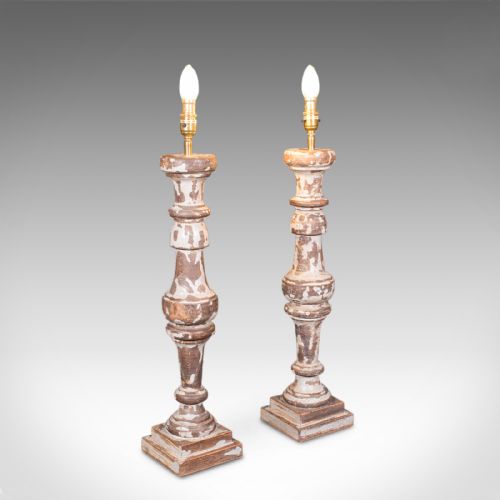
Painted wooden columns encompass architectural salvage, display pedestals, torchieres, and table lamps originating from English, French, Swedish, Italian, and Indian workshops. These pieces emerge from periods spanning the eighteenth century through the Edwardian era and the 1920s.
The inventory on this page ranges from grand scale architectural pillars and softwood portico columns to slender turned lamp bases and decorative sculpture stands. Many appear in pairs, designed originally to frame doorways, support busts, or elevate lamps in domestic and public spaces.
Makers and designers applied distinct regional vocabularies, visible in Gustavian white finishes, French faux marble effects, Anglo-Indian twist carvings, and vibrant fairground pigments. The resulting objects blur the line between structural salvage and freestanding decorative sculpture.
Materials and Construction
Carpenters and joiners shaped these columns from native pine, softwood, hardwood, and stone-and-wood combinations, utilising lathe turning and hand carving. Structural integrity relied on solid timber construction, sometimes incorporating internal bracing or hollow cores for architectural installation.
Surfaces received layers of gesso, gold leaf, and lead- or oil-based paints, frequently finished with decorative schemes imitating marble, such as verde antico. Over generations, these coatings weathered naturally, retaining original green, cream, black lacquer, or distressed polychrome patinas.
The selection includes architectural salvage alongside functional lighting, spanning the eighteenth century through the 1920s.
Evaluating the Pieces
Quality rests upon the integrity of the original paint surface and the depth of the underlying carved detail. Pieces retaining untouched historical finishes - whether simulated marble or aged polychrome - carry greater character than later repainted examples.
Proportion and scale dictate utility, separating sturdy architectural columns from lighter display torchiere stands. Well-executed turned profiles and balanced proportions reflect the skill of the original workshop.
Marguerite
The Painted Wooden Columns Glossary
- Torchere
- A tall ornamental stand designed to support a lamp, candle, or decorative object. These slender wooden pillars often feature carved shafts and tripod or circular bases.
- Gesso
- A plaster-like mixture applied to wood surfaces to prepare them for painting or gilding. It provides a smooth base for intricate decorative details.
- Verde Antico
- A simulated marble finish created through decorative paint techniques. Artisans use layered pigments on wood to imitate dark green antique stone.
- Portico
- An architectural porch structure supported by columns. Salvaged elements from these structures often form the basis of decorative interior pillars.
Painted Wooden Columns: Frequently Asked Questions
How were painted wooden columns used historically?
These columns served both structural and decorative roles in period interiors. Architectural examples framed doorways and mantels, while pedestals and torchiere stands elevated sculptures, lighting, and floral arrangements.
Larger scale pieces acted as focal points in grand reception rooms. Smaller turned columns and lamp bases brought architectural gravitas to domestic tabletops.
How do I care for an antique painted surface?
Preserving original paint requires avoiding harsh chemical cleaners and modern polishes. Gentle dusting with a dry, soft cloth protects fragile layers of gesso and pigment.
Keep wooden columns away from direct heat sources and strong sunlight to prevent the underlying timber from warping and the historic paint from flaking.
Can architectural columns support structural weight today?
Most antique columns listed as decorative pedestals, torchiere stands, or lamp bases are unsuited for modern load-bearing architectural functions. Architectural salvage pieces intended for porticos require professional assessment before structural installation.
Treat freestanding wooden columns primarily as decorative display objects or sculptural furnishings rather than structural supports.
How can I distinguish a nineteenth century column?
Nineteenth century pieces display distinct joinery methods, such as hand-turned lathe marks and older fastener types. Tool marks and timber shrinkage offer clues to age.
Surface patination provides further evidence, as genuine nineteenth century paint layers show natural craquelure and wear that modern reproductions struggle to replicate.