





Decorative Wall Display Plates
These decorative wall display plates bring colour, pattern and historical narrative to an interior.
Decorative Wall Display Plates
Decorative wall display plates span centuries of ceramic and metal craftsmanship, originating from traditional English, French, Dutch, Italian and Japanese workshops. Collectors encounter earthenware chargers, bone china dessert services, porcelain cabinet plates and metal display trays meant to be hung or mounted.
Buyers choose these objects to introduce focal points into a room, utilising their rich glazes, armorial crests and pictorial scenes. They function equally well displayed singly or grouped in sets across a wall.
Materials and Technique
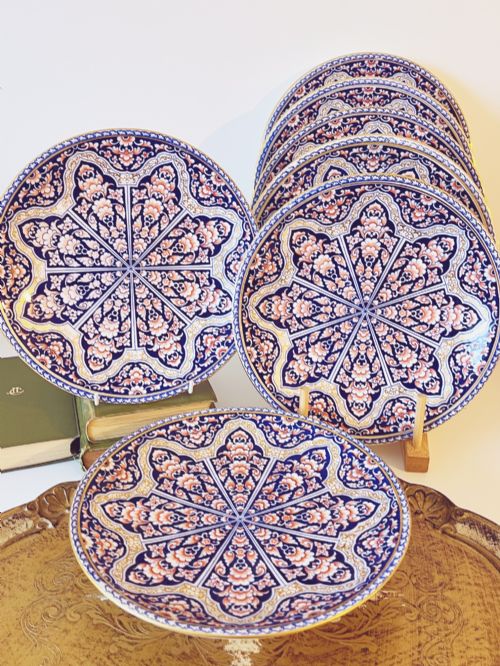
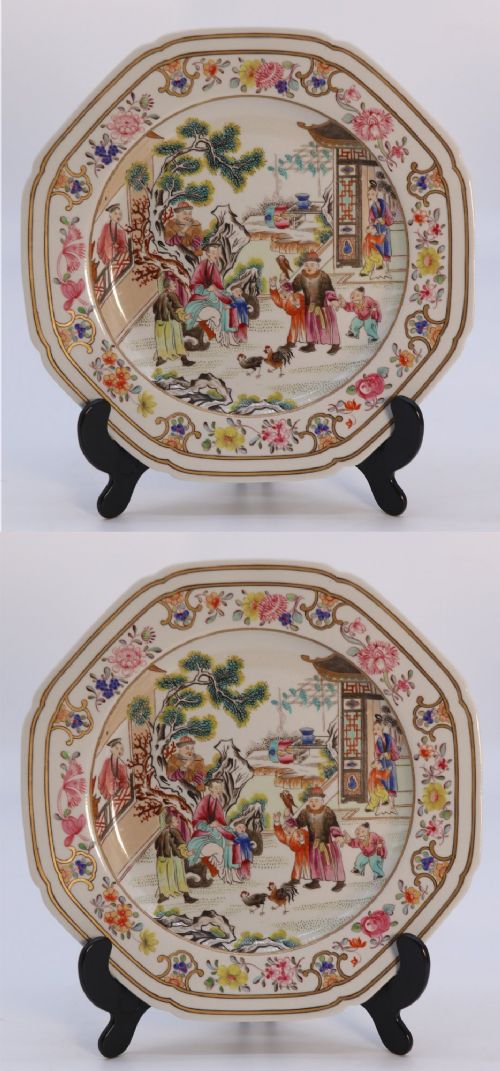
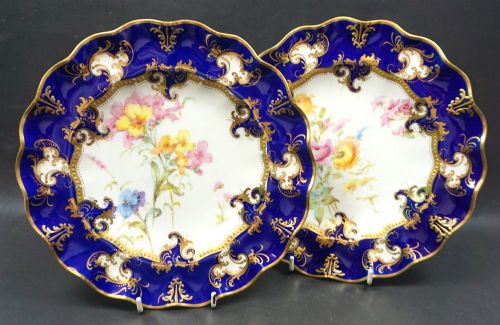
Potters and artisans utilised porcelain, ceramic, bone china and earthenware as the foundational bodies for these plates. Techniques involve intricate cobalt blue underglaze painting, polychrome enamel application, and hand-painted gilt highlights using gold leaf.
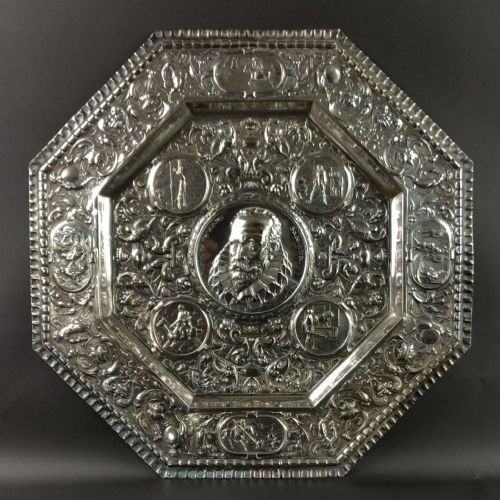
Metal alternatives employ brass and copper shaped through repoussé work or finished with Japanese cloisonné enamel, fusing glass powders onto metal wires to depict birds, flora and fauna.
Masterpiece cloisonné chargers capture permanent gardens of chrysanthemums watched over by observant ceramic frogs.
Distinctions in Quality
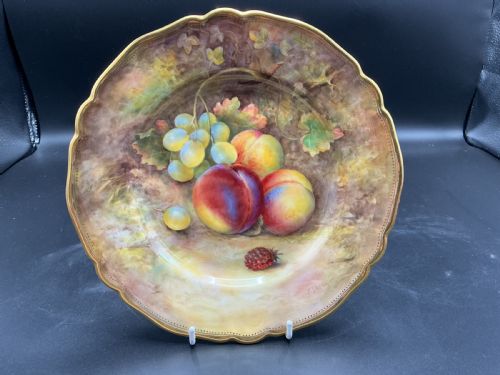
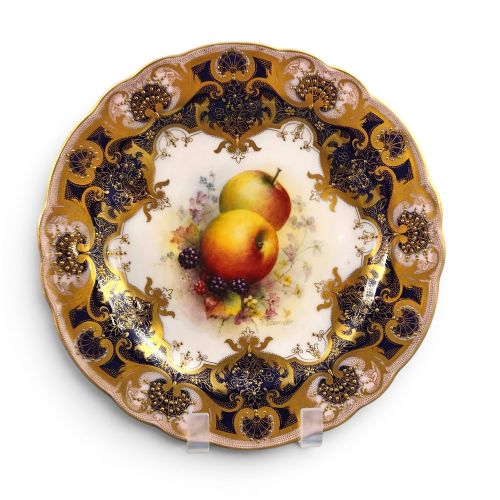
Quality rests primarily on the precision of the hand-painting and the complexity of the design, such as signed artist work on painted fruit plates or detailed cloisonné wirework. Early examples demonstrate superior weight, depth of glaze and crispness in transfer printing or hand-applied enamels.
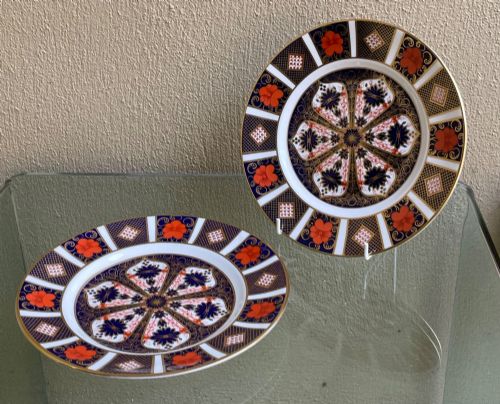
Royal Crown Derby·Royal Worcester·Copeland·Spode·Coalport
The Decorative Wall Display Plates Glossary
- Charger
- A large decorative plate, traditionally larger than a standard dinner plate, intended primarily for display on a wall or sideboard rather than dining use.
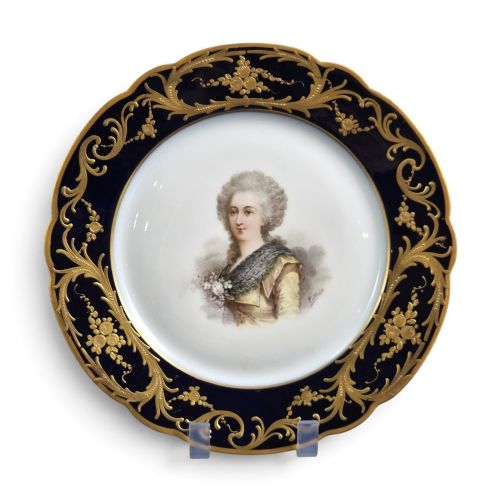
- Cabinet Plate
- A fine decorative plate made for display in a cabinet or on a wall rather than practical service, often featuring elaborate hand-painted scenes.
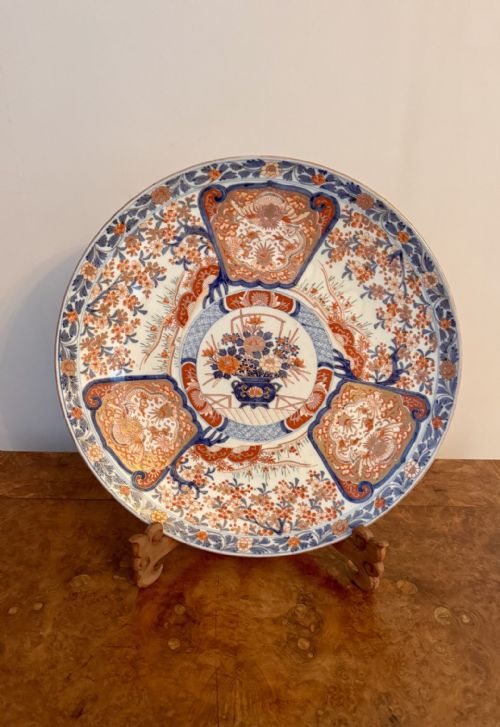
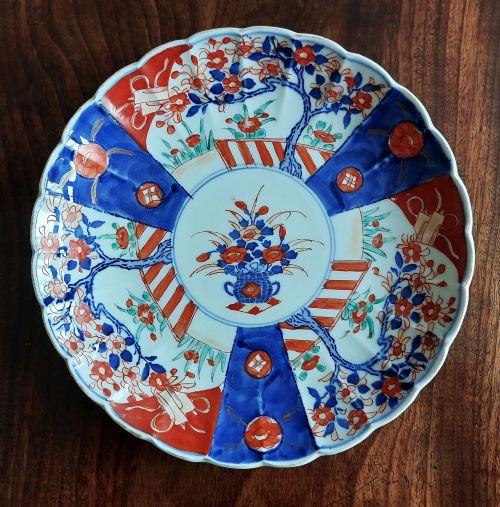
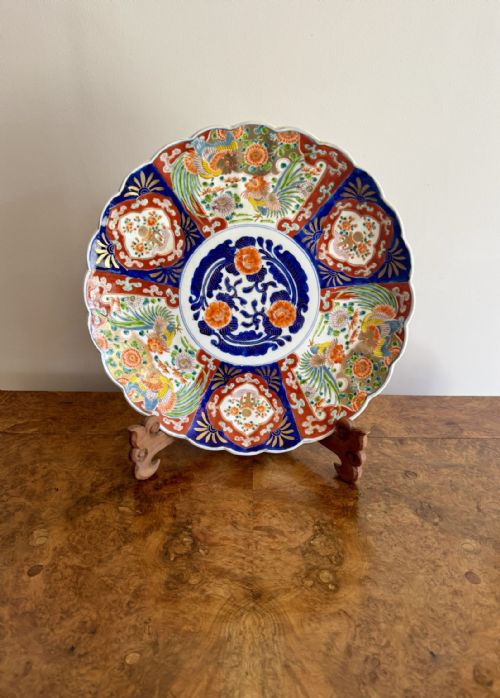
- Imari
- A style of Japanese porcelain featuring a distinct palette of underglaze blue, iron red, and gilt, which heavily influenced European potteries.
- Cloisonné
- A metalwork technique where enamel is applied to compartments created by soldering flat metal wire to a metal base.
- Repoussé
- A metalworking technique where a malleable metal is hammered from the reverse side to create a raised design in relief.
Decorative Wall Display Plates: Frequently Asked Questions
How do I hang decorative wall display plates safely?
Plates require specialised spring-loaded brass hangers that grip the rim securely without damaging the ceramic body or glaze. Ensure the wall fixing matches the weight of larger earthenware or metal chargers.
Position plates away from direct sunlight and heavy foot traffic to protect the enamel surfaces and historical glazes from accidental knocks.
Can these antique plates still be used for dining?
Most pieces intended for display feature delicate overglaze enamel painting or soft earthenware bodies that sustain damage from cutlery and modern dishwashers. Older glazes can contain lead, making them unsuitable for serving food.
Enjoy these objects purely as visual art on walls or within cabinets rather than utilitarian tableware.
How do I identify Japanese Imari from European copies?
Japanese Imari porcelain typically exhibits a slightly grainy paste, spontaneous brushwork, and characteristic spur marks on the unglazed base. The palette relies on deep cobalt blue combined with rust red and generous gold leaf.
European factories like Royal Crown Derby adopted the aesthetic later, producing refined bone china bodies with precise, uniform factory marks.
What is the difference between a charger and a cabinet plate?
Chargers are substantially larger, often measuring over thirty centimetres across, and were historically designed as decorative base plates or wall ornaments. Cabinet plates are smaller, highly finished porcelain items created specifically to showcase elite painting skills.
Both serve as wall display items today, but chargers dominate a space with bolder patterns.