





Decorative Temple Jars
Decorative temple jars bring vivid colour and scale to a room, drawing the eye with rich palettes and intricate patterns.
Decorative Temple Jars
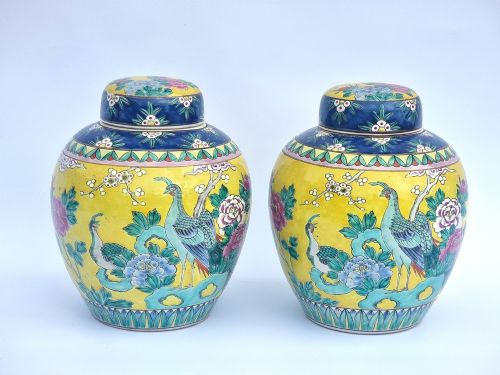
Decorative temple jars encompass large lidded vessels originating from Chinese and Japanese traditions, spanning periods from the late Edo and Meiji eras through the nineteenth century. These striking pieces frequently take the form of ginger jars, monumental floor vases, and covered urns designed to command attention in a space.
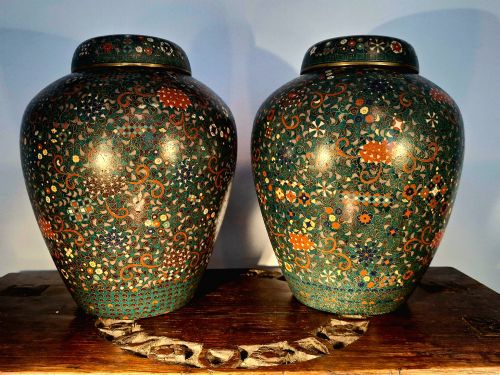
The versions most commonly met on this page include nineteenth-century Japanese Imari porcelain jars alongside intricate cloisonne enamel lidded vessels. Buyers also encounter Chinese blue and white porcelain and Famille Rose examples bearing historical marks.
Materials and construction
Potters shaped these decorative temple jars from fine porcelain, applying detailed overglaze enamel, blue and white pigments, or gold leaf to achieve striking visual depth. Artisans also constructed substantial metal bodies for cloisonne pieces, fusing enamel pastes within soldered wire cells.
Painters utilised rich Imari palettes, combining cobalt blues and iron reds with gilt highlights across the curved surfaces of covers and bodies. Craftsmen fired these ceramics and enamels at high temperatures to secure permanent vibrancy in the finishes.
Decorative Temple Jars Retail Price Guide 2026
Typical asking prices for decorative temple jars among the pieces listed under this phrase on Sellingantiques today, from the lower quarter to the upper quarter. They describe what is for sale here now, not the wider market.
Listings feature nineteen-century porcelain, cloisonne enamel, and brass materials spanning Meiji, Edo, and Qing periods.
Distinctions in craftsmanship
The fineness of the painted detail and the precision of the enamel work distinguish superior decorative temple jars from simpler productions. Master painters achieved sharper lines and more complex motifs, whereas lesser examples display hurried brushwork.
Weight, symmetry of the ceramic body, and the crispness of gilt or metal wire borders further separate the finer specimens. Well-preserved surfaces retain their original gloss and colour intensity without excessive fading or loss.
The Decorative Temple Jars Glossary
- Imari
- A traditional Japanese style of porcelain decorated in underglaze blue and overglaze red, green, and gold. This palette creates a vibrant contrast across the surface of lidded jars.
- Cloisonne
- A technique where enamel is applied to compartments created by soldering metal strips onto a metal base. The piece is then fired and polished to a smooth finish.
- Ginger jar
- A ceramic vessel characterised by a wide body, rounded shoulders, and a fitted lid. Originally used for storing spices, these forms became staples of decorative display.
- Famille Rose
- A Chinese ceramic palette featuring an opaque pink or rose enamel introduced during the Qing Dynasty. This style allowed for delicate, painterly floral and figural scenes.
- Meiji Period
- An era in Japanese history spanning from 1868 to 1912 noted for expansive decorative arts output. Works from this time often exhibit exceptional technical mastery.
Decorative Temple Jars: Frequently Asked Questions
How were decorative temple jars originally used?
These large lidded vessels served primarily to store precious commodities such as spices, tea, and ginger in domestic and ceremonial settings. Over time, wealthy households adopted them purely as decorative focal points for mantelpieces and large rooms.
Today, their substantial scale and striking ornamentation make them ideal for placement on side tables, pedestals, or floor positions where they can anchor a room's design.
Are these jars stable for everyday display?
Most decorative temple jars possess heavy ceramic or metal bodies that provide a stable base when placed on level furniture. Their substantial lids remain secure under normal household conditions.
Placement in high-traffic hallways or near active children requires care to prevent accidental bumps, given the fragile nature of historic porcelain and enamel.
How should I clean my temple jar?
Dusting gently with a soft, dry microfibre cloth suffices for routine maintenance of both porcelain and cloisonne surfaces. Avoid chemical cleaners or abrasive pads that can damage delicate gold leaf or overglaze enamels.
Moisture should be kept away from unglazed foot rims and metal wirework to prevent corrosion or staining over time.