


Decorative Tea Box
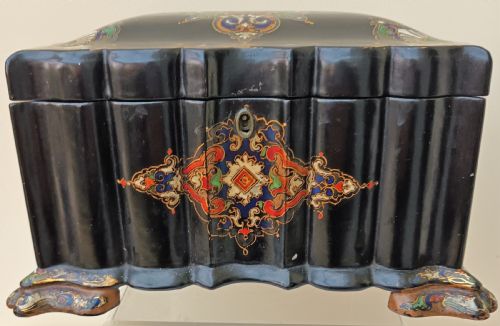
These decorative tea box examples span Georgian, Regency and Victorian periods, offering refined lidded timber and metal receptacles designed to store and preserve costly dry leaf.
Decorative Tea Box
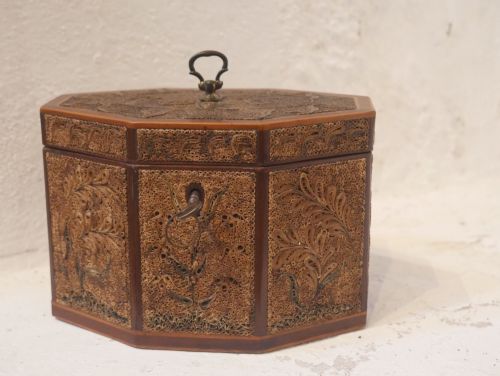
A decorative tea box satisfies the historical need to store dried leaves safely while displaying taste within the parlour. These vessels range from straightforward rectangular wooden containers to sarcophagus forms and paper filigree creations.
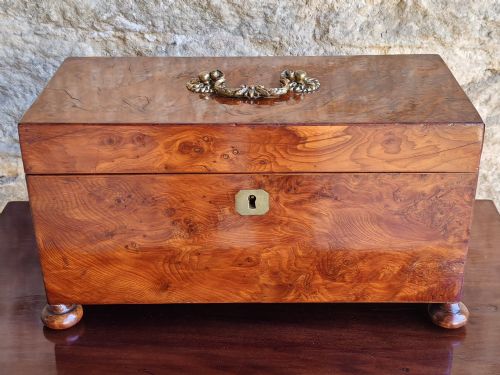
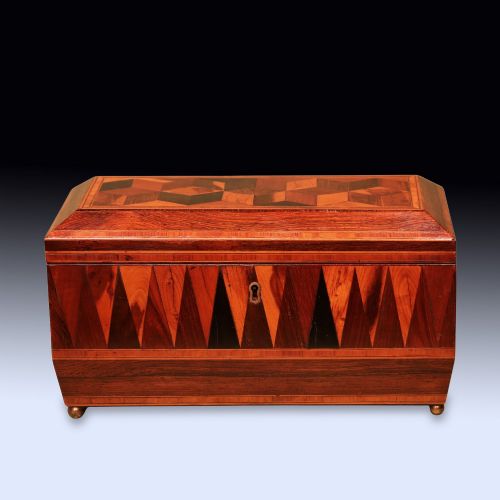
The versions met most frequently on this page belong to the Georgian and Regency eras, constructed in mahogany, rosewood and satinwood, often featuring fitted interiors for multiple canisters.
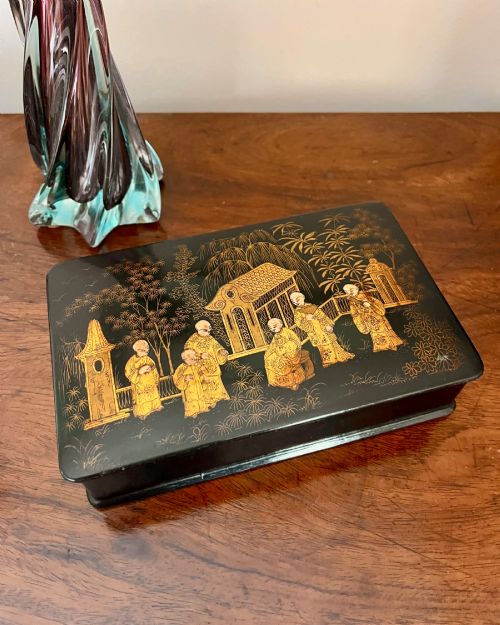
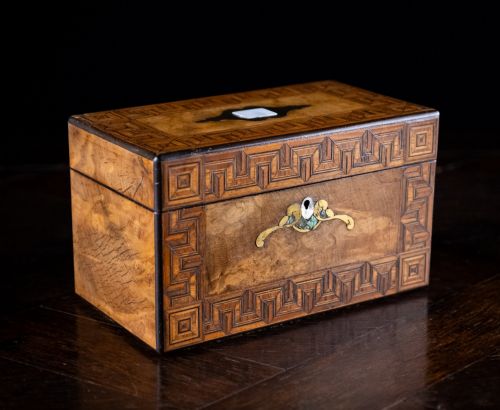
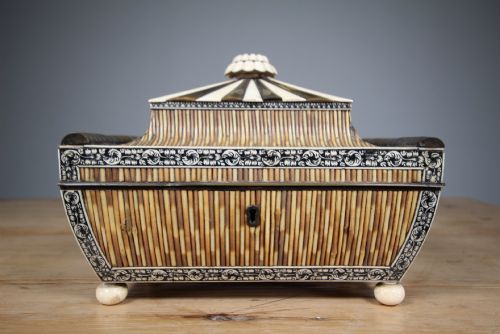
Makers utilised various decorative techniques including marquetry, parquetry, brass inlay and lacquer work to elevate simple storage into high status objects. Some examples incorporate mother-of-pearl, bone and tortoise shell detailing alongside original glass mixing bowls.
Materials and Construction
Cabinetmakers constructed these bodies using native timbers like mahogany, walnut and yew, alongside imported exotics such as rosewood, padouk and coromandel.
Surface ornamentation relied on precision veneer work, boxwood stringing, brass stringing and mother-of-pearl inlay, complemented occasionally by gesso decoration or chinkiang lacquer.
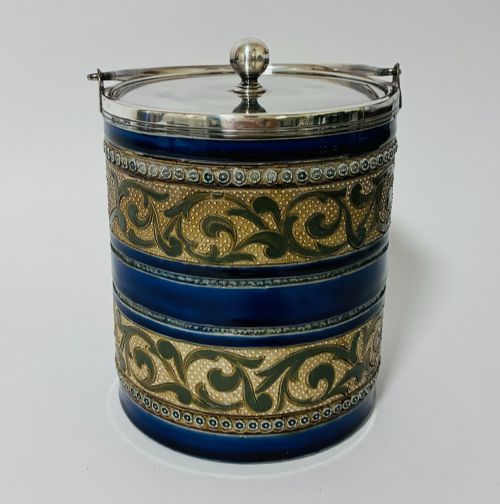
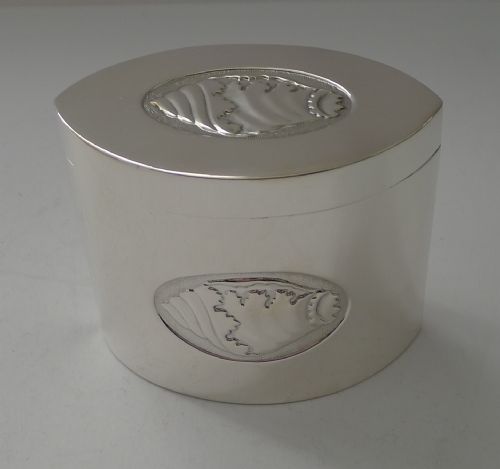
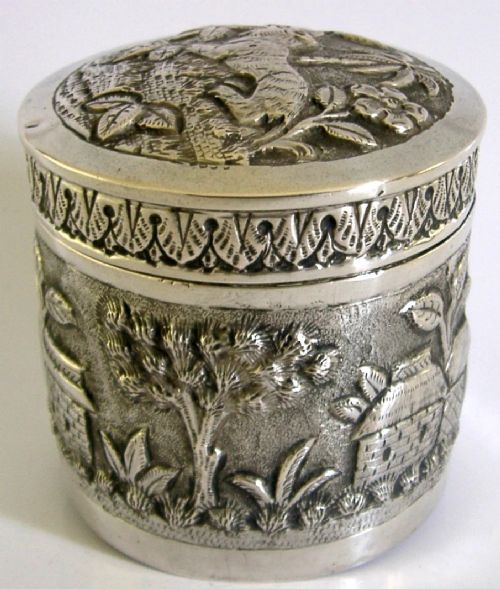
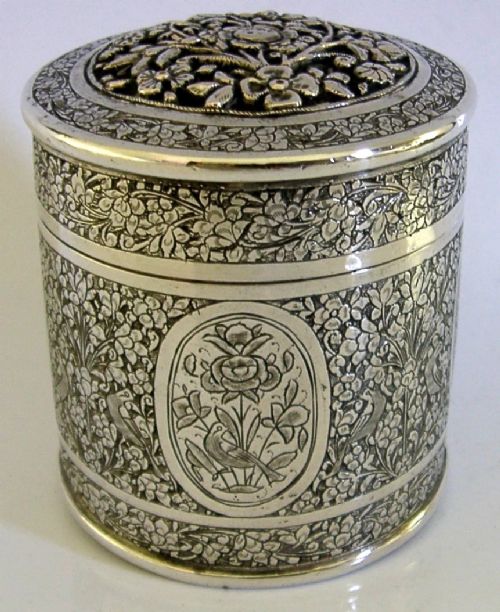
Silversmiths produced alternative versions in solid sterling silver, while ceramicists and metalworkers combined pottery with silver plating for biscuit barrels and allied jars.
Materials recorded across the inventory include brass, wood, rosewood, bone, mahogany, boxwood, metal and satinwood.
Distinctions in Quality
Quality rests upon the precision of the timber matching and the intricacy of the parquetry, marquetry or boulle work applied to the exterior carcase.
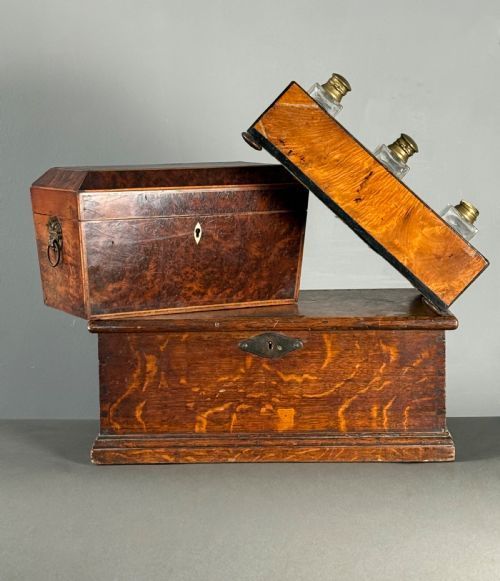
The survival of internal components, such as wooden canisters, fitted mixing bowls, keys and operating locks, elevates the standing of an individual piece.
Structural integrity of delicate paper scrollwork, tortoise shell panels or lacquer determines the enduring worth of more fragile examples.
Tahan of Paris
The Decorative Tea Box Glossary
- Sarcophagus shape
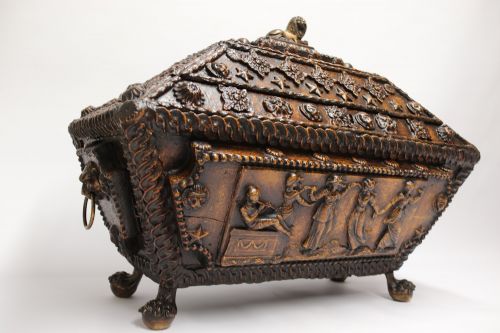
- A sloping, pedestal-mounted box form popular during the Regency period. This profile emulates classical stone tombs with stepped lids.
- Parquetry
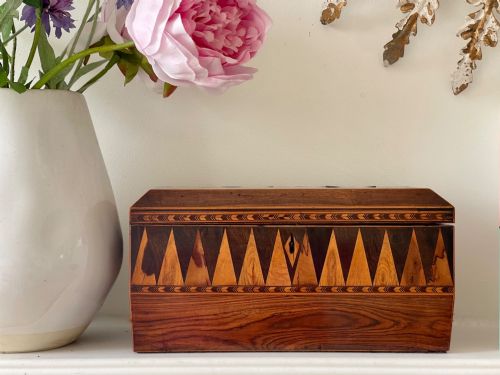
- Geometric mosaic woodwork created by fitting small wood veneers together. It forms repeating patterns across the exterior surfaces.
- Navette
- A pointed oval shape resembling a little boat. Georgian craftsmen applied this outline to specific scrollwork containers.
- Boulle
- Marquetry style combining tortoiseshell and brass inlay. It takes its name from the French cabinetmaker associated with Louis XIV.
- Stringing
- Thin inlaid lines of contrasting timber or metal. This technique outlines panels and edges on quality cabinetry.
Decorative Tea Box: Frequently Asked Questions
How were tea caddies used?
These receptacles held valuable loose leaves under lock and key to prevent pilfering by household staff. The host measured out portions using integrated spoons while guests sat in the parlour.
Interior compartments kept green and black varieties separate, while central glass bowls served for blending leaves or holding sugar.
What woods are common?
Cabinetmakers selected rich tropical and native timbers for their grain patterns and colour depth. Mahogany, rosewood and walnut appear frequently across Georgian and Victorian editions.
Exotic additions like amboyna, coromandel, padouk and gonçalo alves highlight pieces intended for wealthier patrons.
How do I date a box?
Stylistic shifts provide primary clues, moving from mid-eighteenth-century mahogany block forms to Regency sarcophagi and Victorian coromandel brass-mounted constructions. Secondary indicators include hinge types, lock mechanisms and internal lining materials.
Detailed marquetry, parquetry and paper filigree also align with specific manufacturing decades between the Georgian era and the twentieth century.
Are interiors usually complete?
Survival rates for internal components vary across the surviving inventory. Some retain original wooden inner lids, glass mixing bowls and mixing sticks.
Others show alterations or missing canisters resulting from centuries of domestic use and reconfiguration.