



Decorative Silver Ornaments
These decorative silver ornaments bring character and historic metalwork into a room, offering everything from whimsical animal figures to fine picture frames.
Decorative Silver Ornaments
Decorative silver ornaments encompass a varied selection of small sculptures, table figures, dishes and desk accessories designed to adorn domestic spaces. When searching for decorative silver ornaments, buyers encounter diverse forms ranging from animal figures and pin cushions to picture frames and architectural models.
The pieces available originate from various eras, spanning the Victorian period through the Edwardian years and into the Art Deco and Mid-Century movements. Continental and British examples demonstrate how different workshops approached metalwork across the late nineteenth and twentieth centuries.
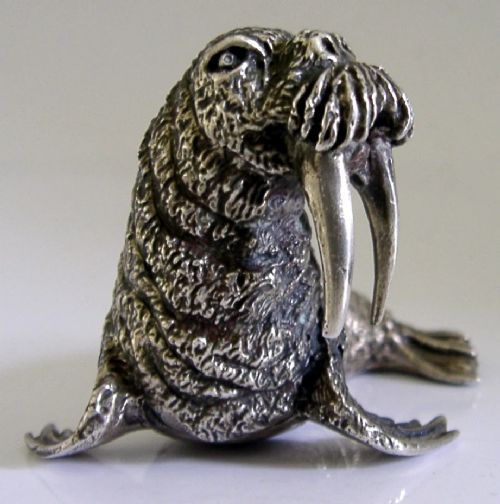
Figurative subjects dominate the selection, including birds, marine animals, equestrian items, and human figures derived from classical or theatrical themes. Alongside solid metal works, composite pieces incorporate materials such as marble, onyx, velvet, and glass to create distinct decorative objects.
How they were made
Makers utilised solid sterling silver alongside silver plate and silvered bronze, casting and shaping the metal to achieve fine surface detail. Figures and vessels often relied on traditional casting methods, allowing artisans to render realistic textures in feathers, fur, and costume.
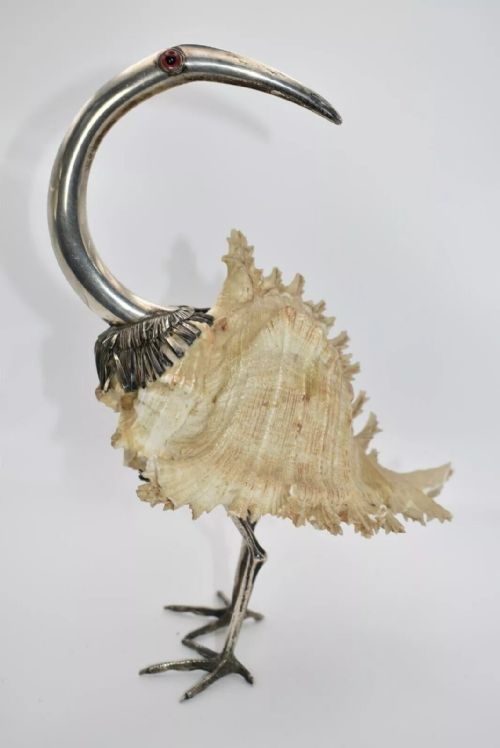
Many items incorporate contrasting support materials to enhance their visual appeal, mounting metal figures upon bases of marble or onyx, or backing picture frames with blue velvet. Mixed media creations also appear, combining silver with natural elements like sea shells.
Listings feature materials including silver, sterling silver, silver plate, silvered bronze, velvet, glass, marble, and onyx across various object types.
What varies in quality
The standard of modelling defines the finer examples, where anatomical accuracy and facial expression in figurative pieces show greater precision and artistry. Casts with crisp, deep chasing display the hand of the artisan more clearly than simplified or mass-produced alternatives.
The integration of secondary materials also separates standard production from superior pieces, particularly where marble bases, fitted glass inserts, or velvet backings complement the metalwork without clumsiness.
Josef Lorenzl·Pierre le Faguays·Gabriella Binazzi
The Decorative Silver Ornaments Glossary
- Sterling silver
- A standard alloy consisting of ninety-two point five percent silver and seven point five percent other metals, usually copper. This composition provides the durability required for detailed decorative items.
- Silvered bronze
- A bronze core treated with a surface layer of silver, often seen in Art Deco figures and animal studies. This technique offered the sculptural qualities of bronze with the appearance of solid silver.
- Silver plate
- A base metal coated with a thin layer of silver through electroplating or older methods. It allowed larger decorative forms to be produced at a lower material cost.
- Pin cushion
- A small domestic accessory, frequently modelled as an animal or object like a sledge, incorporating a fabric pad for pins. Victorian examples combined functional use with ornate silver bodies.
- Chasing
- A metalworking technique where an artisan depresses the metal surface with a hammer and punches to create low-relief designs and textures. It is used to finish cast figures and vessels.
Decorative Silver Ornaments: Frequently Asked Questions
What periods do these silver ornaments come from?
The pieces span from the late nineteenth century through the Edwardian era, the Art Deco period of the 1920s and 1930s, and into Mid-Century modern designs of the 1950s and 1960s.
Victorian and Continental Victorian works sit alongside later modernist interpretations, reflecting changing aesthetic preferences across generations.
How do I care for silver and silvered bronze?
Solid silver requires periodic cleaning with a soft cloth and appropriate polish to remove tarnish without abrading the surface details. Silvered bronze objects should be dusted gently, avoiding harsh chemical polishes that can damage the delicate surface layer.
Keeping items away from high humidity and direct sunlight helps preserve both the metal and any secondary materials like velvet or marble.
Are these items solid silver?
The selection includes items made from solid sterling silver, silver plate, and silvered bronze over a base metal core. Individual listings specify the primary material used for each piece.
Marks and hallmarks often appear on sterling items to indicate purity and origin, whilst bronze pieces rely on cast metal techniques.
What materials are used alongside silver?
Many decorative objects incorporate contrasting materials to enhance their design, including marble and onyx bases for figurative sculptures. Glass, velvet, and even sea shells also appear in specific pieces like photo frames, pin cushions, and bird sculptures.
These additions provide structural support and colour contrast to the metallic elements.