





Decorative Porcelain Set
A decorative porcelain set brings coordinated colour and refined craftsmanship to a room, offering everything from matching dining plates to multi-piece mantel garnitures.
Decorative Porcelain Set
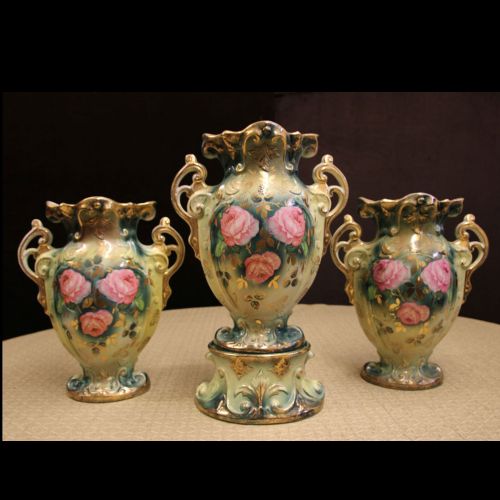
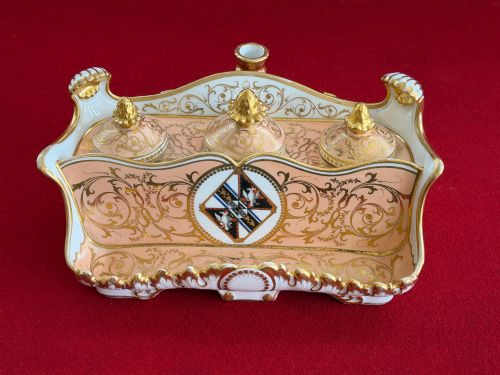
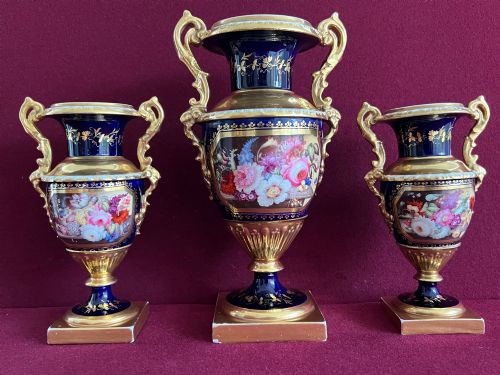
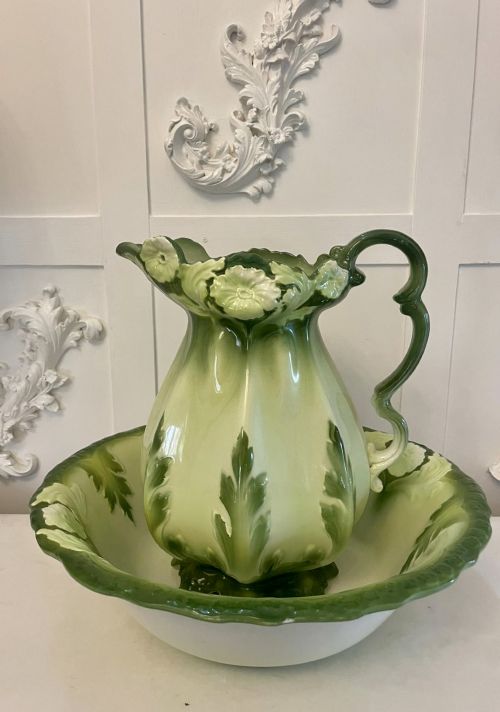
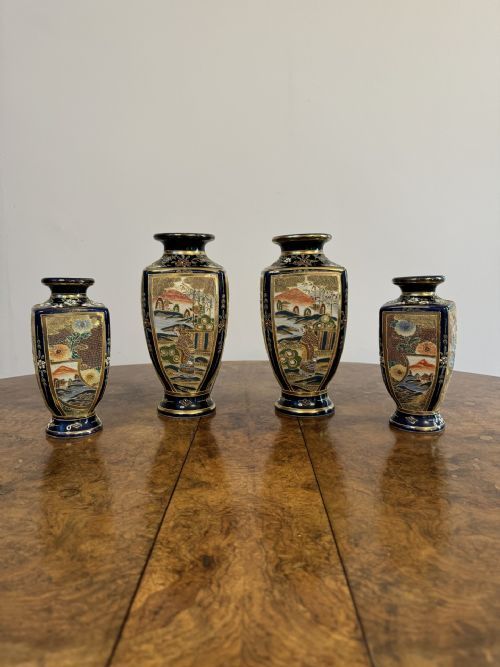
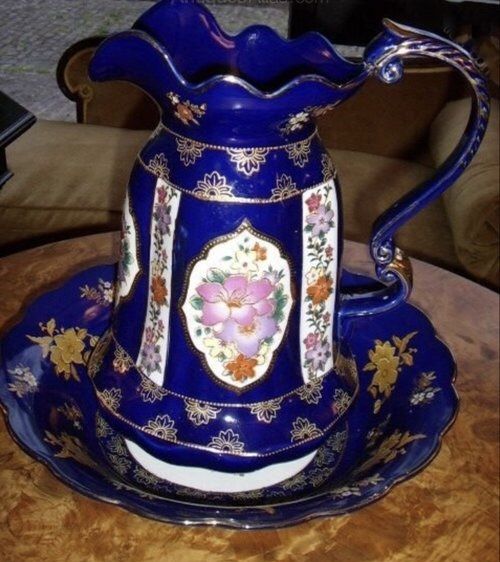
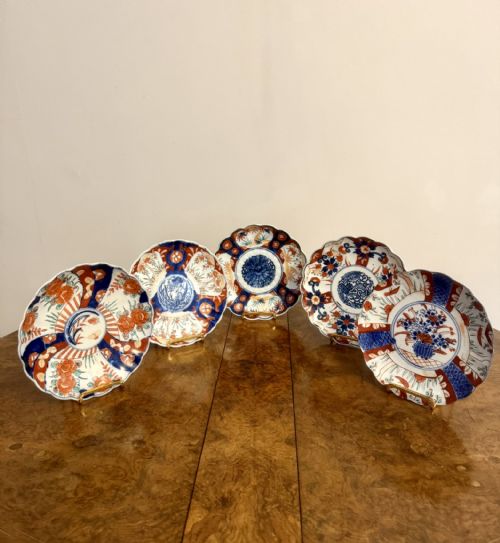
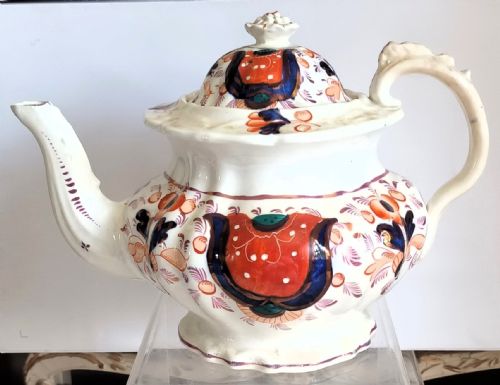
A decorative porcelain set groups matching ceramic items intended for display or coordinated table use, spanning functional wares and purely ornamental arrangements. Buyers seeking these groupings will find everything from multi-piece Japanese Imari garnitures and dessert services to complete washstand jug and bowl combinations.
The selections recorded here cross several centuries and origins, reaching from nineteenth-century Victorian drawing rooms to early twentieth-century production. Forms range from cabinet plates and clock garnitures to tea sets and large lidded vases.
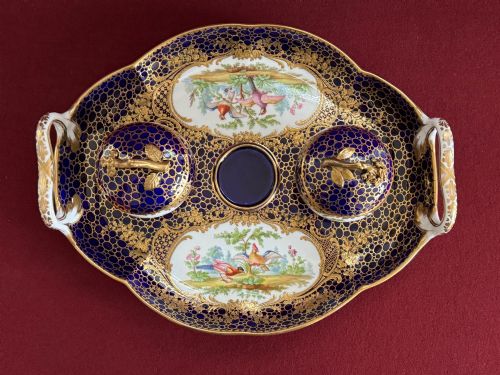
European factories and Japanese export workshops alike contributed to these groupings, utilising styles that include Rococo Revival, Art Nouveau, and Sévres-inspired decoration. Each set reflects the aesthetic priorities of its period, whether through hand-painted floral motifs, cobalt blue glaze, or gilt-accented panels.
Materials and methods
Makers shaped these wares from refined ceramic bodies and porcelain clay, applying fluid glazes to create smooth, impermeable surfaces before secondary firing. Many pieces incorporate enamel colours and gold leaf applied by hand over the glaze.
Decoration relied on skilled brushwork, cobalt pigments, and transfer printing, supplemented in European works by brass mounts and gilt details. Kiln temperatures determined the vitrification of the paste, while successive firings fixed the polychrome enamels and gilding.
Decorative Porcelain Set Retail Price Guide 2026
Typical asking prices for decorative porcelain set among the pieces listed under this phrase on Sellingantiques today, from the lower quarter to the upper quarter. They describe what is for sale here now, not the wider market.
The available selections encompass diverse forms including washstand sets, inkstands, cabinet plates, clock garnitures, and dinner services.
Distinctions in quality
Quality rests upon the precision of the hand-painting, the crispness of the porcelain moulding, and the integrity of the matching components within a grouping. Superior examples display finely detailed brushwork, uniform glaze application, and well-preserved gilding without rubbing.
The cohesion of a set also dictates its standing, as matching colour saturation and uniform factory marks across multiple pieces separate unified productions from later assembled collections. Superior garnitures maintain precise symmetry and matching decorative schemes across every vessel.
Minton Porcelain·Royal Crown Derby·Aynsley·Müller Volkstedt MV Co.·Doulton Burslem·KPM Berlin·Royal Worcester
The Decorative Porcelain Set Glossary
- Garniture
- A coordinated set of three or more vases or vessels designed to stand together on a mantelpiece or sideboard.
- Imari
- A Japanese export porcelain style characterised by underglaze blue and iron red, complemented by secondary colours and gold.
- Cabinet plate
- A decorative plate intended for display on a wall or stand rather than for dining use.
- Glaze
- A glassy coating fused to ceramic surfaces during firing to seal the body and provide colour or shine.
- Gilding
- The application of gold leaf or gold powder to ceramic surfaces for decorative emphasis.
Decorative Porcelain Set: Frequently Asked Questions
What is a garniture set?
A garniture set is a matching group of three, four, or five vases and urns created to sit together on a mantelpiece or large shelf. These arrangements typically feature a central larger vessel flanked by symmetrical smaller companions.
Such groupings gained popularity during the eighteenth century and remained a staple of Victorian interior display. They provide balanced visual weight and unified decoration across a room's focal point.
How do I care for antique porcelain?
Antique porcelain requires gentle handling and should be washed by hand in lukewarm water with mild soap. Avoid soaking pieces that feature delicate overglaze enamels or gold leaf.
Keep display sets out of direct sunlight to prevent fading in painted colours. Secure tall garnitures and vases on stable surfaces away from heavy foot traffic.
What defines an Imari porcelain set?
Imari porcelain sets originate from Japanese export traditions, featuring a distinct palette of deep cobalt blue, iron red, and gold. Designs often incorporate floral panels and brocade patterns.
These wares were widely produced during the Meiji period and earlier eras for Western export. Their bold colours made them popular for display in Victorian drawing rooms.
How are dessert services used today?
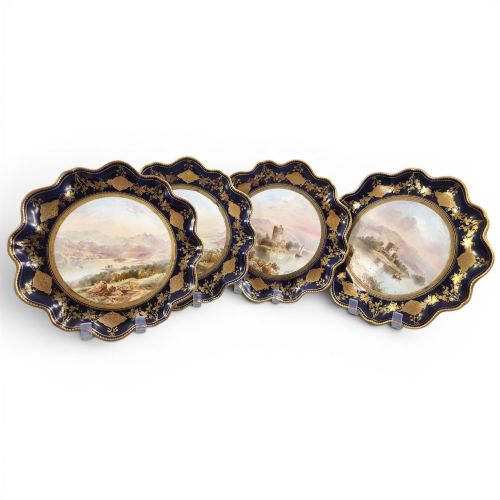
Dessert services, comprising plates and matching comports, serve as decorative table displays or functional tableware for special occasions. The coordinated plates allow for uniform presentation of sweet courses.
Many collectors display these service plates on walls or within cabinets. Their detailed hand-painted scenes and gilded rims bring period character to modern dining spaces.