




Decorative Porcelain Mantel Garniture
These decorative porcelain mantel garniture sets bring nineteenth-century drawing rooms to life with matching urns, vases, and clock displays.
Decorative Porcelain Mantel Garniture
A decorative porcelain mantel garniture comprises a matching set of three or more ornamental pieces, typically featuring a central clock flanked by vases or urns designed for the fireplace mantel. These arrangements originate primarily from the nineteenth century, spanning periods such as 1880, 1890, and 1900.
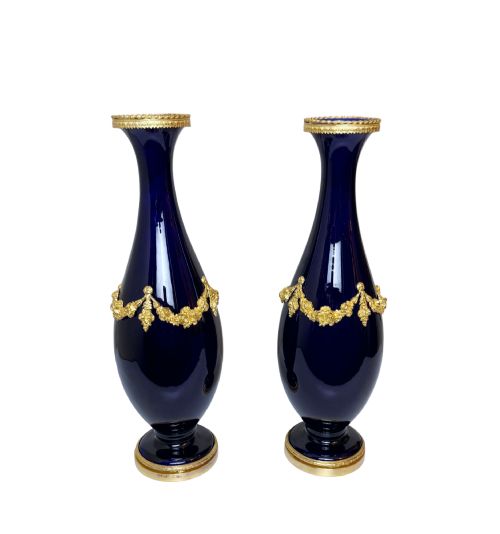
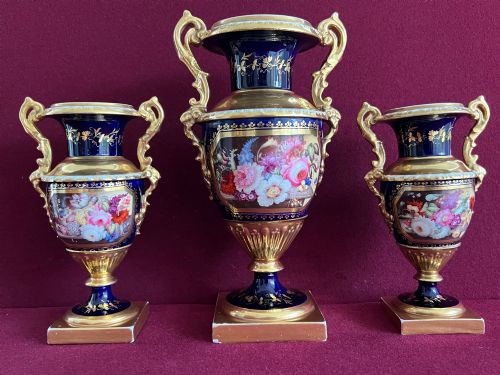
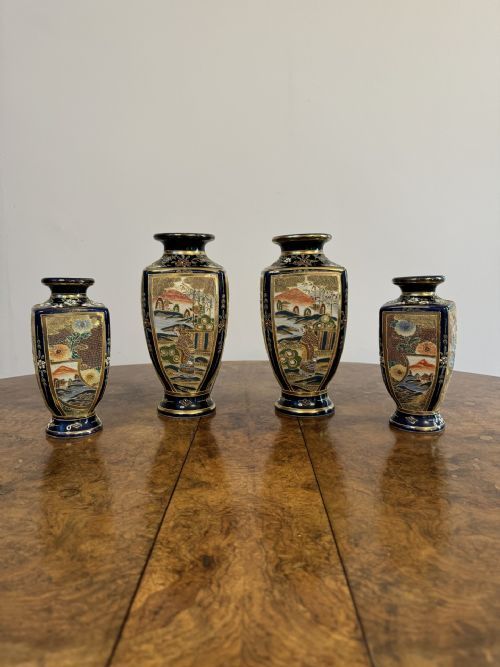
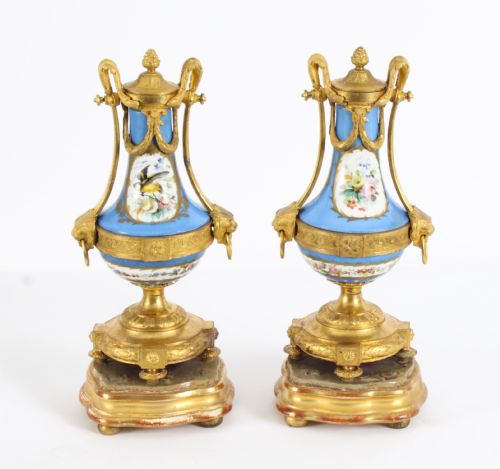
The pieces on this page showcase diverse regional traditions and aesthetic movements, including French Sevres style, Vienna style, KPM Berlin, Japanese Imari, and Satsuma. Buyers frequently encounter multi-piece sets of lidded vases or complete clock garniture suites finished with detailed painting.
Forms vary from pairs of monumental lidded urns to larger sets of four vases, often utilising classical shapes and traditional oriental motifs. Each configuration serves to anchor a formal interior room display with balanced symmetry.
Materials and construction methods
Maker workshops shaped porcelain and earthenware bodies before applying intricate enamel paints, coloured glazes, and gold leaf highlights. Many pieces incorporate hand-painted figural or floral scenes set against rich background colours like bleu celeste.
Metal mounts in ormolu, gilt bronze, and brass provide structural framing and decorative handles, bases, and finials. These bronze and brass elements are cast and chased to complement the curved contours of the ceramic vessels.
Decorative Porcelain Mantel Garniture Retail Price Guide 2026
Typical asking prices for decorative porcelain mantel garniture among the pieces listed under this phrase on Sellingantiques today, from the lower quarter to the upper quarter. They describe what is for sale here now, not the wider market.
Nineteenth-century mantel clocks often ticked loudly enough to keep entire households awake during quiet evenings.
Distinctions in craftsmanship
Quality reveals itself in the precision of the hand-painted details and the richness of the enamel and gold leaf application. Finer sets display crisp brushwork and well-defined figural subjects rather than simple transfer printing.
The weight and finish of the ormolu or gilt bronze mounts distinguish superior garnitures from standard production. Heavy, sharply chased metalwork that fits securely to the porcelain indicates a higher grade of manufacture.
KPM Berlin
The Decorative Porcelain Mantel Garniture Glossary
- Garniture set
- A harmonious group of three or more matching decorative objects designed to be displayed together on a mantelpiece or sideboard. They typically include a central clock or large urn accompanied by symmetrical side vases.
- Ormolu
- Gilded bronze mounts and decorative hardware used to embellish furniture and ceramic pieces. This technique involves applying a gold amalgam to a bronze base.
- Bleu celeste
- A bright sky-blue ceramic glaze famously utilised in nineteenth-century French porcelain factories. It provides a striking backdrop for gilded and hand-painted reserves.
- Imari
- A traditional Japanese style of porcelain decorated in underglaze blue and vibrant overglaze iron red, green, and gold. These pieces were widely exported and later emulated in European workshops.
- Satsuma
- A type of Japanese earthenware featuring a crackled ivory glaze decorated with polychrome enamels and gilt. These items gained immense popularity in Western export markets during the Meiji period.
Decorative Porcelain Mantel Garniture: Frequently Asked Questions
What is a mantel garniture?
A mantel garniture is a matched set of decorative items, usually comprising a central clock and two flanking vases or urns, created to sit on a fireplace mantelpiece.
These coordinated sets were designed during the nineteenth century to provide visual balance and formal symmetry to drawing room interiors.
How do I display a garniture set?
Garniture sets look best arranged with the tallest piece, such as a clock or large lidded urn, positioned centrally on the mantelpiece. The matching side vases or smaller urns flank this central object to create a balanced composition.
Ensure the mantel surface is stable and deep enough to safely support the full width of the multi-piece display.
What styles are common in porcelain garnitures?
The selections span European revival styles like French Sevres, Vienna, and KPM Berlin alongside Japanese Imari and Satsuma traditions. These varied aesthetics reflect global trade and stylistic influences of the nineteenth century.
Many examples blend ceramic bodies with ormolu mounts inspired by Rococo and Neoclassical design vocabularies.
Are clock garnitures still working?
Clock movements in nineteenth-century garniture sets vary in mechanical condition and operational status. Some retain their original workings while others require professional servicing to keep accurate time.
Buyers should inspect specific listings to determine whether the clock mechanism is complete and functional.