




Decorative Mantle Urns
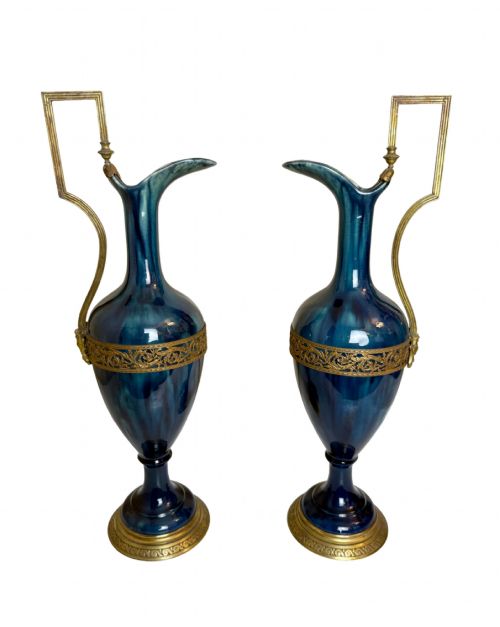
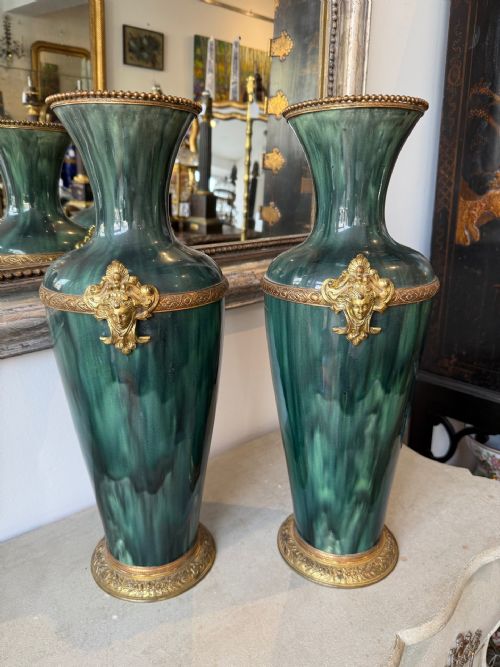
These decorative mantle urns bring nineteenth-century ornamentation to a fireplace, combining porcelain, glass, and bronze mounts for formal display.
Decorative Mantle Urns
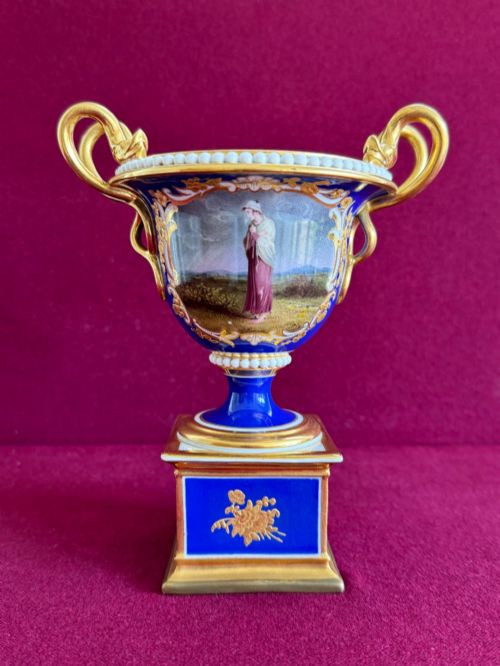
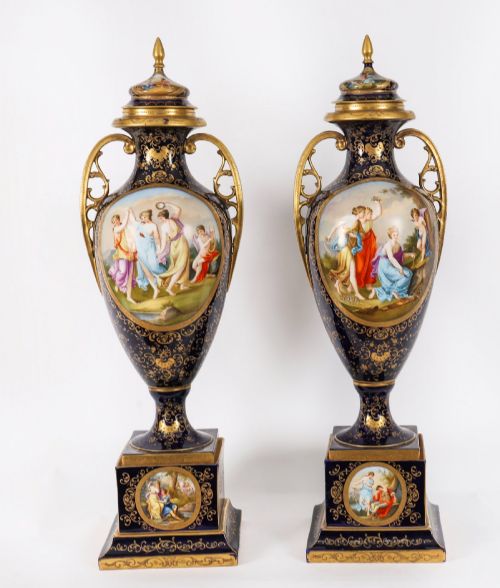
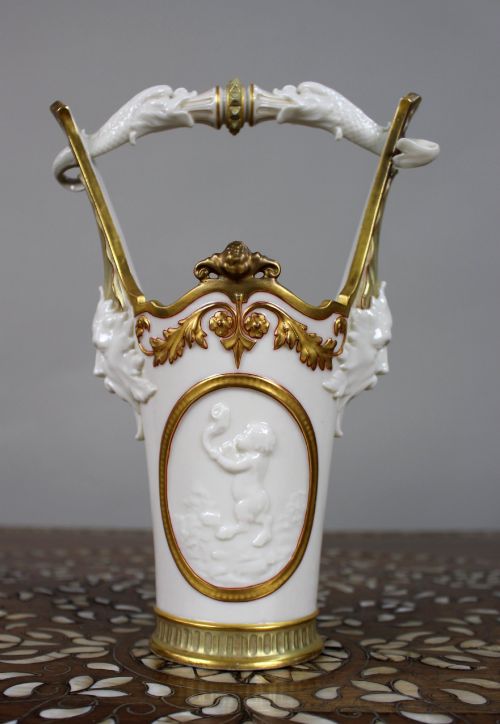
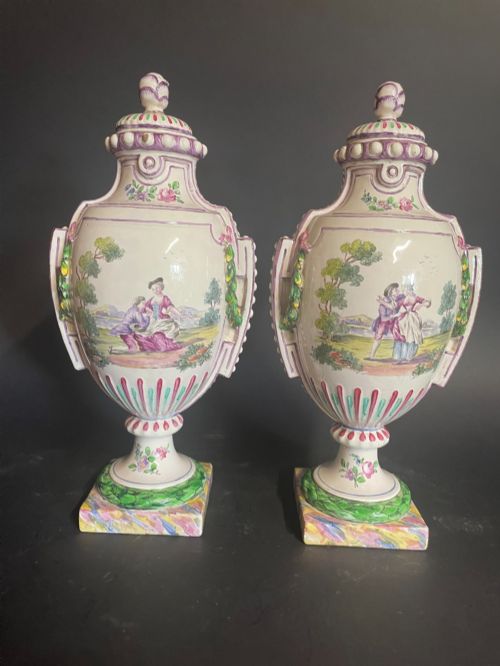
Decorative mantle urns encompass nineteenth-century ornamental vessels, clocks, and garnitures designed for interior placement. The selection spans the 1860s through the 1920s, featuring works from English, French, and Japanese makers.
Buyers will encounter pairs of porcelain and glass vases alongside bronze-mounted urns and complete clock garniture sets. Styles draw heavily from neoclassical, Rococo revival, and empire traditions of the nineteenth century.
The objects take various shapes, including campana urns, lidded jars, and two-handled vases. Many items incorporate metal trims in ormolu, gilt bronze, and brass to elevate their ornamental presence.
Materials and Technique
Makers utilised porcelain, earthenware, and glass as base bodies, often applying painted decoration, glazes, or pate-sur-pate details. Porcelain pieces frequently feature hand-painted floral or portrait subjects by notable factory artists.
Metal components rely on bronze, brass, and toleware, finished with gilding, gold leaf, or silvering. Ormolu and gilt bronze mounts were cast and chased before being secured to ceramic or glass bodies.
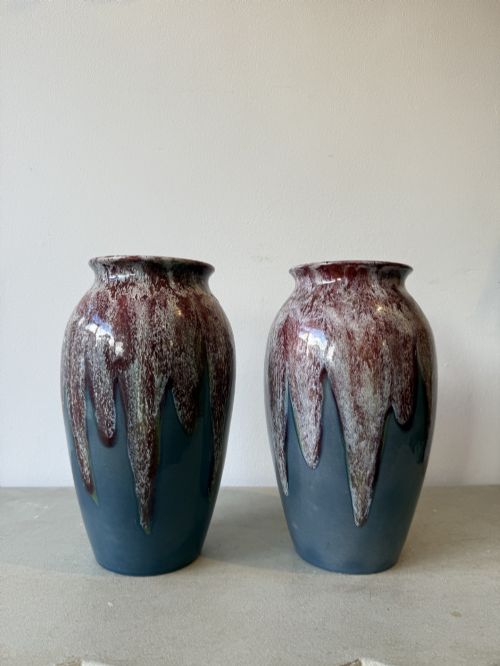
Techniques range from pottery throwing and moulding to lacquered papier-mâché construction. Stoneware and earthenware creations like Doulton Lambeth and art pottery showcase distinctive regional glazing methods.
Decorative Mantle Urns Retail Price Guide 2026
Typical asking prices for decorative mantle urns among the pieces listed under this phrase on Sellingantiques today, from the lower quarter to the upper quarter. They describe what is for sale here now, not the wider market.
Listings feature nineteenth-century porcelain, glass, and bronze from English and French makers alongside Japanese Satsuma and Imari works.
Judging Quality
Quality rests on the crispness of the casting in metal mounts and the finesse of the hand-painted decoration on ceramic bodies. Superior examples display detailed chasing on ormolu elements and precise brushwork on porcelain portraits or florals.
The presence of recognised factory marks, artist signatures, or stamps provides an indicator of higher workshop standards. Pairs that remain entirely matched in glaze colour and mount detail command greater appreciation than assembled groupings.
Royal Worcester·Doulton Lambeth·Royal Crown Derby·Royal Vienna·Jennens and Bettridge·Minton·Sceaux Faience
The Decorative Mantle Urns Glossary
- Garniture
- A set of matching ornamental vases or urns designed to sit together on a mantlepiece, often accompanying a central clock.
- Ormolu
- Gilded bronze mounts applied to furniture, clocks, and decorative vessels during the eighteenth and nineteenth centuries.
- Campana
- An inverted bell-shaped classical urn form popular in nineteenth-century decorative arts.
- Pate-sur-pate
- A porcelain decoration technique where layers of liquid white clay are built up on a coloured background to create a low relief cameo effect.
Decorative Mantle Urns: Frequently Asked Questions
How are mantle urns displayed?
These decorative objects sit centrally on a fireplace mantle, often flanked by matching vases or integrated into a three-piece clock garniture set.
They function purely as decorative ornaments rather than utilitarian vessels, designed to catch the light and add symmetry to a room.
What materials are common?
The listings feature ceramic bodies in porcelain, earthenware, and faience, alongside glass, papier-mâché, and metal.
Many pieces incorporate gilt bronze, ormolu, or brass trims that contrast with the coloured glaze or painted ceramic surfaces.
How do I identify periods?
Nineteenth-century pieces often reflect historical revival styles such as French Louis XVI, Neoclassical, or Rococo.
Factory marks, signatures, and stamps help narrow down the decade of production, ranging from the 1860s through the Edwardian era.
Are garniture sets complete?
Garniture sets typically comprise a central clock accompanied by a matching pair of side urns or vases designed to display together.
Keeping the complete trio intact preserves the intended visual balance of the nineteenth-century mantle arrangement.