
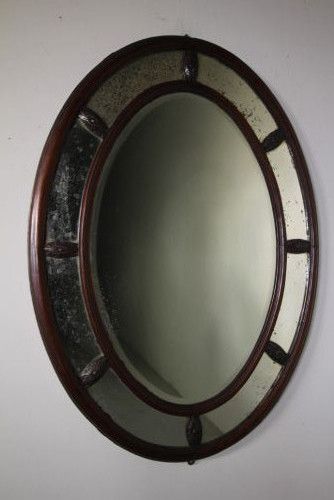


Decorative Mahogany Mirror
A decorative mahogany mirror brings rich timber grain and reflective depth to a room, spanning wall hangings, cheval forms and overmantels.
Decorative Mahogany Mirror
A decorative mahogany mirror encompasses wall hung frames, overmantels and dressing glasses spanning Georgian, Victorian and Edwardian periods. Buyers encounter oval wall hangings, fretwork plates and parcel gilt examples shaped by regional British and Scottish traditions.
The selection ranges from large country house ovals to compact vanity and pier mirrors. Makers utilised rich timber frames often paired with giltwood, brass or inlaid details to catch the light.
How they were made
Craftsmen built these frames from solid mahogany and mahogany veneers, frequently incorporating parcel gilt highlights, brass fittings and mirror glass plates. Carved fretwork designs and inlaid motifs define the surface decoration across 19th century workshops.
Techniques varied from scroll cut frets to applied giltwood mouldings and turned supports on dressing mirrors. Older plates often display characteristic foxing while newer bevelled glass provides clearer reflection.
Listings feature mahogany, giltwood, brass and rosewood across Georgian, Regency, Victorian and Edwardian periods.
What varies in quality
The caliber of a decorative mahogany mirror rests in the crispness of its fretwork carving and the depth of the timber grain. Finer examples display balanced proportions, delicate parcel gilt accents and well preserved original surfaces.
Construction methods also distinguish standard pieces from superior ones, visible in the tightness of frame joints and the quality of the glass plate. Regional variations, such as Scottish fretwork styles, introduce distinct decorative flourishes.
The Decorative Mahogany Mirror Glossary
- Fretwork
- Openwork ornamentation cut into thin timber boards using a scroll saw. This technique creates intricate geometric or scroll patterns along the edges of hanging frames.
- Parcel Gilt
- Partial application of gold leaf over specific carved details or mouldings. It highlights the timber grain beneath by contrasting warm wood tones with metallic sheen.
- Overmantel Mirror
- A wide glass frame designed to hang directly above a fireplace mantelpiece. These pieces often feature horizontal proportions and architectural mouldings.
- Foxing
- Natural degradation and spotting within the silvered backing of antique mirror glass. This chemical ageing process produces characteristic dark specks across the reflection.
- Cheval Mirror
- A full length dressing glass suspended on a vertical swivelling frame between four standing legs. This freestanding form allows the user to adjust the viewing angle.
Decorative Mahogany Mirror: Frequently Asked Questions
How do I date an antique mahogany mirror?
Dating relies upon examining the construction methods, framing style and the characteristics of the glass plate. Georgian and Regency pieces show different timber preparation and joinery compared to later Victorian and Edwardian revivals.
Secondary woods at the back of the frame and the type of fixings also offer clues to the period. Comparing the decorative motifs against known historical styles helps narrow down the decade of manufacture.
Where should I hang an overmantel mirror?
An overmantel mirror sits naturally above a fireplace mantelpiece to anchor the room and reflect natural light. Ensure the wall fixings match the substantial weight of the timber frame and glass.
Keep the lower edge just above the mantel shelf to maintain a balanced visual proportion with the hearth below.
What is the difference between a pier mirror and a wall mirror?
A pier mirror is specifically designed to hang on the narrow wall space between two windows, known as the pier. These pieces often feature tall, slender proportions to fit the architectural gap.
Standard wall mirrors follow broader rectangular, oval or circular formats intended for general placement across larger wall surfaces.
How do I care for foxed mirror glass?
Foxed mirror glass requires gentle dusting with a soft, dry cloth rather than harsh liquid cleaners. Avoid spraying chemical solutions directly onto the glass surface, as moisture can seep behind the aged silvering.
Preserving the natural patina of the plate maintains the historic character of the antique piece.