

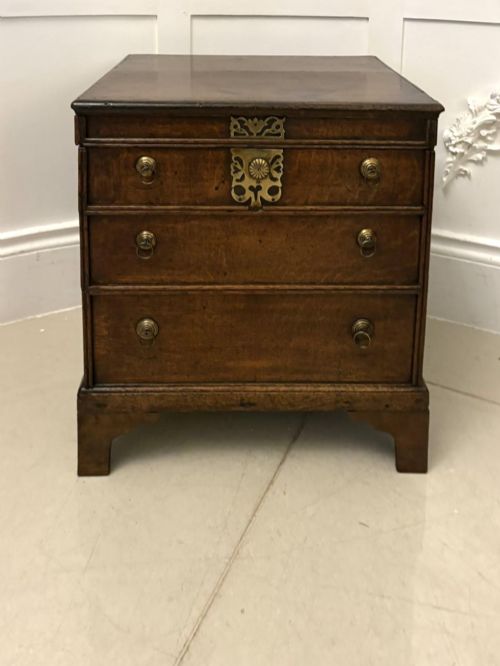
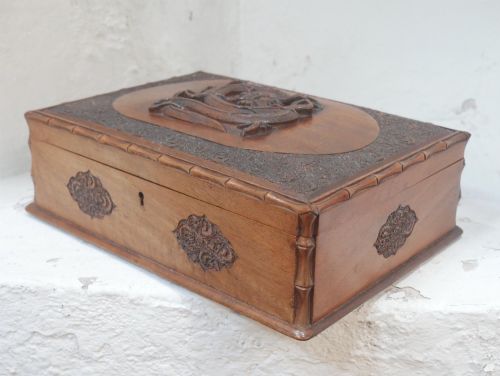
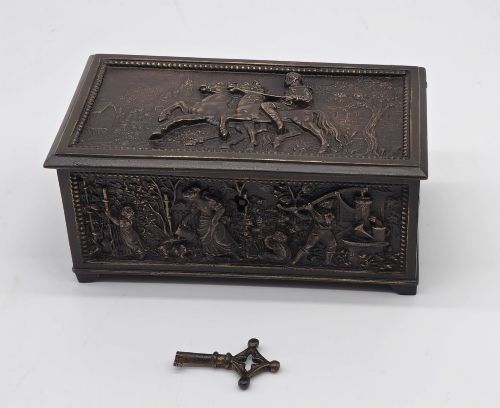
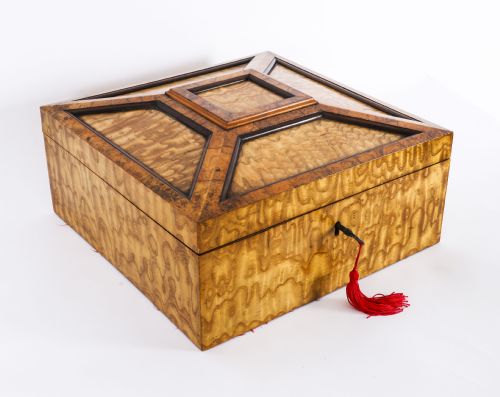
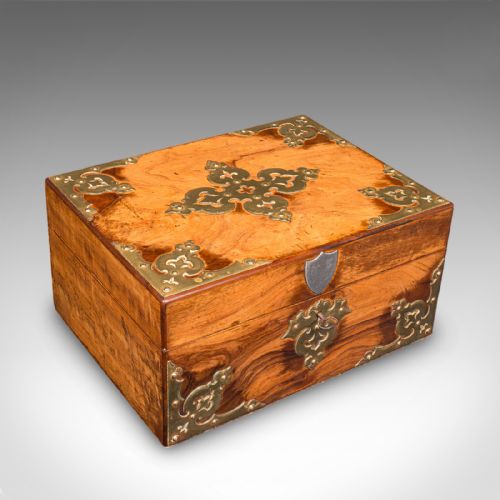


Decorative Jewellery Chest
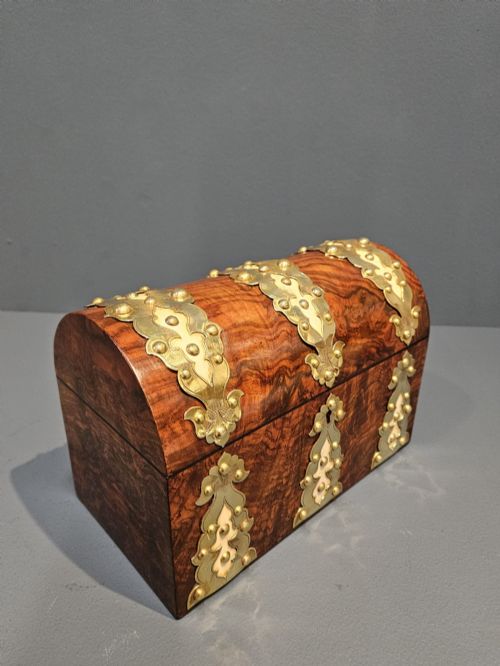
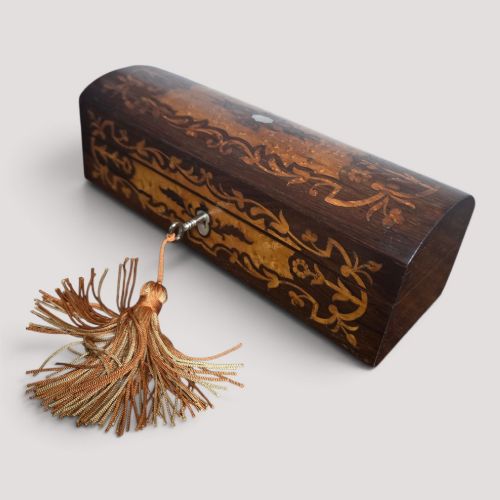
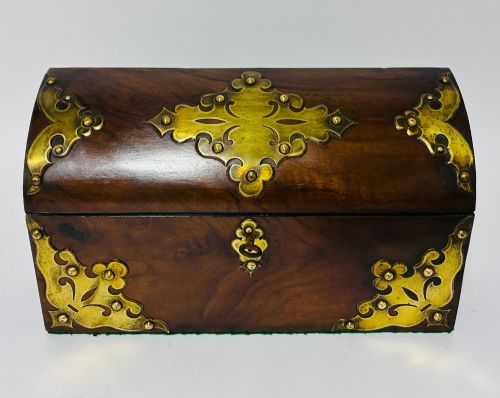
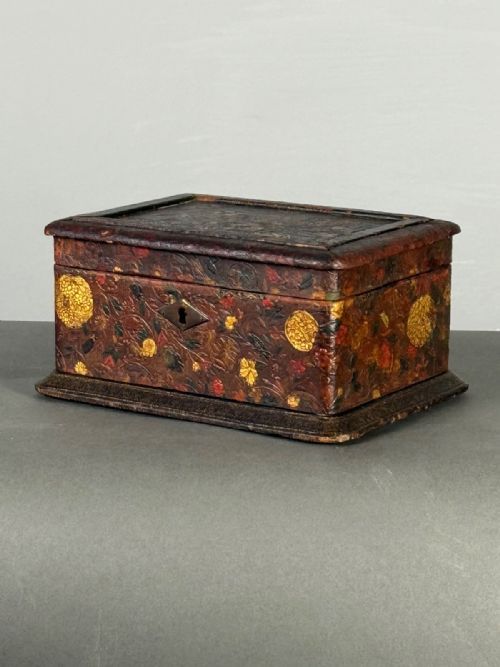
A decorative jewellery chest sits ready to hold small treasures, offering intricate craftsmanship and rich historical character.
Decorative Jewellery Chest
A decorative jewellery chest brings together small caskets, trinket boxes, and miniature cabinets designed to secure precious keepsakes. Buyers seeking a decorative jewellery chest encounter pieces spanning the seventeenth century through the early twentieth century, with strong representation from the Victorian and Regency eras.
The forms vary widely, encompassing English brass-bound caskets, French marquetry boxes, Anglo-Indian carvings, and Chinese lacquered table cabinets. Walnut, rosewood, and burr veneers dominate the domestic English and European offerings, whilst exotic hardwoods and specialised techniques mark pieces from further afield.
Most examples function as repositories for rings, letters, or sewing implements, often fitted with internal compartments and velvet linings. These boxes serve both a utilitarian purpose and a display function on a dressing table or desk.
Materials and Construction
Cabinet makers utilised dense structural timbers such as oak and mahogany as foundations, applying decorative surface veneers of walnut, rosewood, satinwood, and thuya wood. Marquetry, parquetry, and Tunbridge Ware mosaic patterns demonstrate the painstaking selection of contrasting woods to create geometric or pictorial designs.
Metal mounts in brass, bronze, and steel provide both structural reinforcement and decorative accent, frequently appearing as strapwork, corner brackets, or carrying handles. Specialised decorative methods include hand painting, lacquer work, and specimen bone veneers, reflecting the diverse global influences present in nineteenth and twentieth-century workshops.
Decorative Jewellery Chest Retail Price Guide 2026
Typical asking prices for decorative jewellery chest among the pieces listed under this phrase on Sellingantiques today, from the lower quarter to the upper quarter. They describe what is for sale here now, not the wider market.
The inventory records diverse international origins, including Chinese lacquered cabinets, Japanese kodansu, and Indian carved woodwork.
Distinctions in Quality
The standard of execution in the timber selection and veneer matching defines the hierarchy of these pieces. Superior examples exhibit continuous grain across joints and meticulously planned geometric or floral marquetry that remains flush with the surrounding surface.
Hardware integration further separates the ordinary from the exceptional. High-grade boxes incorporate rebated brass hinges, functional locks with matching keys, and finely cast or hand-chased metal mounts that integrate harmoniously with the timber carcass rather than sitting purely as surface additions.
Susse Freres Paris·S Theeman
The Decorative Jewellery Chest Glossary
- Tunbridge Ware
- Tunbridge Ware. A form of woodworking originating from Kent, characterised by intricate mosaics made from thousands of tiny wood blocks to create pictorial or geometric designs.
- Marquetry
- Marquetry. The art of applying pieces of veneer to a structure to form decorative patterns, pictures, or designs, utilising woods of contrasting natural colours.
- Kodansu
- Kodansu. A traditional Japanese small cabinet with multiple internal drawers, often finished in black lacquer and used for storing personal documents or small valuables.
- Parquetry
- Parquetry. A geometric mosaic of wood pieces used for decorative floors and box surfaces, similar to marquetry but strictly geometric rather than pictorial.
Decorative Jewellery Chest: Frequently Asked Questions
What were decorative jewellery chests used for?
These boxes provided a secure, compartmentalised space for individuals to store precious rings, earrings, and small keepsakes away from dust and light.
Many examples also doubled as stationery cases or workboxes, containing fitted trays for sewing needles, thread, and letters.
How do I date a wooden jewellery box?
Dating relies on observing the secondary timbers used inside, the style of the brass hardware, and the predominant wood veneers of the period.
For instance, Regency boxes often feature brass stringing and Rosewood, whilst Victorian pieces frequently utilise burr walnut and heavy brass binding.
Are these boxes still practical for daily use?
Modern owners routinely utilise them to hold everyday jewellery on a dressing table or to organise small desk accessories.
The sturdy construction and internal velvet trays make them well-suited for safeguarding rings and watches today.
How should I care for antique wood boxes?
Protect the timber by keeping the box away from direct sunlight and maintaining a stable indoor humidity to prevent veneer cracking.
A gentle application of appropriate wax polish maintains the lustre of the wood without building up a heavy residue.