




Decorative Iron Urns
These decorative iron urns bring classical presence to gardens and halls alike, shaped by Victorian foundry work and nineteenth-century design.
Decorative Iron Urns
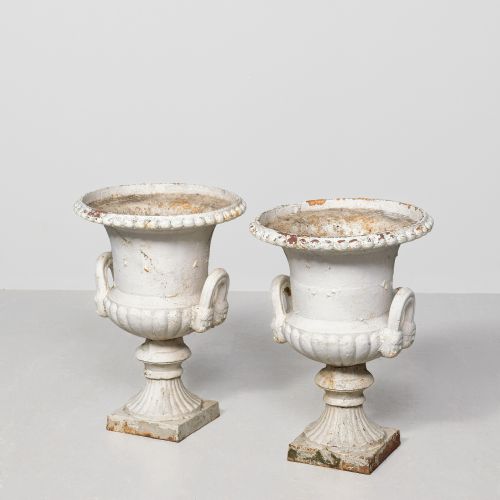
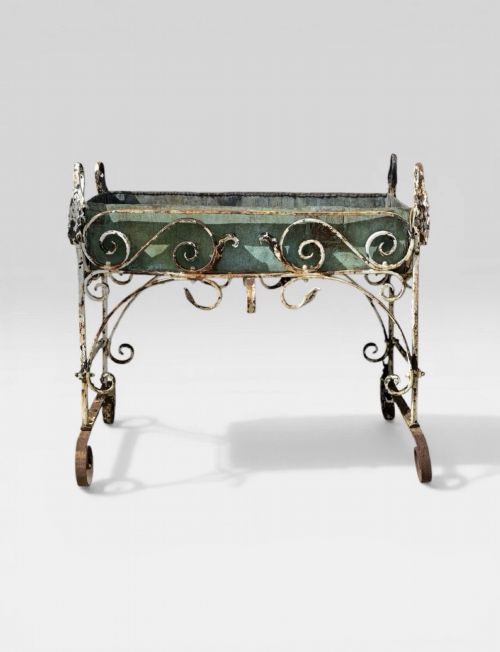
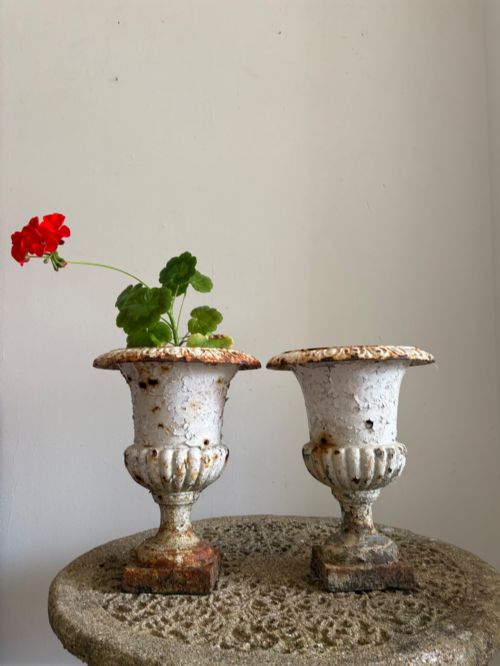
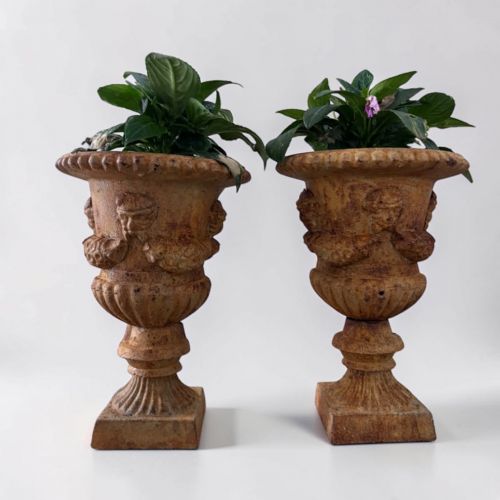
Decorative iron urns span robust garden planters and classically modelled campana vessels designed for domestic and outdoor display. You will find sturdy Victorian examples cast in iron alongside French wrought iron variations intended for patios and courtyards.
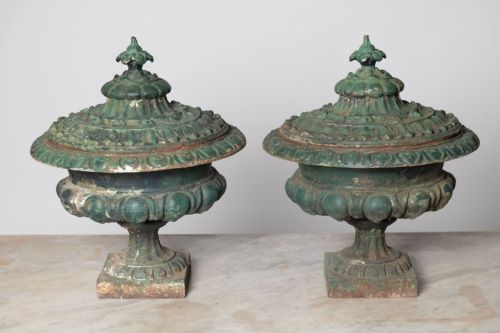
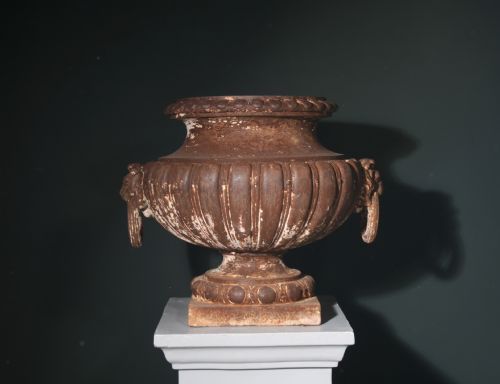
The selection ranges from architectural pedestals and tazza forms to lidded garden ornaments. Many pieces reflect revivalist tastes of the nineteenth century, pairing heavy metalwork with classical leaf motifs.
How they were made
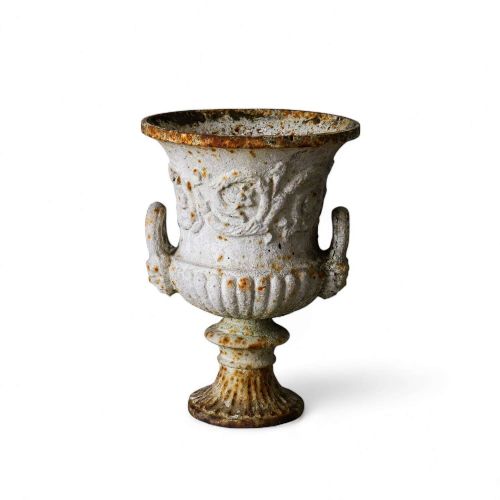
Foundries utilised traditional sand-casting techniques to shape molten metal into thick-walled iron urns, often finishing surfaces with lead paint or retaining weathered patinas. Wrought iron variants display hand-forged elements shaped over the anvil for structural garden display.
Makers occasionally applied gold leaf or enamel highlights to accent classical cast relief work such as acanthus leaves and gadrooning.
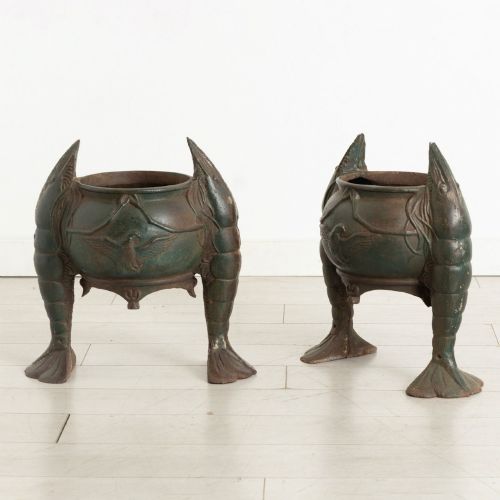
Listings feature nineteenth-century cast iron and French wrought iron alongside unexpected novelty forms modelled as marine creatures.
What varies in quality
Quality rests in the crispness of the cast ornament, where sharper relief lines and clearly defined classical details signal superior foundry work. Thick-walled casting and intact original pedestals separate monumental garden pieces from lighter utility vessels.
The survival of original painted surfaces or stable weathered patinas adds significantly to the character of a nineteenth-century iron urn.
Andrew Handyside·Val D Osne Foundry
The Decorative Iron Urns Glossary
- Campana
- A bell-shaped garden urn with a flaring rim and a footed base. This classic neoclassical form appeared frequently in Victorian cast iron.
- Tazza
- A shallow bowl-shaped vessel mounted on a stem and pedestal. These pieces were often utilised as decorative garden centrepieces.
- Acanthus leaf
- A classical carved or cast foliage motif derived from Mediterranean plant forms. It frequently decorates the body and handles of Victorian urns.
- Gadrooning
- A decorative carved or cast band of rounded, parallel ridges. This ornamental moulding edges many classical iron rims.
- Foundry mark
- An impressed or raised signature left by the maker in the metal. These stamps identify the producing ironworks.
Decorative Iron Urns: Frequently Asked Questions
Are these iron urns suitable for outdoor use?
Cast and wrought iron pieces withstand outdoor weather naturally, developing stable surface patinas over decades of exposure.
Position them on solid stone or gravel surfaces in the garden to ensure proper drainage.
How do I identify a Victorian iron urn?
Look for heavy sand-cast construction combined with classical revival motifs such as acanthus foliage and campana profiles.
Nineteenth-century examples often exhibit thick walls and authentic painted or rusted patinas.
Do these urns come with pedestals?
Certain larger examples include matching cast iron pedestals or stands designed to elevate the vessel in a garden setting.
Check individual descriptions to confirm whether the base forms an integrated part of the piece.
How should I clean a cast iron urn?
Brush away loose dirt gently with a soft bristle brush and rinse with plain water without harsh chemical detergents.
Preserve any historic paint layers or stable rust patinas rather than stripping the metal down to bare iron.