

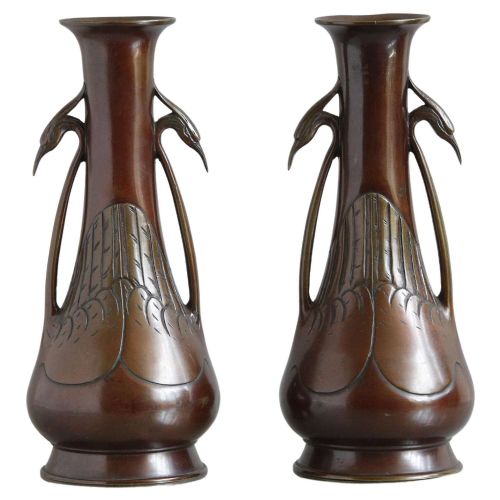

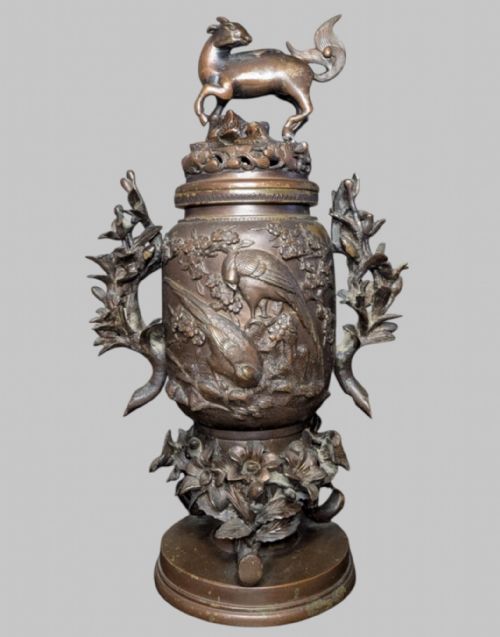


Brown Metal Urn
A brown metal urn brings classical dignity and heavy metallic presence to a room, spanning Japanese Meiji works to French neoclassical forms.
Brown Metal Urn
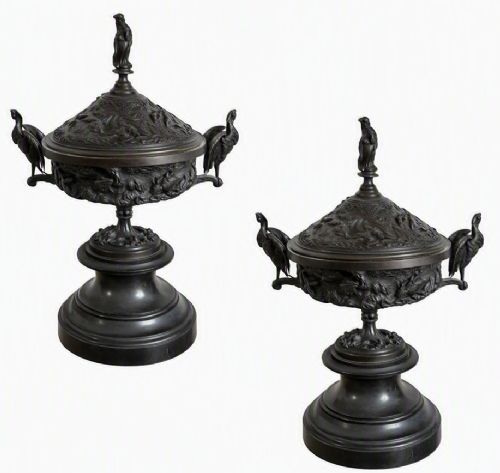
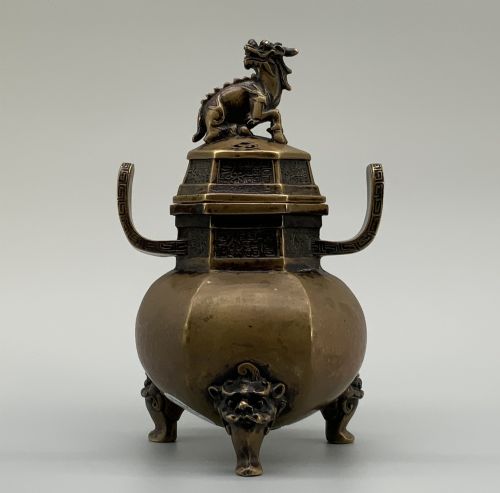
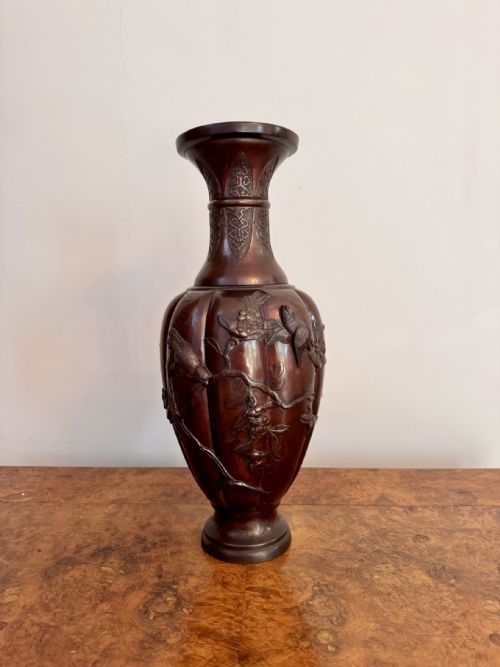
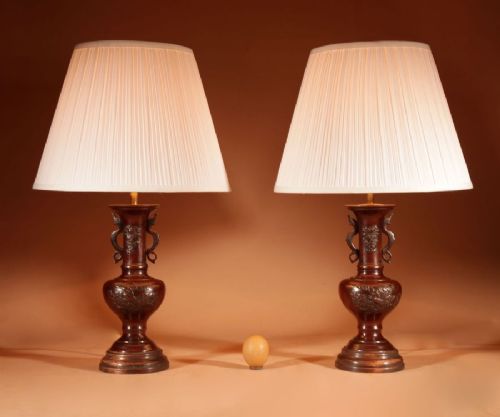
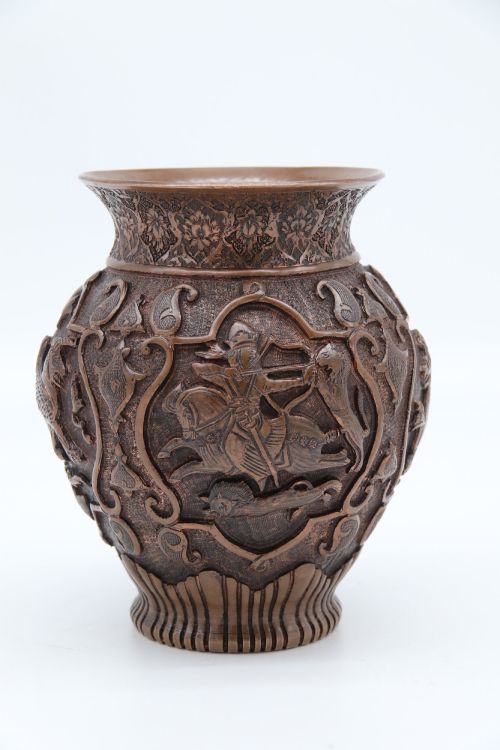
A brown metal urn search reveals a diverse collection of cast iron, copper, and bronze vessels originating from nineteenth-century Europe, China, and Japan. Buyers encounter utilitarian jardinieres, incense burners, and decorative vases alongside grand campana-shaped garden pieces.
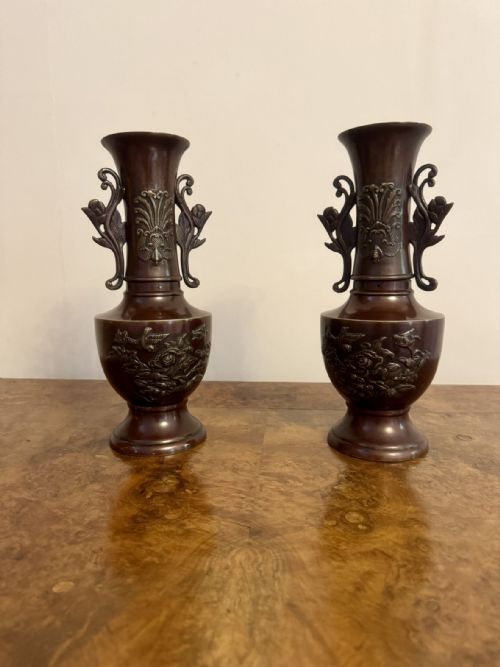
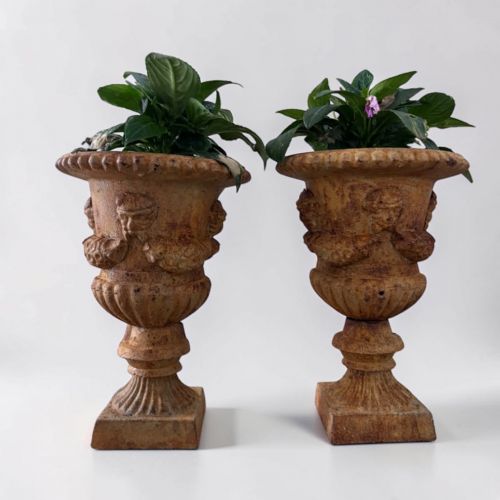
Japanese Meiji period bronze vases dominate the selections, often displaying intricate handles, patinated surfaces, and distinct Oriental motifs. French and English examples contribute cast iron garden urns and spelter campana vessels on stepped plinths.
Earlier periods are represented by pre-sixteenth-century Chinese bronze pieces and Regency period cassolettes, showing how classical forms crossed international boundaries during the nineteenth century.
Materials and Techniques
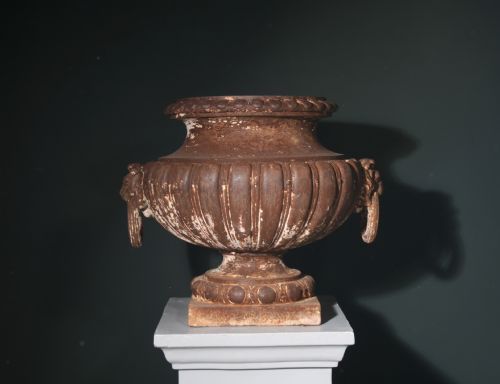
Foundries utilised cast iron for heavy garden planters and architectural urns, often bearing foundry stamps from establishments such as Val d'Osne. Bronze and spelter pieces relied on detailed casting methods, frequently finished with deliberate patination to achieve deep brown surfaces.
Surface decoration involved repoussé work on copper vessels and delicate cloisonné enamel on Japanese bronze bodies. Artisans added sculptural elements like animal finials, handles shaped as birds or dragons, and cast figures to complete the compositions.
Listings combine nineteenth-century European cast iron garden urns with Japanese Meiji bronze vases and Chinese bronze vessels.
Substance and Detail
Weight and metal density distinguish substantial castings from lighter decorative objects, with heavier bronze pairs demonstrating greater substance. The precision of the surface chasing and the depth of the brown patina separate standard production from masterworks.
Signed pieces and works carrying specific foundry marks or historic inscriptions hold distinct attribution weight. The sharpness of cast details, particularly on handles and figural attachments, indicates the care taken during the original moulding process.
Jules Moigniez·Val D'Osne Foundry·Charles Korschann
The Brown Metal Urn Glossary
- Patinated bronze
- Bronze treated with chemical solutions to produce a brown or dark surface coloration. This finish protects the metal and enhances sculptural depth.
- Campana urn
- A bell-shaped vessel with a flared lip originating in classical antiquity. These pieces sit on circular feet and often feature decorative handles.
- Jardiniere
- A large ornamental pot or planter designed to hold growing plants. They appear in cast iron and bronze across nineteenth-century listings.
- Cassolette
- A decorative vessel shaped to serve as a perfume burner or a vase with a reversible cover. Regency examples in bronze often follow classical lines.
- Repoussé
- A metalworking technique where the artist hammers metal from the reverse side to form a raised design. Copper vases frequently employ this method.
- Cloisonne
- Enamelwork created by soldering wire partitions onto a metal base before filling the cells with coloured paste. Japanese examples often integrate this technique with bronze.
Brown Metal Urn: Frequently Asked Questions
Where were bronze urns placed?
Nineteenth-century bronze urns served as decorative table pieces, altar vessels, or display objects in formal rooms.
Larger cast iron versions were designed for gardens, terraces, and grand entrance halls.
How do I care for bronze?
Dust the surface regularly with a soft dry cloth to prevent the accumulation of particles in recessed details.
Avoid liquid cleaners or polishes that can strip the original brown patination from the metal.
What is a Meiji period vase?
Meiji period vases originate from Japan between eighteen sixty-eight and nineteen twelve, a time of exceptional metalwork.
These pieces often feature signature patination, animal motifs, and fine bronze casting.
Are these urns waterproof?
Cast iron garden urns tolerate moisture and soil when used outdoors as plant containers.
Interior bronze and copper vessels may require inner liners to hold water safely without damaging the historic metal.