


Decorative Hearth Stand
A decorative hearth stand gathers the functional ironwork, brass and copper that make a fireplace feel complete.
Decorative Hearth Stand
A decorative hearth stand encompasses various pieces designed for the fireplace, ranging from fire screens and spark guards to trivets, coal buckets and companion sets. These items serve both practical and decorative purposes around the hearth.
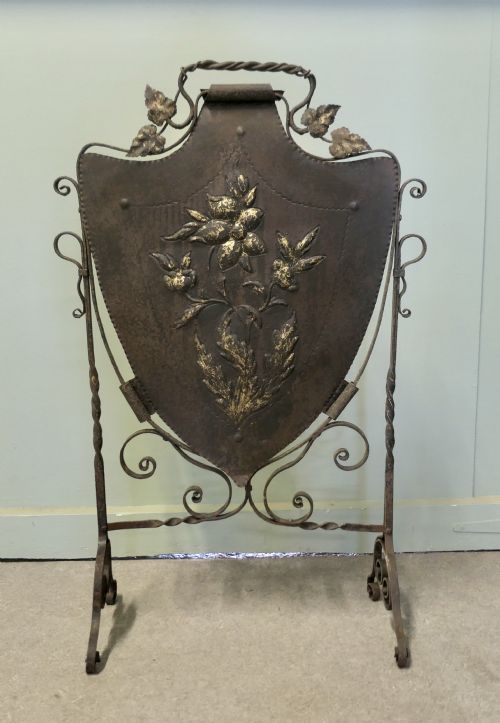
The versions most commonly met on this page span the Victorian, Edwardian and Georgian periods, alongside pieces from the Arts and Crafts and Art Nouveau movements. Forms shift from sturdy iron fire screens to polished brass trivets and copper coal buckets.
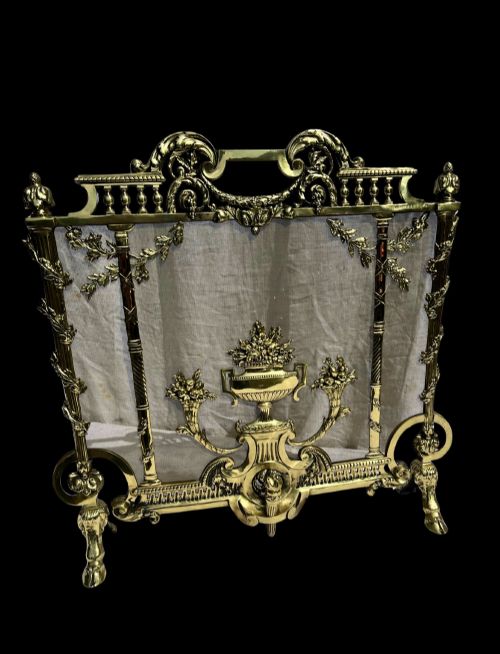
Origin details in the evidence show English country house examples alongside French Rococo designs in brass and wrought iron. The selection bridges heavy utility items and delicate needlework or stained glass screens.
Materials and construction
Metalworking dominates these pieces, utilising brass, wrought iron, copper and lead. Blacksmiths and founders shaped these materials into fireguards, andirons and coal buckets using traditional hammering, casting and joining techniques.
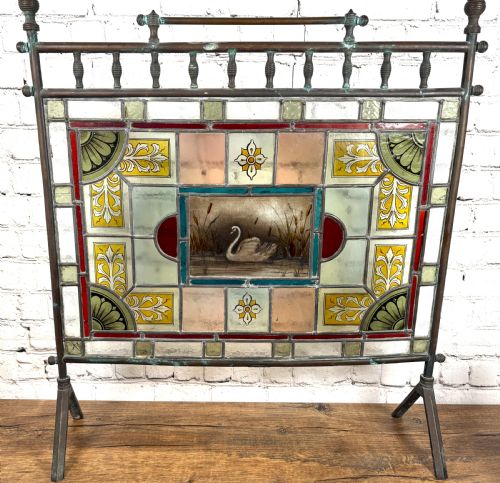
Glass, fabric and wood appear in specific forms, notably through stained glass panels, leaded work, dark oak framing and silk embroidered or needlework pictures set within fire screens. Metal mesh provides functionalspark protection without obscuring the fire.
Several pieces double as needlework display frames, proving that Victorians truly embroidered everything in sight.
Judging quality in hearth accessories
The distinction between standard utility items and finer examples rests on the crispness of casting, the weight of the metal and the ambition of the design. Heavier brass and thick wrought iron indicate substantial construction built to withstand daily hearth use.
Artistic execution sets apart the better pieces, whether through the hand-beaten surface of an Arts and Crafts copper bucket, the complex soldering of a stained glass fireguard, or the fine needlework of a framed screen panel.
The Decorative Hearth Stand Glossary
- Fire screen
- A protective barrier placed before an unlit fireplace to block drafts or hide the grate, often featuring glass, metal mesh or needlework.
- Trivet
- A small metal stand raised on legs, utilised to hold a kettle or pot near the heat of the fire.
- Andiron
- One of a pair of metal supports placed in a hearth to hold logs for burning, sometimes known as a firedog.
- Coal bucket
- A metal container designed for holding and transporting solid fuel to the fireplace.
- Spark guard
- A fine metal mesh screen positioned to catch embers spitting from an open fire.
Decorative Hearth Stand: Frequently Asked Questions
What is a decorative hearth stand?
A decorative hearth stand refers to metalwork and companion pieces placed around the fireplace, including trivets, kettles stands and screens.
These items organise the hearth while adding decorative character through brass, copper and ironwork.
How were fire screens used?
Fire screens served to shield people in the room from the intense radiant heat of a blazing coal fire when seated close.
During warmer months when the hearth was empty, they hid the empty grate and soot from view.
What metals are most common?
Brass and wrought iron appear most frequently across the listed items, providing durable structure for daily use.
Copper and lead also feature in specific items like coal buckets, kettles and stained glass window guards.
How do I spot Arts and Crafts pieces?
Arts and Crafts pieces typically display hand-worked surfaces, visible hammer marks and honest construction in copper or iron.
They favour simple, natural forms over ornate revival styles like French Rococo.