





Brass Fireside Stand
These brass fireside stand options organise your hearth equipment with period metalwork, offering both practical containment and decorative focus.
Brass Fireside Stand
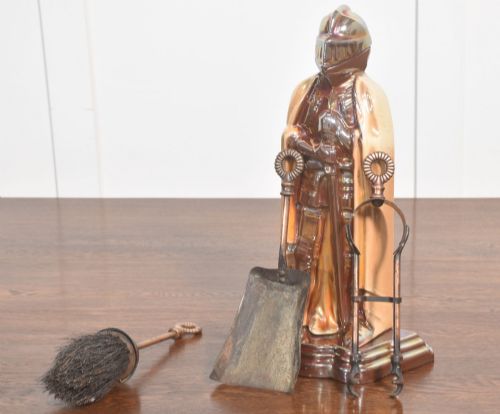
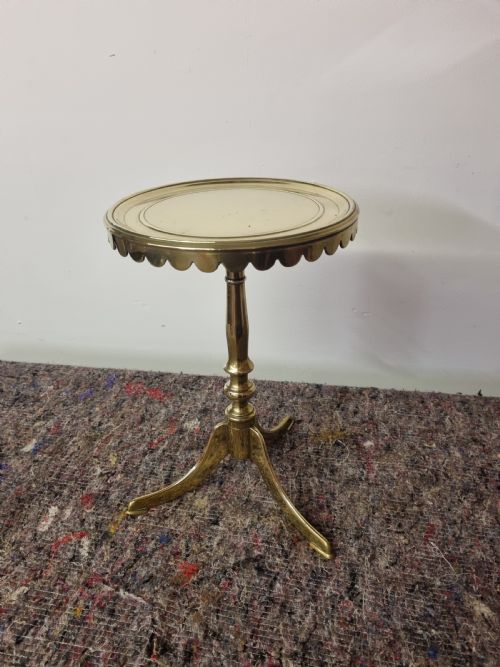
A brass fireside stand groups hearth furniture together, ranging from dedicated tool rests and companion sets to footmen and trivets. These utility pieces support everyday fire tending while bringing polished metal into the room.
The selections span Georgian pieces through to Edwardian and Art Deco iterations, demonstrating how hearth designs shifted from utilitarian footmen to ornamental companion sets. You will encounter cast brass, sheet brass, and paired iron construction across the periods.
Companion sets and trivets dominate the forms, alongside companion stands, footmen, and newspaper racks adapted for fireside use. Each object serves a functional hearth role, whether elevating a kettle or holding poker sets.
Materials and construction
Makers utilised cast brass, sheet brass, and combinations of brass and steel to build durable hearth hardware that endured intense heat. Iron and cast iron frequently reinforced structural elements like legs and inner frames.
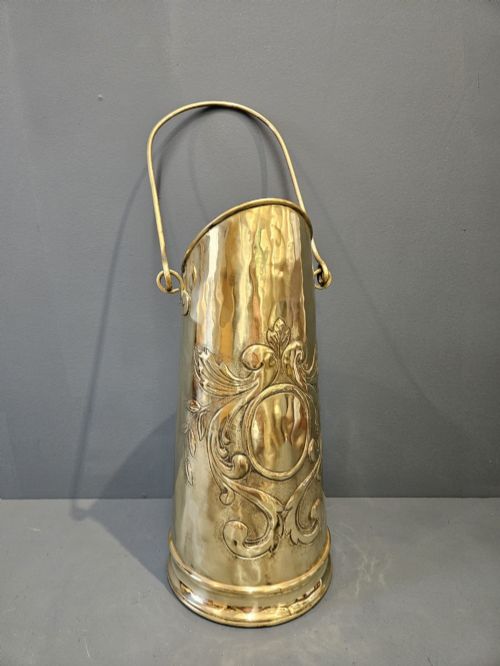
Foundries employed sand casting for heavy components such as trivets and andirons, while hand beating and riveting shaped lighter coal scuttles and footmen. Decorative details emerged through piercing, chasing, and applied copper finishes.
The listings show materials spanning brass, steel, iron, cast iron, and copper finish across Georgian to 1930 periods.
Judging build and design
Quality rests in the weight of the cast metal and the crispness of chased or pierced surface details. Finer examples display sturdy joints and substantial gauge brass rather than thin, pliable sheeting.
Design ambition separates standard utility items from distinctive period pieces, particularly where makers incorporated stylistic motifs like Art Nouveau curves or Gothic Revival tracery.
The Birmingham Guild
The Brass Fireside Stand Glossary
- Footman
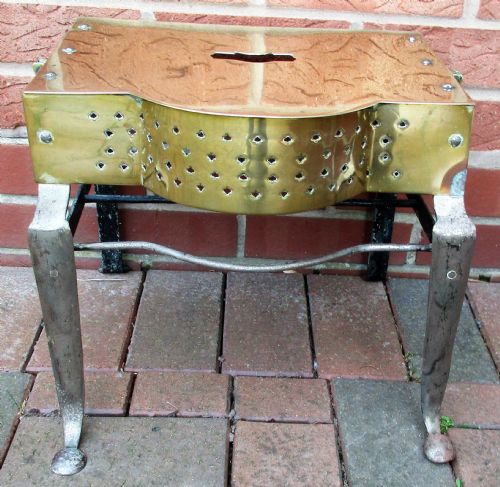
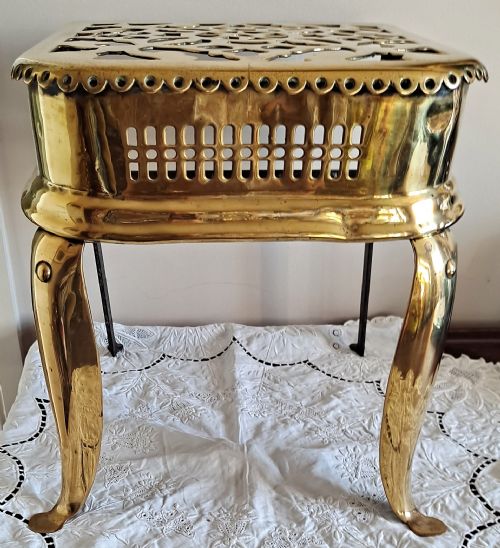
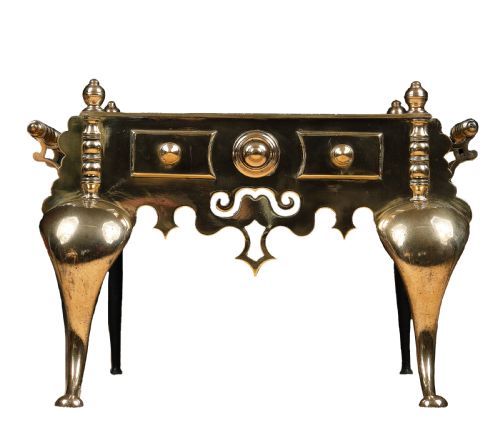
- A metal stand placed in front of the hearth to keep food warm. These low benches typically combine a brass top with iron legs.
- Trivet
- A three-legged metal stand used to support kettles or pots near the fire. They often feature pierced brass tops.
- Andirons
- Horizontal metal bars supported by legs used to hold logs in an open fireplace. They frequently match companion stands.
- Companion set
- A group of fireplace tools, such as pokers and tongs, displayed on a matching stand. Sets often coordinate with other hearth furnishings.
Brass Fireside Stand: Frequently Asked Questions
What is a footman?
A footman is a low metal stand positioned before the fireplace to hold plates or kettles near the heat. They usually feature brass tops with iron frames.
These versatile pieces served practical kitchen and parlour duties before moving into decorative domestic use.
How do I clean brass?
Clean brass using mild soapy water and a soft cloth to remove soot and dust without stripping the natural age. Avoid harsh abrasive compounds that scratch the surface.
Many collectors prefer leaving a dark patinated finish rather than polishing the metal to a bright shine.
Where were they made?
Hearth furniture production centred around metalworking regions in Britain, notably Birmingham and Welsh workshops. Foundry output supplied domestic households with robust iron and brass items.
French makers also contributed distinctively styled andirons and chenets during the Georgian and Victorian eras.
Are trivets still useful?
Trivets function effectively as heat mats for hot serving dishes on dining tables or sideboards. Their sturdy metal construction handles warm cookware easily.
Placing them near modern hearths continues their original domestic purpose while displaying historical metalwork.