




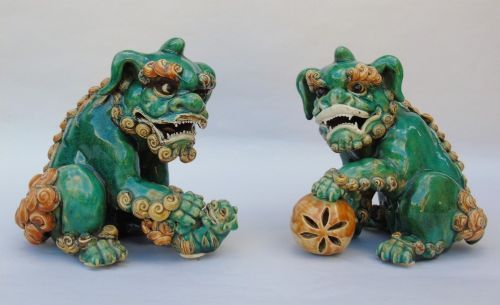
Decorative Glazed Pottery Statues
Decorative glazed pottery statues bring colour and character to a room, offering sculptural form captured in fired earth.
Decorative Glazed Pottery Statues
Decorative glazed pottery statues encompass figures, animals and figurative groups shaped from clay and finished with lustrous surface coatings. When you search for decorative glazed pottery statues, you encounter works spanning the nineteenth century up to the nineteen-thirties.
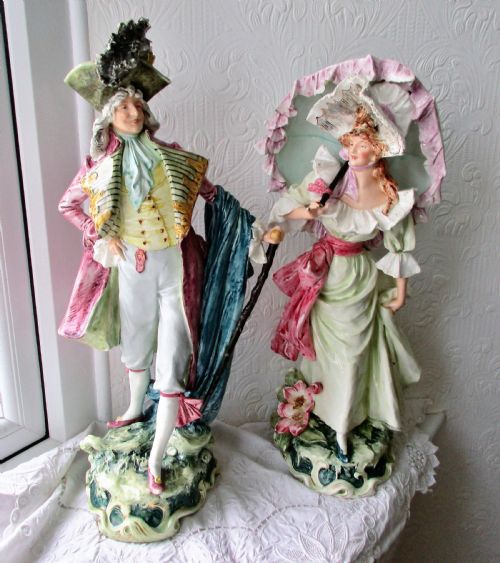
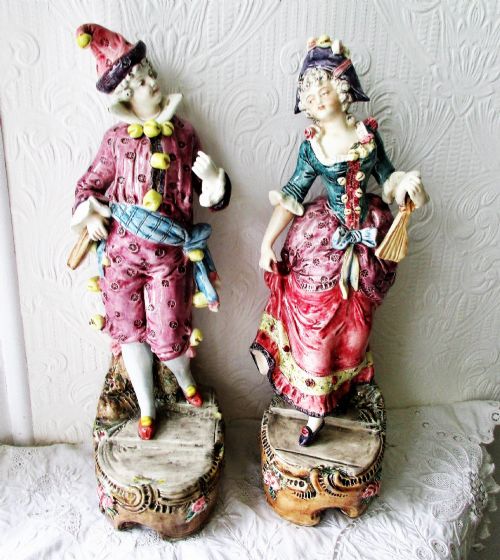
The selection on this page ranges widely in origin and aesthetic, taking in English Staffordshire figures alongside French faience, Italian majolica and Asian traditions. Animal forms and human figures dominate the types available, often created as pairs for mantelpieces or display cabinets.
Production methods and cultural influences shift across the periods represented, moving from Victorian Staffordshire earthenware to revival styles modelled on earlier dynasties and European revivals. Each piece reflects the decorative taste of its specific decade and place of origin.
How they were made
Potters shaped these statues using earthenware, ceramic, and porcelain bodies, frequently building up the form by hand or pressing clay into moulds. Artisans then applied liquid pottery glaze and enamel to create colourful surfaces before firing the pieces in a kiln.
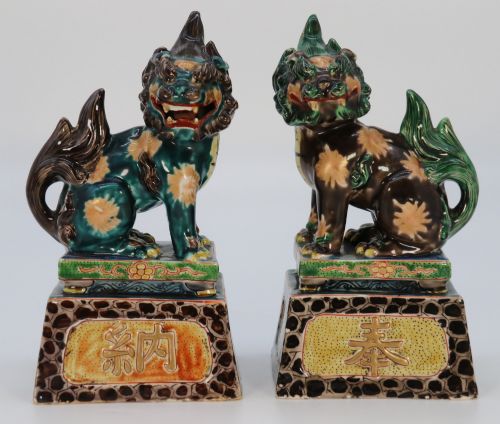
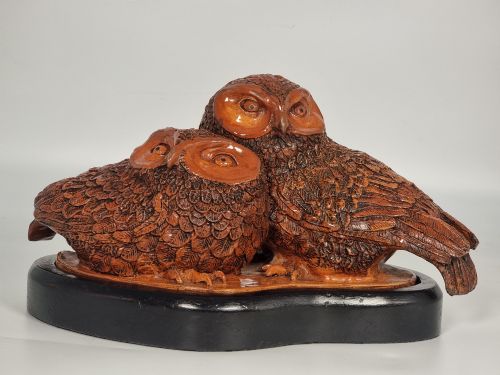
Surface treatments included rich sancai glazes and vibrant enamels that ran across the earthenware bodies, sometimes paired with secondary materials such as ebonised wood for bases. The interaction between the clay body and the fluid glaze during firing produced the characteristic sheen seen on these sculptures.
Decorative Glazed Pottery Statues Retail Price Guide 2026
Typical asking prices for decorative glazed pottery statues among the pieces listed under this phrase on Sellingantiques today, from the lower quarter to the upper quarter. They describe what is for sale here now, not the wider market.
Among the menagerie of lions, dogs, ducks and horses, a lone leopard hunter stands ready.
What varies in quality
The depth and richness of the glaze application also distinguish finer studio and factory output from standard commercial production. Balanced colouring and harmonious pairing in symmetrical figures elevate the visual impact of the work.
The Decorative Glazed Pottery Statues Glossary
- Earthenware
- Porous pottery fired at lower temperatures, commonly used for traditional figures and glazed wares. It requires a glaze layer to become completely watertight.
- Faience
- Tin-glazed earthenware originating in Europe, known for bright painted enamel decoration over an opaque white background. It developed extensively in France and Italy.
- Majolica
- Italian tin-glazed pottery with colourful opaque glazes, celebrated for bold hues and decorative sculptural forms. The style experienced notable revivals during the nineteenth century.
- Sancai
- A three-colour lead glaze tradition associated with Chinese ceramics, typically employing amber, green, and cream tones. It accentuates modelled details on figures and animals.
- Okimono
- Japanese decorative sculpture designed for display on a shelf or tokonoma rather than heavy ritual use. These carvings and pottery figures reflect Meiji period craftsmanship.
Decorative Glazed Pottery Statues: Frequently Asked Questions
What periods do these statues come from?
The pieces span from the late nineteenth century through to the nineteen-thirties, taking in Victorian, Edwardian and vintage eras.
Production during these decades embraces both European factory traditions and Asian revival aesthetics.
Were these figures meant for display?
Most of these ceramic and earthenware statues were created specifically for interior display on mantelpieces, sideboards and tables.
Pairs were frequently designed to flank a central decorative object or mirror in domestic rooms.
How do I care for glazed pottery?
Keep the statues away from direct sunlight and dust them gently with a dry, soft cloth to protect the enamel and glaze surface.
Avoid using water or liquid cleaners, as older earthenware bodies can be sensitive to moisture.
How do regional styles differ?
European pieces often draw on French rococo or English Staffordshire domestic traditions, featuring human characters and animals.
Asian works utilise classical forms such as Tang dynasty style horses and Ming style ducks finished with sancai glazes.