





Vintage Ceramic Couple Ornaments
These vintage ceramic couple ornaments bring character to a room, offering charming depictions of couples from various historical periods.
Vintage Ceramic Couple Ornaments
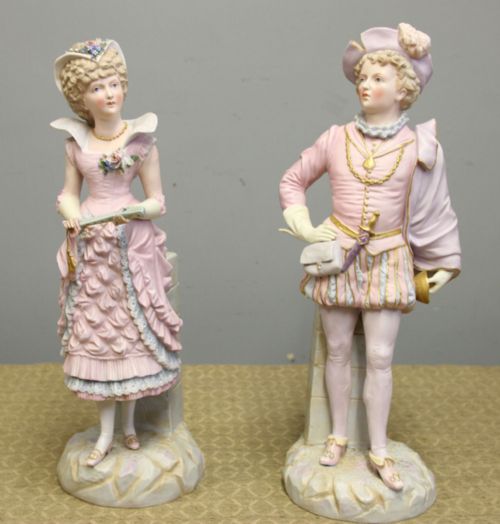
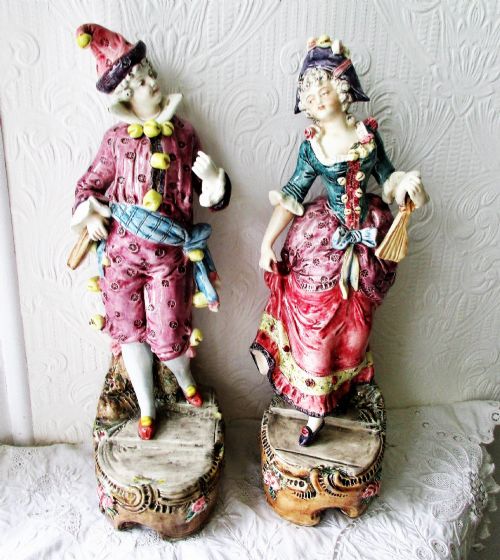
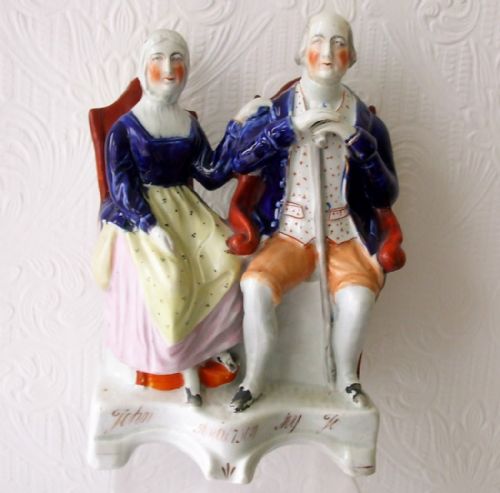
Vintage ceramic couple ornaments encompass decorative figurines, pottery figurines, and porcelain figurines that portray pairs in various styles. When you search for vintage ceramic couple ornaments, you encounter pairs of figures such as a gallant and his lady, a Scottish laird and his wife, or musical figures. These objects span periods from the nineteenth century and the Victorian era up to nineteen thirty.
The forms originate from English, French, and German makers, utilising styles like Victorian, Rococo Revival, and Victorian Folk Art. Many appear as matched pairs, while others are single large Staffordshire pieces depicting specific literary or traditional pairs. They serve entirely decorative purposes, designed for display on mantelpieces and shelves.
How they were made
Makers shaped these ornaments from earthenware, faience, and porcelain, including bisque porcelain and glazed porcelain. The production involved moulding the clay before firing it into a durable ceramic body.
Vintage Ceramic Couple Ornaments Retail Price Guide 2026
Typical asking prices for vintage ceramic couple ornaments among the pieces listed under this phrase on Sellingantiques today, from the lower quarter to the upper quarter. They describe what is for sale here now, not the wider market.
The listings on this page include earthenware, bisque porcelain, and glazed porcelain, spanning the Victorian period and nineteen thirty.
What varies in quality
The refinement of the modelling and the crispness of the painted details separate finer examples from simpler work. Finer pieces display delicate facial expressions and carefully rendered clothing folds, whereas simpler items rely on broader brushwork.
The application of glaze and enamel paint also differs across the range. Superior ornaments retain vibrant colours and precise gilding, showing greater care in the final finishing stages.
Royal Capodimonte Factory
The Vintage Ceramic Couple Ornaments Glossary
- Bisque porcelain
- Unglazed porcelain with a matte, white surface that resembles marble. This finish highlights fine sculptural detail without the glossy shine of traditional ceramics.
- Staffordshire figure
- A type of pottery figurine produced in the Staffordshire potteries of England. These pieces often depict regional characters, historical figures, or traditional couples.
- Faience
- Tin-glazed earthenware originating from France and other European regions. It provides an opaque white background suitable for colourful painted decoration.
- Rococo Revival
- A nineteenth-century design style reviving the ornate curves and playful themes of the eighteenth-century Rococo movement. Figures in this style often feature asymmetrical bases and elaborate scrolling.
Vintage Ceramic Couple Ornaments: Frequently Asked Questions
What periods do these couple ornaments come from?
The pieces span the nineteenth century, including Victorian examples, as well as items from around nineteen thirty.
They reflect the shifting ceramic styles and manufacturing techniques of these various eras.
Are these ornaments sold as pairs?
Many listings feature matched pairs of figures, such as a lady and gentleman or a gallant and his partner.
Single figures also appear, including large Staffordshire portrait pieces representing specific couples.
What materials were used to make them?
Makers utilised earthenware, faience, and various forms of porcelain, including bisque and glazed bodies.
Surface decoration typically involves enamel paint, standard glazes, and occasional gold leaf accents.
Where were these ceramic figures manufactured?
The available pieces originate from English, French, and German workshops and factories.
Notable regional traditions include Staffordshire pottery and Capodimonte porcelain production.
How should I display these ornaments?
These decorative figurines suit placement on mantelpieces, tabletops, and display cabinets.
Their ceramic construction requires stable placement away from high-traffic edges.