


Decorative Gilded China Platter
These decorative gilded china platter options bring cabinet and serving pieces in porcelain and bone china from Georgian to 1930s workshops into the home.
Decorative Gilded China Platter
A decorative gilded china platter combines porcelain and bone china surfaces with gold leaf, gilt, and enamel highlights across forms ranging from cabinet plates to serving dishes and deep lobed trays. The pieces here span the Georgian period, the nineteenth century, and the early decades of the twentieth century, bringing together English and French studio output.
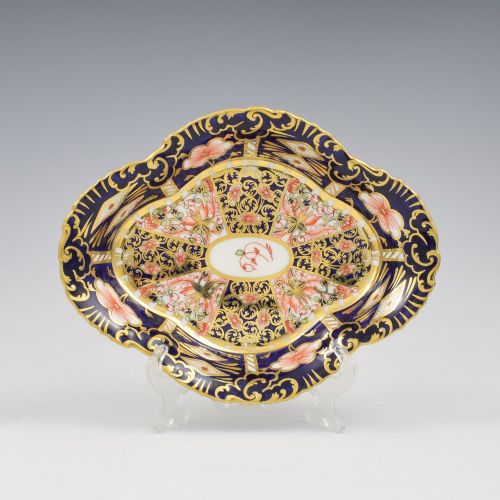
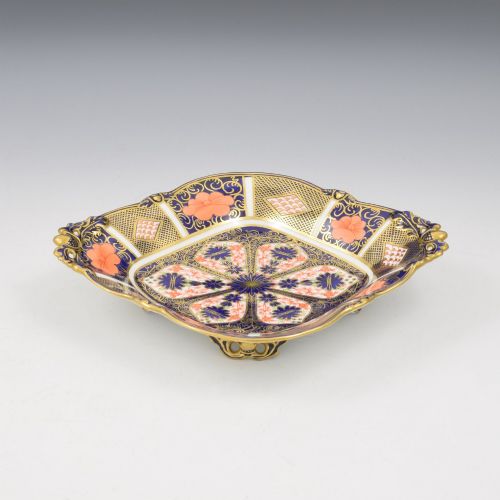
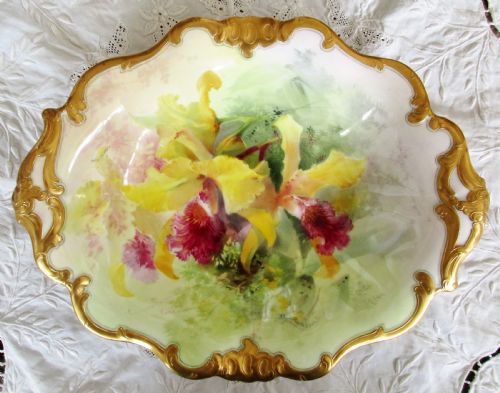
Buyers meet serving dishes and cabinet plates that display intricate painted decoration, notably English Imari patterns, armorial motifs, and botanical studies such as orchids alongside landscape scenes. These items functioned originally for formal dining or cabinet display, meaning they often survive in forms meant to command attention on a table or wall.
Makers represented in these listings include Royal Crown Derby, Royal Doulton, Coalport, Royal Worcester, and Chamberlain's Worcester, alongside continental pieces from Paris workshops. Each factory brought distinct moulding and painting traditions to its output, resulting in diverse forms from twin-handled serving dishes to pierced trays.
Materials and methods
Potters shaped these objects using porcelain and bone china bodies, which were then fired to create hard, smooth surfaces capable of holding fine enamels and gilding. Artisans applied gold leaf, gilt, and gilding by hand, often building up rich metallic borders and detailed motifs that complemented the painted scenes underneath.
Painting and enamelling required skilled decorators to render botanical subjects, armorial crests, and complex Imari patterns directly onto the glazed ceramic body before secondary firings fixed the colours. Makers such as Royal Crown Derby and Chamberlain's Worcester utilised specialised enamel palettes to achieve deep blues, iron reds, and contrasting gold accents.
Listings feature porcelain and bone china pieces spanning from the 18th century through the Georgian and Victorian periods into the 1930s.
Quality and execution
The standard of a decorative gilded china platter depends on the precision of the hand-painting and the thickness and burnishing of the applied gold leaf. Pieces decorated by named artists or produced by leading houses show superior brushwork in details like botanical specimens and armorial crests.
The complexity of the ceramic form itself distinguishes finer examples, such as pierced serving trays and deep lobed dishes that required advanced moulding and kiln work to prevent warping. Well-preserved enamel colours and minimal rubbing to the gilt edges indicate careful handling over generations.
Royal Crown Derby·Royal Doulton·Coalport Porcelain·Royal Worcester·Chamberlains Worcester·Pucher Deroche Paris
The Decorative Gilded China Platter Glossary
- Imari
- A decorative style featuring deep underglaze blue and iron red, frequently enriched with gold gilt, originating in Japan and adapted by English factories like Royal Crown Derby.
- Bone china
- A type of porcelain containing bone ash, developed in England to create a strong, brilliantly white ceramic body suitable for delicate forms and rich gilding.
- Armorial plate
- A ceramic dish painted with a specific family coat of arms or crest, usually commissioned as part of a larger bespoke service for wealthy patrons.
- Cabinet dish
- A decorative ceramic piece made primarily for display in a cabinet or on a wall rather than for practical dining use.
- Gilding
- The application of gold leaf or gold paint to the surface of ceramics to create metallic highlights and decorative borders.
Decorative Gilded China Platter: Frequently Asked Questions
What is a cabinet dish?
A cabinet dish is a decorative ceramic plate or tray created specifically for display in a cabinet or on a wall, often featuring detailed painted scenes or elaborate gilding rather than being used for serving food.
These pieces usually showcase the highest skill of the factory's artists and decorators, making them focal points for collectors.
How do I care for gilded china?
Gilded china requires gentle hand washing in lukewarm water with a mild detergent, avoiding abrasive sponges or harsh scrubbing that can wear away the delicate gold leaf and enamel paints.
Displaying pieces away from direct sunlight and heavy foot traffic helps protect the painted surfaces and metallic highlights from accidental damage.
What is English Imari?
English Imari is a decorative ceramic style inspired by Japanese export wares, characterised by a distinct palette of deep cobalt blue, iron red, and abundant gold gilding.
Factories like Royal Crown Derby adopted this aesthetic during the Georgian and Victorian eras, producing striking tableware and cabinet pieces that remain highly recognizable.
How do I date an antique plate?
Dating an antique ceramic piece involves examining factory backstamps, registration marks, and style characteristics specific to periods like the Georgian era, Victorian times, or the early twentieth century.
Comparing the painting technique, paste composition, and known artist signatures helps narrow down the decade of production.