




Decorative Desk Timepiece
These decorative desk timepiece objects bring character to a study, combining precision metalwork with period charm from the nineteenth and early twentieth centuries.
Decorative Desk Timepiece
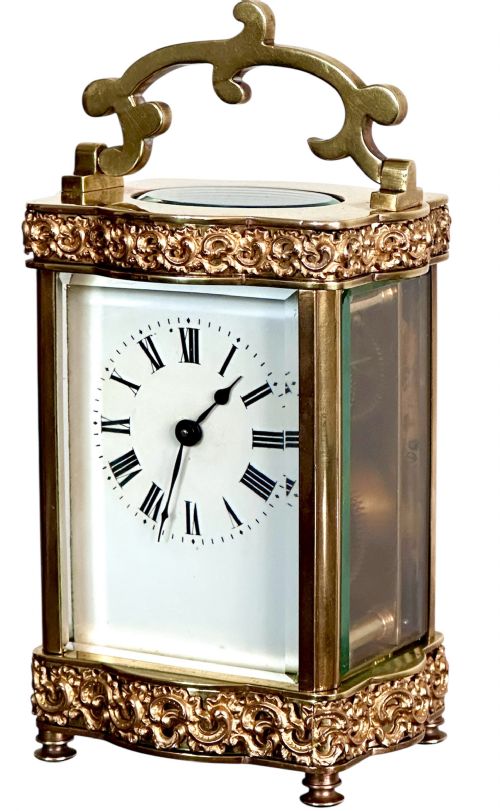
A decorative desk timepiece serves as a functional ornament for tables, desks, and mantels, drawing on styles from the Victorian and Edwardian eras. When searching for this phrase, collectors encounter various forms including carriage clocks, four-glass mantel designs, and small boudoir pieces.
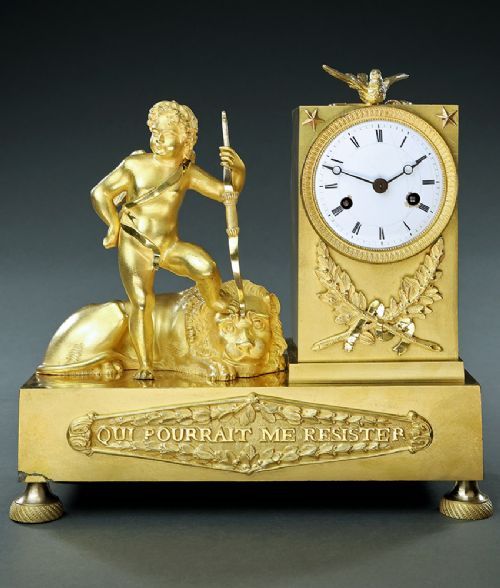
The selection ranges from French carriage clocks with frets and columns to British fusee bracket models and Swiss enamel easel clocks. Most examples date from the nineteenth century, reflecting periods like the Victorian age and French Empire styling.
Makers and makers' retailers housed in these listings include firms such as Le Roy, Henri Jacot, and Tiffany, alongside specialist horologists. Buyers choose these objects for their intricate dials, figural bronzes, and compact proportions suited to desktop placement.
Materials and construction
Horologists and metalworkers utilised gilt brass, ormolu, and bronze to construct the structural cases, often combining them with marble or ebonised wood plinths. Enamel work, including champleve decoration and hand-painted dials, adds colour and fine detail to the faces.
Glass panels feature prominently in crystal regulators and carriage clocks, allowing an open view of the escapement and gear trains. Cabinetmakers also employed hand-carved oak for specific stylistic variants like Arts and Crafts pieces.
Look closely to find mischievous putti, playful poodles, and goats climbing palm trees cast right into the brass mounts.
Factors separating tiers of quality
The degree of hand-engraving across the brass or gilt bronze surfaces distinguishes standard production from superior work. Fully engraved panels and crisply cast figural elements like putti or cherubs indicate higher craftsmanship.
Complexity of the movement, such as fusee mechanisms or specialised escapements housed within four-glass cases, elevates an object. The integration of delicate champleve enamel and intact hand-painted porcelain or enamel dials further defines the top of the range.
Le Roy Paris·Duverdrey and Bloquel·Tiffany·Henri Jacot·John Bennett Cheapside London·Barwise London
The Decorative Desk Timepiece Glossary
- Timepiece
- A clock that tells the time without a striking mechanism. This term appears frequently on pieces designed for desks and boudoirs.
- Ormolu
- Gilt bronze created by applying finely ground gold-mercury amalgam to a bronze object. It provides a rich, durable surface seen on French Empire and Rococo cases.
- Fusee
- A conical pulley used in mechanical clocks to equalize the driving force of the mainspring as it unwinds. It ensures more consistent timekeeping.
- Champleve
- An enamelling technique where troughs or cells are carved into the metal surface and filled with vitreous enamel. These colourful panels adorn carriage and easel clocks.
- Crystal Regulator
- A clock encased in glass panels on four sides with a mercury or compensated pendulum. It showcases the internal movement from multiple angles.
Decorative Desk Timepiece: Frequently Asked Questions
Where should I place a desk timepiece?
These compact objects suit flat surfaces like writing desks, sideboards, or small mantelpieces where their detailed metalwork and dials remain visible.
Ensure the location is stable and away from direct sunlight or dampness to protect sensitive enamel and gilt finishes.
How do carriage clocks differ from mantel clocks?
Carriage clocks were originally built for travel, featuring protective glass panels, robust brass framing, and a fold-down carrying handle on top. Mantel clocks are generally larger, heavier, and styled for static placement on furniture.
Both forms appear frequently within nineteenth-century horology.
What is a crystal regulator?
A crystal regulator is a clock housed entirely within glass panels, allowing light to pass through and illuminate the interior movement. They gained popularity during the late nineteenth century in France.
These pieces emphasise the mechanical escapement and mercury-filled pendulums as part of their visual appeal.
How do I identify the period of a timepiece?
Examine the stylistic cues, such as French Empire neo-classical motifs, Victorian rococo revival scrolls, or later Art Deco geometric lines. Material choices and maker signatures stamped on the movement backplate also provide clear chronological markers.
Comparing construction techniques helps confirm whether a piece belongs to the mid-nineteenth century or the Edwardian era.