


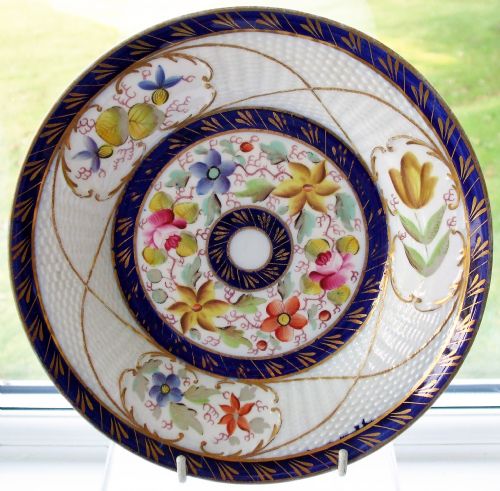


Decorative Ceramic Saucers
These decorative ceramic saucers and associated plates bring centuries of kiln artistry to the table, offering rich palettes and intricate hand-painted motifs for the discerning collector.
Decorative Ceramic Saucers
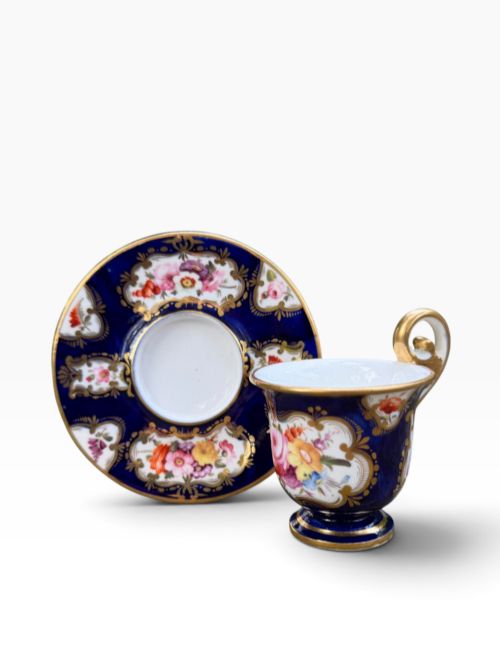
Decorative ceramic saucers and their accompanying cabinet plates and cups span periods from the eighteenth century through to the mid-twentieth century. Buyers searching for decorative ceramic saucers will encounter pieces originating from English factories such as Worcester, Coalport, New Hall, Davenport, and Royal Crown Derby, alongside continental Meissen and Sevres-manner works. Asian traditions also feature prominently, with Chinese Canton enamel and Japanese Imari styles forming a significant part of the selection.
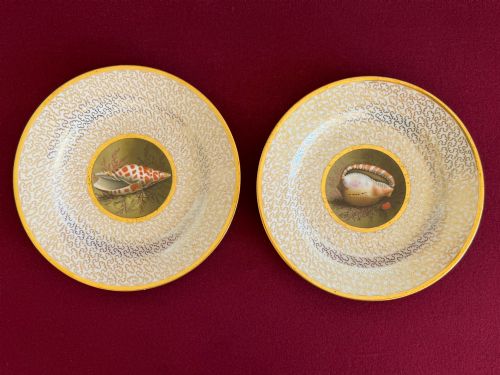
The forms extend beyond standard tea wares to include cabinet plates, dishes, and bowls intended primarily for display rather than utility. English Georgian and Regency pieces sit alongside nineteenth-century Imperial-style Chinese porcelain and twentieth-century decorative iterations. Each item demonstrates the distinct aesthetic priorities of its period, shifting from eighteenth-century Chinoiserie designs to Victorian and later interpretations.
How they were made
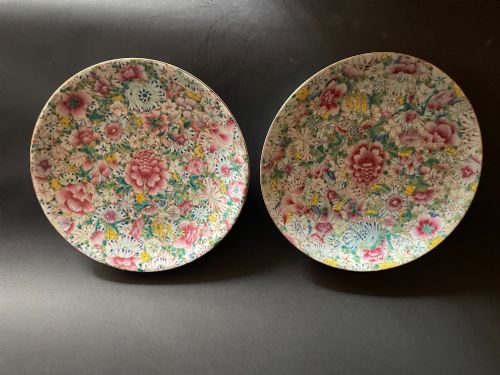
Manufacturing methods rely on both hard-paste and soft-paste porcelain bodies, shaped and fired in kilns before receiving intricate surface decoration. Artisans applied cobalt blue underglaze for deep, enduring blue tones, whilst other pieces utilise polychrome Famille Rose enamels and hand-painted details. Many examples incorporate gilding, including gold leaf applications that highlight rims and focal points.
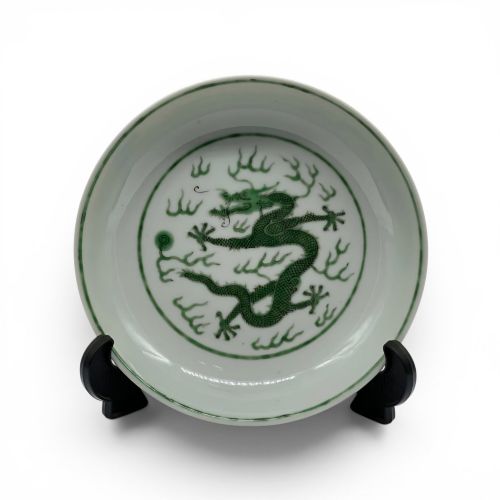
Decoration techniques combined freehand brushwork with specialised regional motifs, such as Japanese Imari palettes or Chinese Kangxi designs. The application of enamel and glaze required precise temperature control during firing to bond the glass and mineral pigments securely to the porcelain substrate.
Decorative Ceramic Saucers Retail Price Guide 2026
Typical asking prices for decorative ceramic saucers among the pieces listed under this phrase on Sellingantiques today, from the lower quarter to the upper quarter. They describe what is for sale here now, not the wider market.
Some saucers carry the Hundred Antiques design, proving that ancient scholars also enjoyed having entirely too many decorative bits on their desks.
What varies in quality
Quality rests upon the crispness of the hand-painted brushwork and the refinement of the porcelain paste itself. Superior pieces exhibit precise enamel application, well-defined gilding, and balanced composition across the decorative surface, whereas lesser examples show hurried execution or muddy pigment blending.
The sophistication of the kiln firing and the preservation of the original glaze also distinguish finer items. Well-preserved gilding and vibrant, stable enamels indicate both careful historical handling and high initial manufacturing standards.
Barr Flight and Barr·Coalport·New Hall·Davenport·Meissen·Royal Crown Derby
The Decorative Ceramic Saucers Glossary
- Soft-paste porcelain
- A ceramic composition made from clay, glass frit, and other materials, fired at lower temperatures than hard-paste. It possesses a warmer tone and a softer glaze that interacts uniquely with underglaze pigments.
- Imari
- A style of Japanese export porcelain characterised by a distinct palette of cobalt blue, iron red, and gold. It heavily influenced European kilns during the eighteenth and nineteenth centuries.
- Famille Rose
- A palette of opaque enamel colours introduced in Chinese ceramics during the Qing dynasty, dominated by shades of pink and rose. It allowed for nuanced pictorial scenes and naturalistic floral depictions.
- Underglaze
- A method of decorating pottery before the glaze is applied, using pigments that can withstand high kiln temperatures. Cobalt blue is the most common and durable of these pigments.
- Cabinet plate
- A decorative plate intended for display in a cabinet or on a wall rather than for practical dining use. These pieces often feature elaborate hand-painted scenes and gilt borders.
Decorative Ceramic Saucers: Frequently Asked Questions
How do I identify a true cabinet plate?
Cabinet plates are distinguished by their decorative focus, often featuring elaborate hand-painted scenes, rich gilding, or intricate patterns that are intended for display rather than daily service.
They frequently lack the heavy utilitarian wear found on standard tableware and may bear maker marks or pattern numbers associated with high-end porcelain houses.
What is the difference between hard-paste and soft-paste porcelain?
Hard-paste porcelain uses kaolin and petuntse fired at very high temperatures, resulting in a dense, vitrified body that resists scratching. Soft-paste porcelain utilises a glassy frit mixture fired at lower temperatures, yielding a softer texture and a warmer, slightly creamy glaze.
Collector appreciation often depends on the specific aesthetic and historical qualities each body type brings to pieces from different European factories.
How should I care for antique porcelain saucers?
Antique porcelain requires gentle handling, ideally washing by hand in lukewarm water with mild soap when necessary. Avoid abrasive sponges, harsh detergents, and dishwashers, as these can damage fragile overglaze enamels and delicate gold leaf.
Display items safely in stable cabinets away from direct sunlight and extreme temperature fluctuations to preserve the integrity of the glaze and pigments.
How do I spot Japanese Imari style?
Japanese Imari style is identifiable by its characteristic tripartite colour scheme of underglaze cobalt blue, iron red, and supplementary gilt highlights. The patterns typically combine floral motifs with intricate brocade designs.
European factories frequently copied this vibrant aesthetic during the eighteenth and nineteenth centuries, creating a rich cross-cultural tradition of decorative ceramics.