

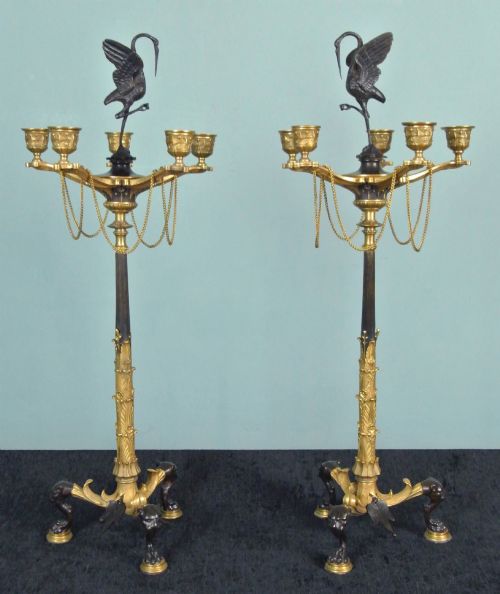
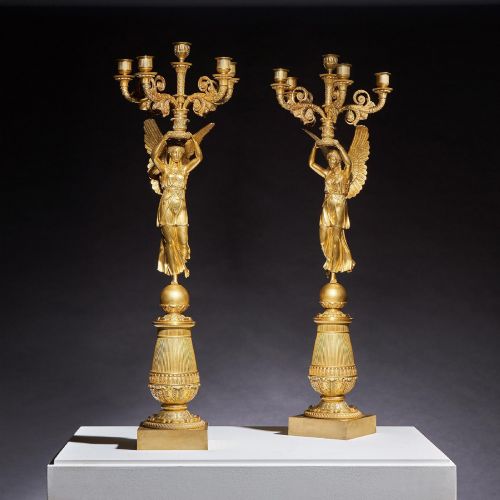
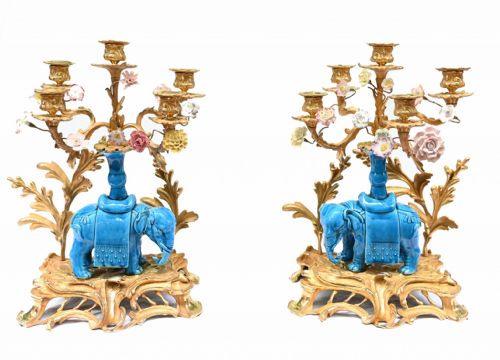


Decorative Bronze Candelabrum
These decorative bronze candelabrum selections bring nineteenth-century French and Regency grandeur to a room, offering sculptural presence and polished metalwork.
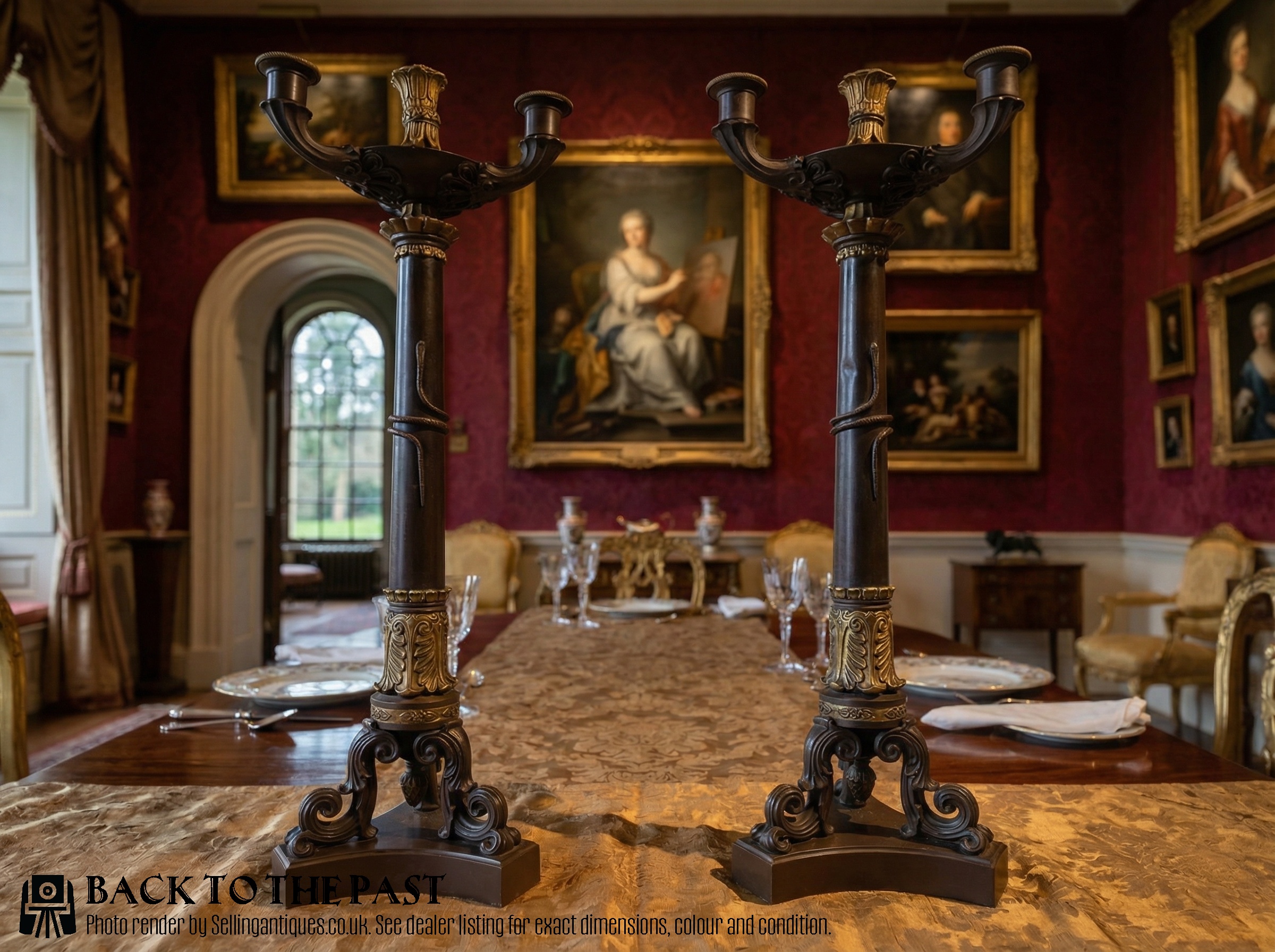
Decorative Bronze Candelabrum
A decorative bronze candelabrum is a multi-branched lighting fixture designed for tables and mantelpieces, combining heavy metal casting with classical ornamentation. Buyers searching for a decorative bronze candelabrum will encounter nineteenth-century French and Regency examples, alongside related table lamps and wall sconces.
The objects on this page span the nineteenth century, including specific periods like the Charles X, Restauration, and late nineteenth-century French eras. Many survive in pairs, featuring multiple arms for candles or conversions to electrical table lamps.
Makers and designers from the period occasionally shaped these forms, incorporating materials such as marble, porcelain, and cloisonne enamel into the bronze and ormolu framework. The designs draw heavily on Neoclassical and French Empire styles, showcasing figures, cherubs, and animals.
How they were made
The primary construction relies on cast bronze and patinated metal, shaped to form the structural body and detailed decorative elements. Foundries applied mercury gilding or ormolu to highlight specific sections of the bronze, creating contrast against darker patinated surfaces.
Secondary materials such as white marble, porcelain, and cloisonne enamel are integrated into the bases and columns of the candelabra. Artisans assembled these components mechanically using threaded rods and screws, allowing for intricate detailing across multiple tiers and arms.
Materials documented across the inventory include gilt bronze, ormolu, white marble, porcelain, and cloisonne enamel.
What varies in quality
The crispness of the bronze chasing and the depth of the ormolu gilding separate standard production from exceptional examples. Finer pieces exhibit sharp, hand-finished detailing in the foliage, figures, and architectural mounts.
The integration of mixed materials, such as heavy white marble bases or intricate cloisonne enamel sections, dictates the overall ambition of the piece. Substantial scale and the survival of matching pairs further elevate the standing of the work.
Barbedienne·Pierre Philippe Thomire·Auguste Cain·Liberty
The Decorative Bronze Candelabrum Glossary
- Ormolu
- Gilded bronze produced by applying a mercury-gold amalgam to a bronze base and heating it until the mercury vaporised. This technique creates a durable, rich golden surface typical of nineteenth-century French metalwork.
- Patination
- The surface finish achieved either naturally or through chemical treatment on bronze and metal. A well-maintained patinated surface adds depth and protects the underlying metal.
- Cloisonne
- An enamelwork technique where thin metal wires form compartments on a bronze body, which are then filled with coloured glass paste and fired. This decorative method appears on select nineteenth-century candelabra bases and columns.
- Restauration
- A French design period spanning the early nineteenth century that bridges the Empire style and the later Charles X reign. Pieces from this era often feature restrained classical motifs and combined patinated and gilded bronze.
- Candelabrum
- A branched lighting device designed to hold multiple candles simultaneously. In nineteenth-century examples, these branches are frequently removable or swivelling.
Decorative Bronze Candelabrum: Frequently Asked Questions
How do I clean a bronze candelabrum?
Dust the metal gently with a soft, dry brush to prevent the accumulation of grit in the chased recesses. Avoid commercial metal polishes, as abrasive pastes will strip away the historic ormolu and patinated surfaces.
For stubborn grime, use a slightly damp cloth with mild soap, drying the metal immediately afterwards. Preserving the original surface finish is essential for maintaining the character of nineteenth-century bronze.
Were these candelabra converted to lamps?
Many nineteenth-century pieces have been adapted to electricity over time, often through reversible wiring run down the centre channel. This conversion allowed period metalwork to remain functional in modern domestic settings.
Buyers should examine the wiring path to determine if the original structure was drilled or altered during the conversion process.
What is the difference between ormolu and gilt bronze?
Ormolu specifically refers to gilt bronze created through the historic mercury-gilding process used extensively in France during the eighteenth and nineteenth centuries. The term gilt bronze is often used more broadly to describe any bronze object covered in a layer of gold.
Both finishes yield a brilliant golden lustre, but true ormolu displays a distinct warmth and depth due to the mercury technique.
How do I spot a true pair?
True pairs exhibit matching foundry marks, identical casting dimensions, and uniform wear patterns across both objects. Variations in the chasing or slight differences in the marble bases often indicate marriage rather than an original pair.
Inspect the internal threading and component assembly to confirm that both pieces were produced in the same workshop at the same time.
What periods do these pieces date from?
The selection consists primarily of nineteenth-century works, encompassing specific stylistic windows such as the Regency, French Empire, Charles X, and Restauration periods. Later nineteenth-century examples also incorporate Art Nouveau influences.
Stylistic markers like Neoclassical motifs or cast cherub figures help narrow down the exact decade of manufacture.