







Decorative Brass Mantle Clock
A decorative brass mantle clock brings domestic timekeeping into the parlour through polished metal and ornate casing.

Decorative Brass Mantle Clock
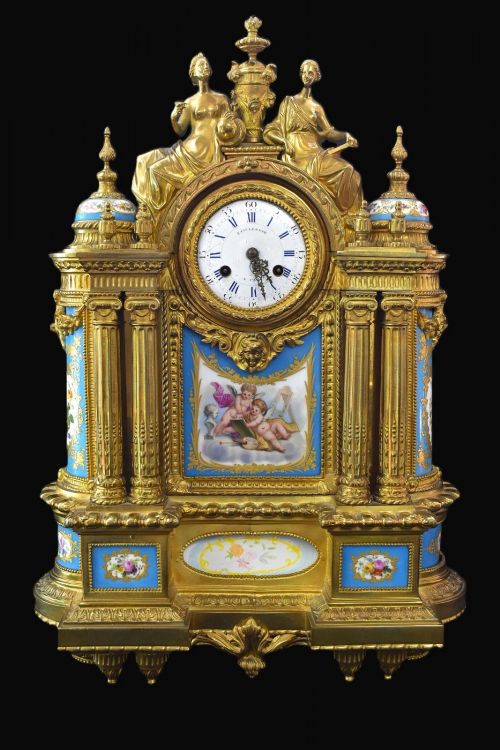
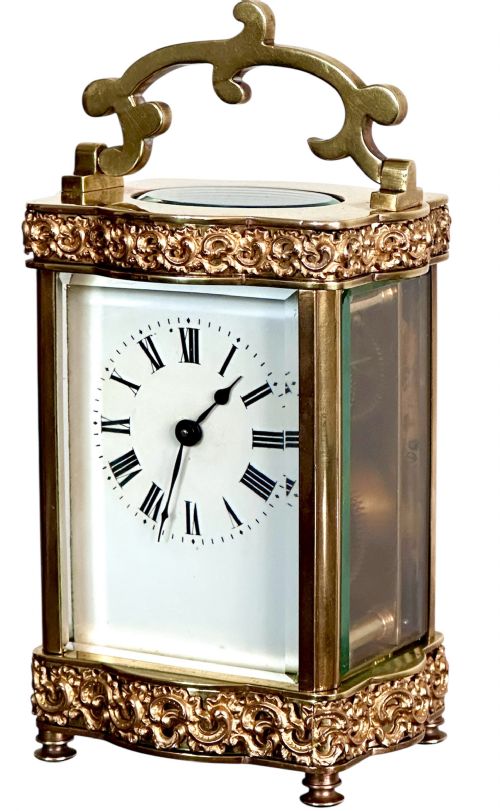
A decorative brass mantle clock unites domestic timekeeping with ornamental metalwork across various periods of the nineteenth century. These pieces range from substantial architectural ormolu cases to smaller glass-enclosed carriage clocks designed for travel or boudoir placement.
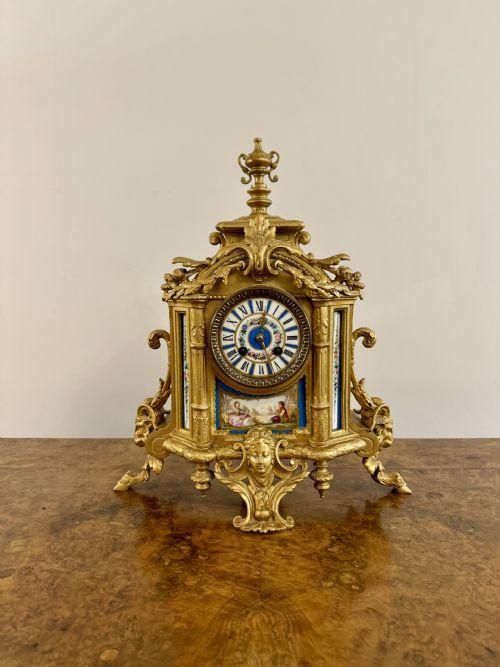
Most examples encountered here originate from nineteenth-century France, featuring rococo revival styling, porcelain panels, and intricate gilding. Alongside these French works, occasional British fusee and balloon clocks appear in the selection.
The assortment spans from mid-nineteenth-century productions through the Victorian era and into the turn of the twentieth century. Forms include four-glass mantel designs, repeating carriage clocks, and ornate clock garnitures accompanied by decorative side ornaments.
Judging execution and detail
Quality rests in the crispness of the cast brass and gilt bronze ornamentation, where deep chasing and sharp relief separate superior work from softer secondary casting. The presence of hand-painted enamel scenes, matched porcelain panels, and profusely engraved side panels elevate a piece above standard production.
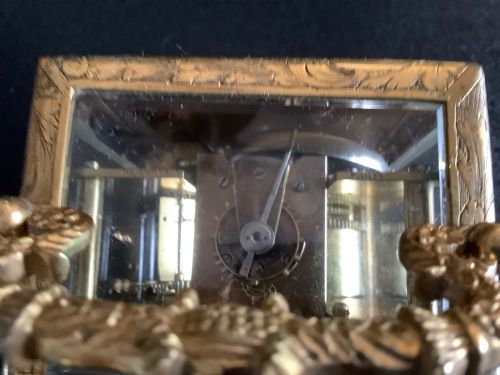
Internal mechanical complexity also distinguishes fine examples, notably with repeating mechanisms, twin fusee movements, and fully restored multi-day striking trains. The integration of delicate details such as sculpted figures, doves, or bespoke architectural framing marks the upper tier of these clocks.
One petite boudoir clock bears an inscription showing it was presented by Sporting Sketches, bringing a nineteenth-century publishing trophy straight to the mantel.
Etienne Lenoir·Duverdrey & Bloquel·TIFFANY·John Leroux·P.H MOUREY
The Decorative Brass Mantle Clock Glossary
- Ormolu
- Gilded bronze produced by applying a mercury and gold amalgam to a bronze base and heating it until the mercury vaporised. This technique creates a durable, rich golden surface characteristic of nineteenth-century French luxury items.
- Fusee
- A conical pulley used in clock movements to maintain an even pull on the gear train as the mainspring unwinds. It ensures consistent timekeeping accuracy throughout the running cycle.
- Champleve
- An enamelling technique where troughs or cells are hollowed out of a metal surface and filled with vitreous enamel paste before firing. The resulting coloured patterns sit flush with the surrounding brass or bronze framework.
- Garniture
- A set consisting of a central clock flanked by matching decorative ornaments such as vases or candelabra. These sets were designed to display symmetrically on a mantelpiece or sideboard.
- Carriage clock
- A portable spring-driven timepiece developed for travellers, fitted with a carrying handle and protective glass panels. Nineteenth-century versions often featured repeating striking mechanisms and platform escapements.
Decorative Brass Mantle Clock: Frequently Asked Questions
How do I wind a mantel clock?
Most mechanical clocks require a key inserted into the dial arbors to tension the mainsprings every eight days. Care must be taken not to overwind the mechanism.
Moving the hands requires following specific instructions depending on whether the movement has a striking train, as turning hands backwards can damage the internal rack.
What is a four glass clock?
A four glass clock is a mantel timepiece encased in brass or gilt metal with glass panels on the front, back, and both sides. This design exposes the movement and mercury or pendulum swing to view.
Originating largely in late nineteenth-century France, these pieces emphasise mechanical transparency alongside decorative metal framing.
How do I date a French clock?
Dating relies on stylistic markers such as rococo revival curves, champleve enamelling, or specific maker signatures stamped on the brass movement plates. Victorian import stamps and registry marks also provide chronological clues.
Comparing the case materials, such as early nineteenth-century ormolu versus late nineteenth-century gilt metal, helps narrow the production decade.
Where should I place my clock?
These clocks require a stable, level surface such as a mantelpiece, sideboard, or sturdy table to maintain proper pendulum or balance wheel beat. Placement away from direct sunlight and drafts preserves the enamel and gilding.
Ambient moisture and extreme temperature fluctuations should be avoided to protect the delicate internal brass gears and wooden or slate backings.