






Decorative Brass Carriage Clock
A decorative brass carriage clock brings intricate metalwork and precise mechanical engineering straight from the nineteenth-century travelling desk into the modern home.
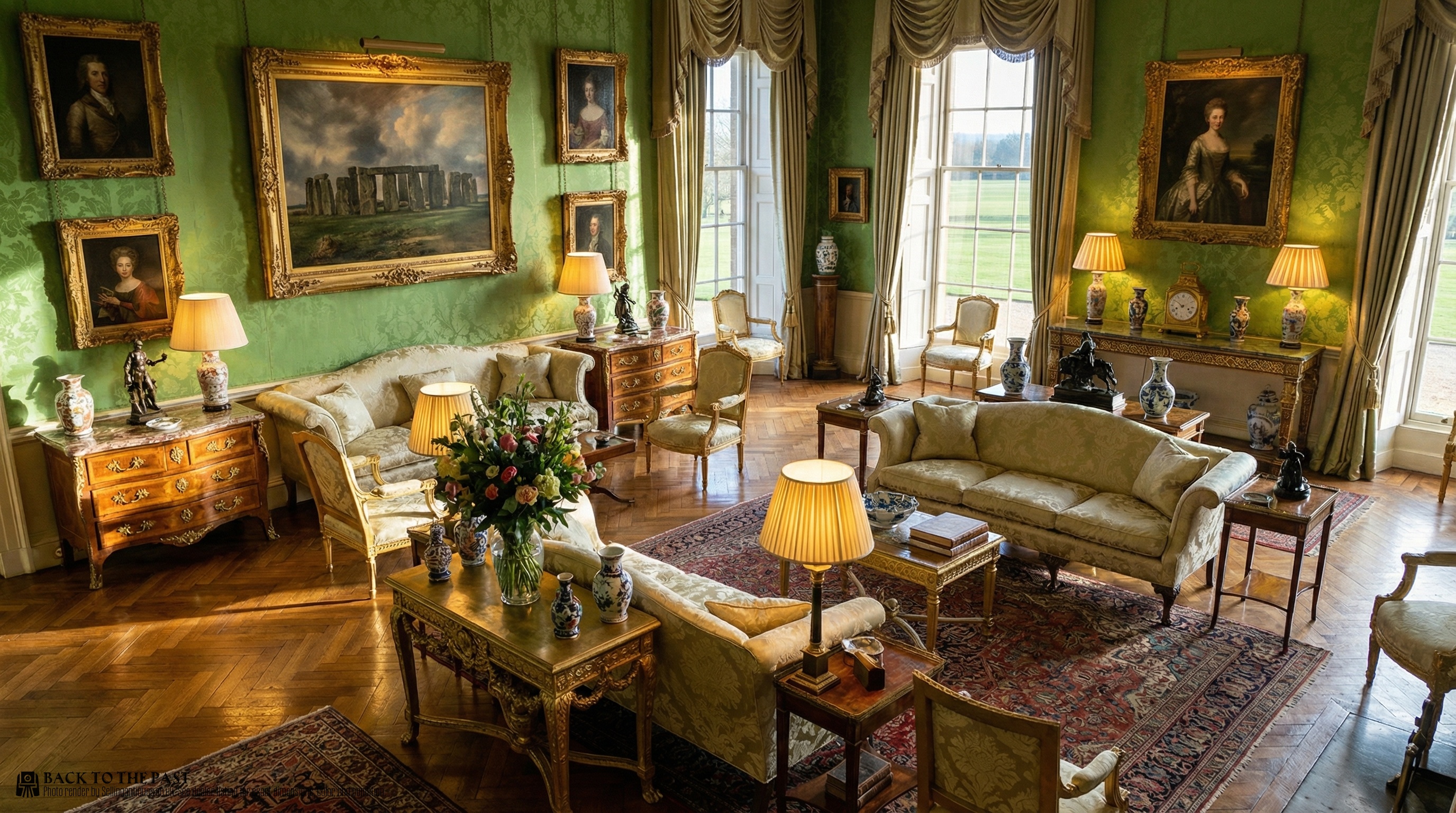
Decorative Brass Carriage Clock
Every decorative brass carriage clock originates predominantly from French and British workshops active during the nineteenth century and the Edwardian era. These portable timepieces served travellers and domestic households alike, combining heavy metal framing with bevelled glass panes to protect the delicate internal movement.
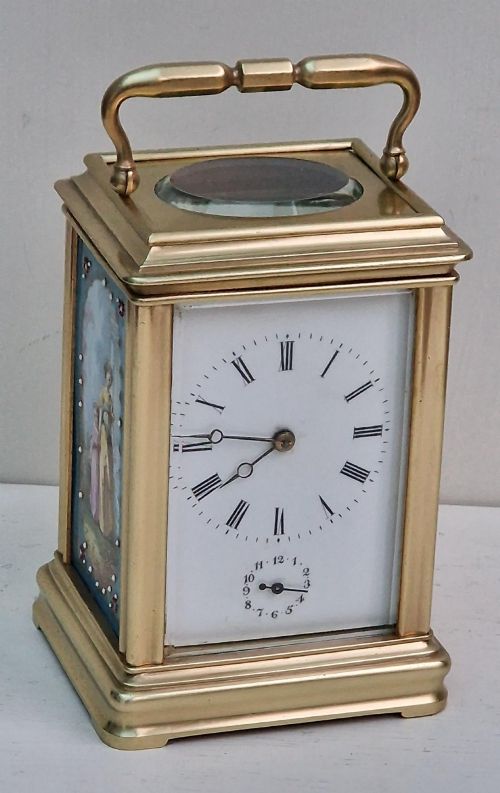
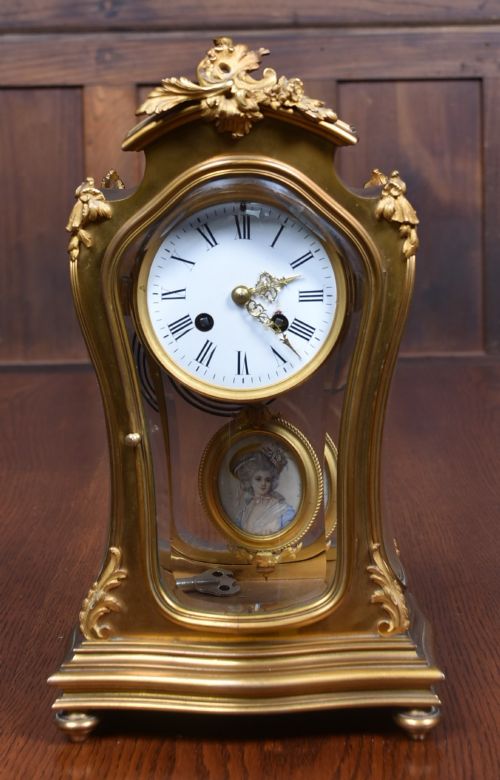
The specimens encountered here most frequently display French styling, ranging from plain lacquered brass cases to elaborate French Rococo Revival, Directoire, and Empire aesthetic schemes. Collectors also find variations featuring porcelain panels, champlevé enamel, and miniature paintings alongside traditional repeating mechanisms.
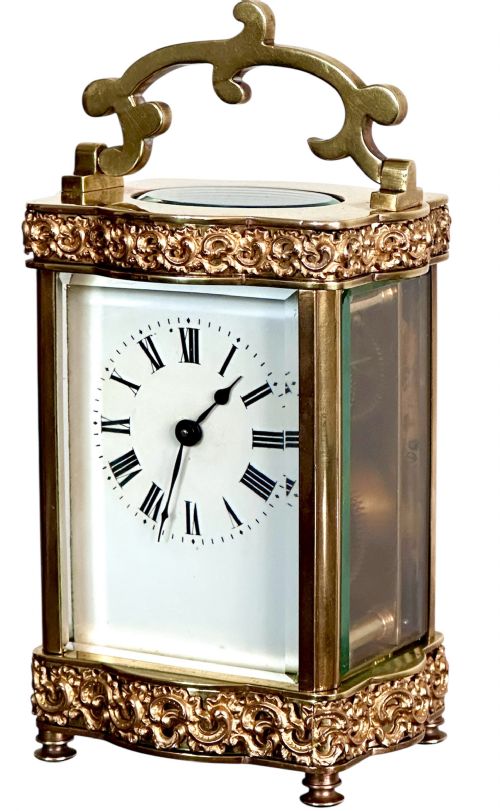
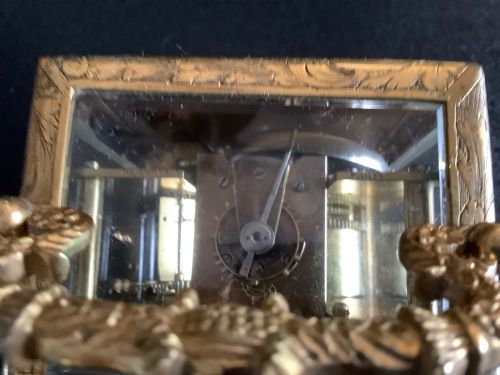
Makers housed these movements in robust brass, gilt brass, and gilt bronze housings, often augmenting the structural pillars and frets with intricate engraving. The overarching design prioritises visibility of the escapement and dial through multiple glass panels while maintaining the structural integrity required for a portable clock.
Distinguishing quality across examples
Quality separates standard production timepieces from superior specimens through the depth and crispness of the engraved decoration across the brass case. Finely articulated gilt bronze, complex champlevé enamel work, and signed movements by known makers elevate an example above plain, unsigned counterparts.
The complexity of the internal mechanism also dictates value, with repeating complications, alarm functions, and double-sided dials requiring greater technical skill than simple time-only movements. The presence of original fitted travelling cases further indicates a higher grade of historical preservation.
The listings show carriage clocks spanning from the 1850s through to the Edwardian period, utilising brass, gilt bronze, enamel, and porcelain.
Rodier·Duverdrey and Bloquel·Tiffany·Delépine Barrois·Paul Garnier
The Decorative Brass Carriage Clock Glossary
- Repeater
- A mechanism that chimes the hours and quarters on demand when a pendant or button is pressed. This complication required intricate internal gong systems.
- Champlevé
- An enamelling technique where troughs or cells are hollowed out of the metal surface and filled with vitreous enamel before firing. It creates vibrant coloured patterns across the brass frame.
- Capucine
- An early form of French carriage clock characterised by striking bells mounted visibly on top of the case and carrying handles. They represent a direct link to eighteenth-century portable timekeeping.
- Fret
- Openwork metal panels incorporated into the sides or top of the case to allow sound from the bell to escape. These decorative grilles often display floral or geometric motifs.
- Escapement
- The internal mechanism that controls the release of power from the gear train to the balance wheel. High-grade examples frequently employ platform escapements.
Decorative Brass Carriage Clock: Frequently Asked Questions
How do I wind a carriage clock?
Most nineteenth-century carriage clocks require a dedicated key inserted into the winding arbors located on the underside or back plate of the movement. Turn the key gently until resistance indicates the mainspring is fully tensioned.
Take care not to overwind the mechanism, as this places excessive strain on the historical spring steel. Check whether the clock has a time-only train or a striking train, which requires winding a second barrel.
What is a repeater carriage clock?
A repeating carriage clock sounds the most recent hour and elapsed quarters when the user presses a button on top of the case. This allowed owners to check the time in darkness without lighting a candle.
The complex rack and snail mechanisms required to execute this function demand precise adjustment by a horologist during restoration.
How should I clean the brass case?
Dust the exterior metalwork and glass panels regularly with a soft, dry microfibre cloth to prevent the accumulation of airborne grime. Avoid harsh chemical polishes that strip original gilding or damage vulnerable enamel and porcelain surfaces.
If the movement requires servicing or deep cleaning of the brass, entrust the piece to a professional clock restorer rather than attempting disassembly at home.
Why do some clocks have porcelain panels?
Makers integrated hand-painted porcelain panels and enamel plaques during the later nineteenth century to appeal to domestic buyers seeking decorative elegance. These panels typically depict floral arrangements or romantic scenes set against gilt bronze bezels.
Such decorative elements transform a functional travel timepiece into an ornate mantel centrepiece suited to formal nineteenth-century parlours.