






19th Century Officer Clock
A 19th century officer clock combines robust mechanical precision with portable elegance, built for travel and campaign use.
19th Century Officer Clock
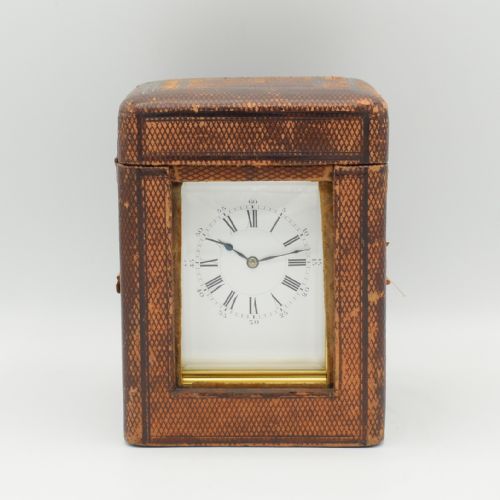
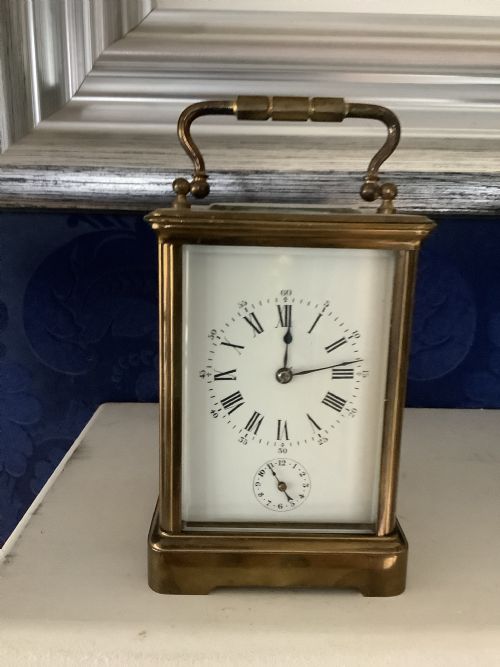
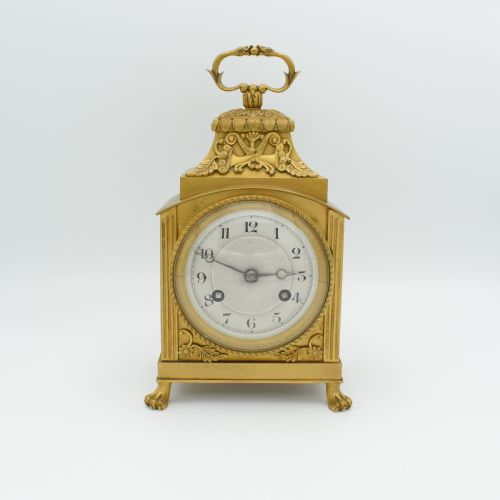
When searching for a 19th century officer clock, buyers encounter portable timepieces housed in brass or gilt frames with bevelled glass panels. These objects include carriage clocks and mantel clocks from French and Victorian makers.
The versions most frequently met on this page originate from nineteenth-century France and Victorian Britain. They range from simple brass carriage clocks to complex examples featuring alarms, striking mechanisms and travel cases.
How they were made
These clocks rely on brass, gilt brass and gilt bronze for their structural cases, paired with clear glass windows that reveal the internal movement. Enamel dials provide a clear surface for painted numerals.
Maker workshops utilised wood veneer, rosewood and leather to construct fitted travel cases designed to protect the portable timepieces during journeys.
Officers relied on these ticking companions to wake them for dawn inspections across dusty campaign trails.
What varies in quality
The standard of a nineteenth-century timepiece is often judged by the complexity of its movement, such as repeating mechanisms, alarms and grande sonnerie striking functions. Simpler eight-day movements occupy a different tier of craftsmanship.
The refinement of the gilt brass or bronze gorge case and the presence of an original leather travel case contribute significantly to the overall execution of the piece.
Henri Jacot·J. F. Bautte Et Cie·Leroy Paris·Le Roy et Fils à Paris·Bourdin Paris·Tiffany·E.J.Dent·Paul Garnier·Drocourt·Joseph Soldano
The 19th Century Officer Clock Glossary
- Carriage clock
- A small, spring-driven clock designed for travel during the nineteenth century. These pieces typically feature a carrying handle and glass panels.
- Gorge case
- A specific style of stepped brass frame commonly utilised for French carriage clocks. The design defines the upper and lower borders of the housing.
- Grande sonnerie
- A complex striking mechanism that chimes both the hours and the quarters automatically. Such movements represent a higher standard of horology.
- Repeating mechanism
- A complication that allows the clock to repeat the last struck hour or quarter at the press of a button. This function was useful before electric lighting.
19th Century Officer Clock: Frequently Asked Questions
What is a 19th century officer clock?
A portable mechanical timepiece created during the nineteenth century for military officers or travellers. They use spring-driven movements and sit within protective metal and glass cases.
These clocks were designed to be wound easily and transported without losing time. Their robust construction allowed them to withstand movement on campaigns and journeys.
How do I wind a carriage clock?
Most models require a specialised key inserted into the winding arbors located on the backplate. Care must be taken not to overwind the mainspring.
Some complicated pieces with alarm or striking functions possess separate arbors for each train. Owners should follow the specific direction required for each individual movement.
Where were these clocks made?
The majority of these timepieces originated in Paris workshops during the nineteenth century. French makers produced a large proportion of the portable clocks used across Europe.
British retailers and makers also retailed or finished similar designs during the Victorian era. Workshops in Paris remained central to the production of high-grade escapements and cases.
How do I clean the glass panels?
The bevelled glass panels can be wiped down with a soft, dry microfiber cloth. Avoid applying liquid cleaning products directly near the brass frame or dial.
Keeping dust away from the escapement ensures the mechanical parts continue to function smoothly. Professional servicing is recommended for internal cleaning.