

Deconstructed Chair
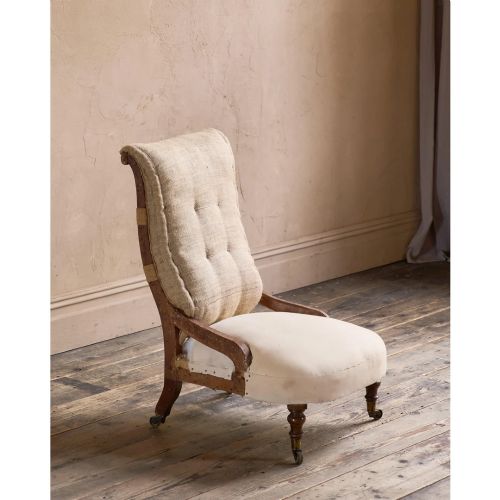
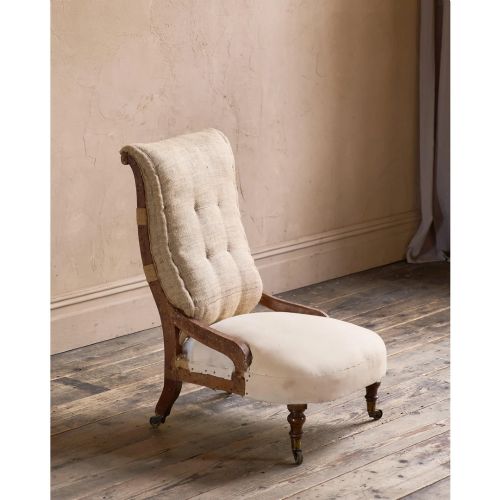
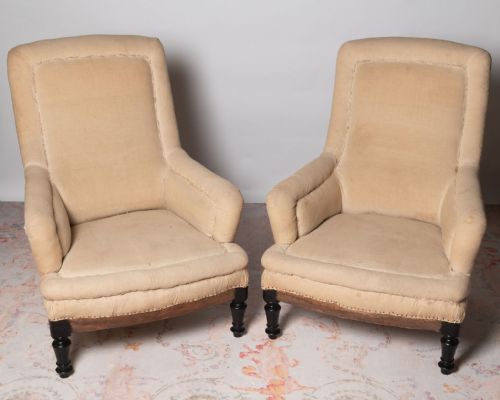
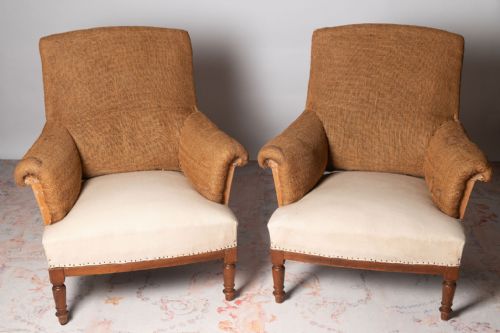
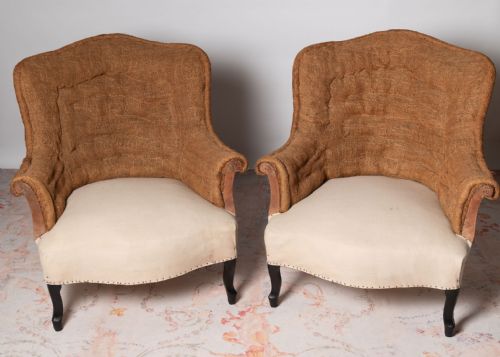
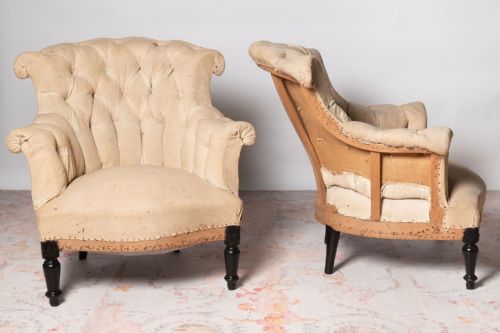
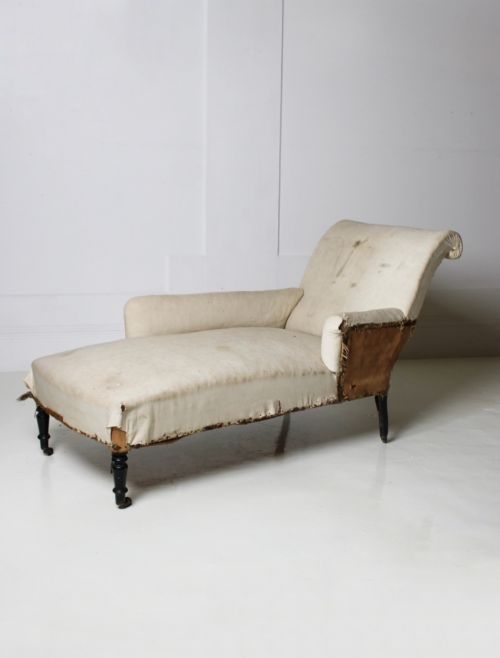
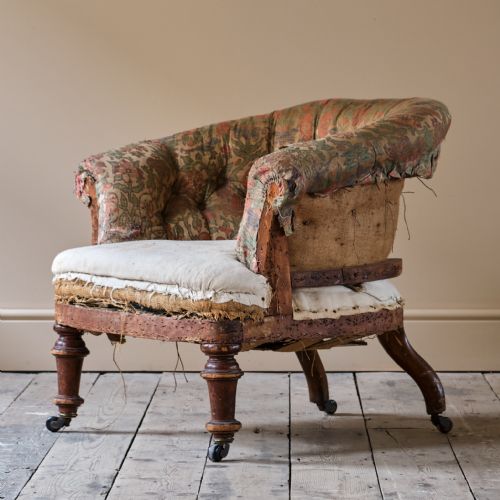
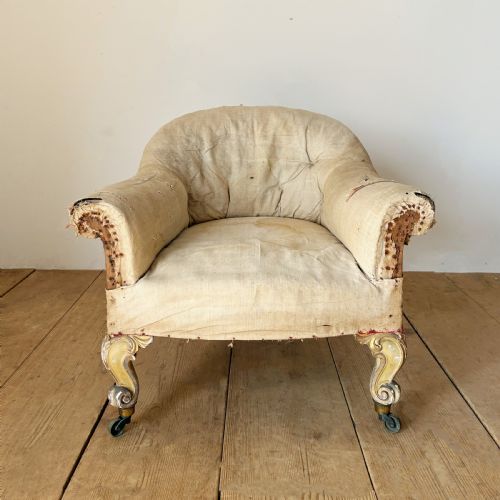
These deconstructed antique chairs strip back centuries of upholstery to expose the honest framing and working materials underneath.
Understanding the Form
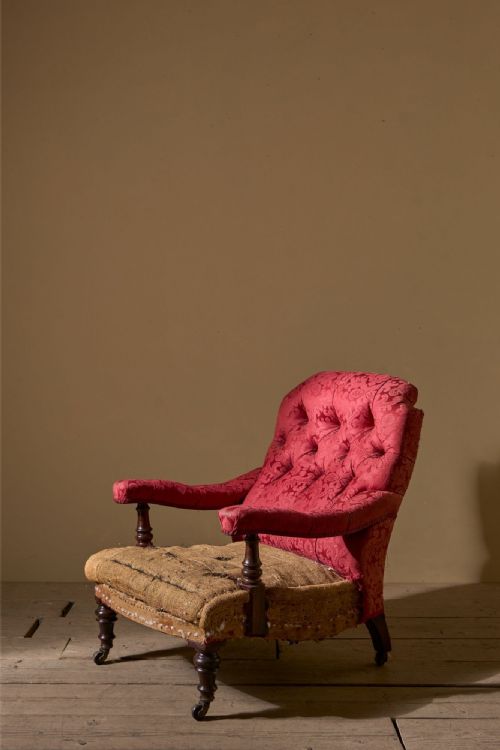
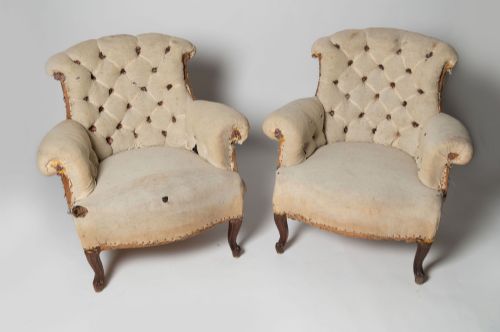
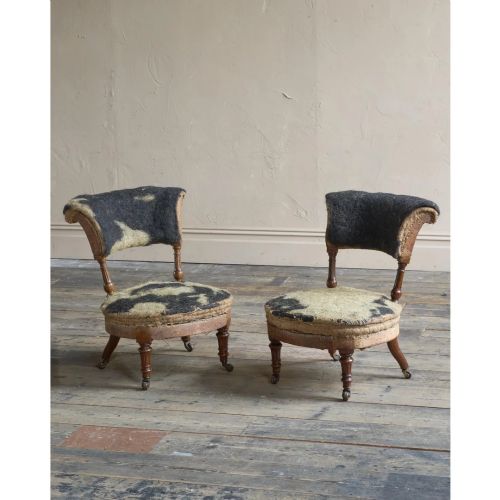
A deconstructed antique chair reveals the bare bones of nineteenth-century seating, from deep-seated Victorian armchairs to French open armchairs and library chairs. These pieces strip away the top layers of velvet, damask, or silk to expose the underlying support structure and internal architecture.
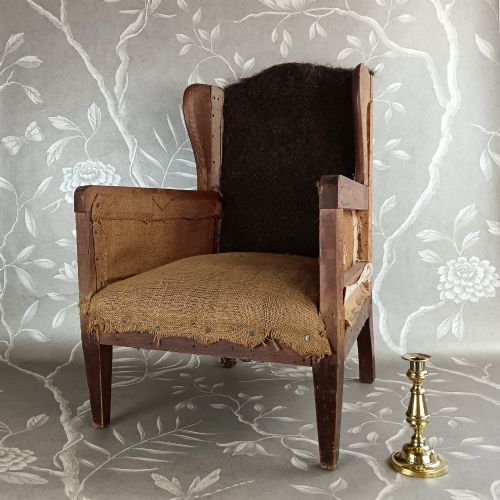
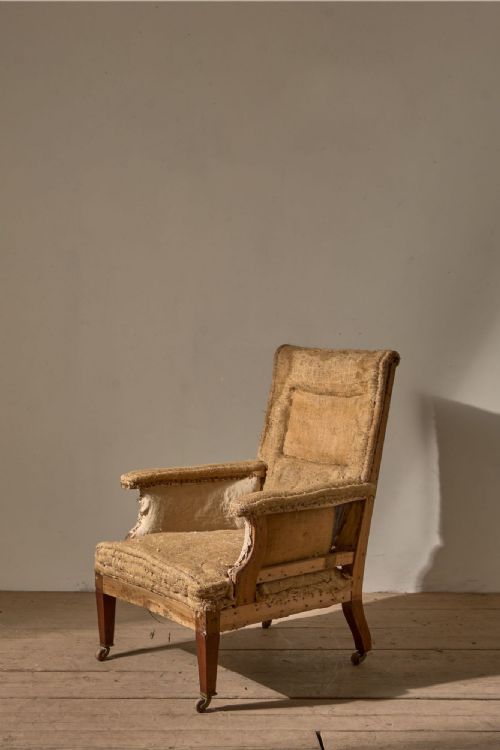
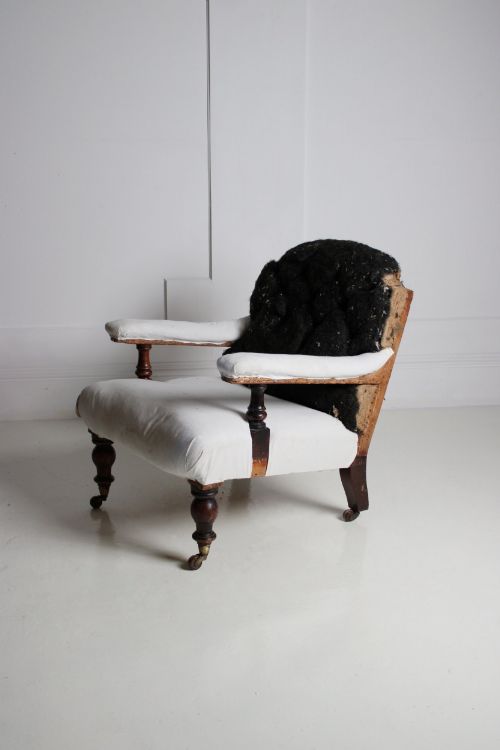
The version most commonly met on this page is the nineteenth-century English or French armchair, retaining its structural webbing and original stuffing beneath a temporary or permanent covering of hessian and calico.
Makers from the period, such as Howard and Sons, created robust frameworks in mahogany, walnut, and other woods designed to endure generations of heavy use.
Construction and Materials
Frames are constructed from solid hardwoods like mahogany and walnut, showcasing traditional joinery and hand-carved details on the exposed woodwork. These structural elements provide the architectural integrity that allows the chair to function without its outer upholstery.
Internal padding relies on traditional stuffing secured by coarse hessian cloth and calico linings, held fast with brass tacks and steel springs or corduroy accents. This layered build creates the characteristic deep-seated comfort of nineteenth-century country house furniture.
Retail Price Guide 2026
Typical UK retail prices for deconstructed chair, calculated from the Sellingantiques database of over a million retail prices indexed since 2003. This retail price guide relies exclusively on Sellingantiques data; no external sources or auction records are used, so the figures do not describe the wider market.
Current listings feature nineteenth-century seating built from mahogany, walnut, and mixed woods, paired with industrial textiles like hessian, calico, and corduroy.
Markers of Excellence
Superior examples distinguish themselves through the sculptural quality of the wooden frame and the integrity of the original joinery, rather than the decorative finish of the outer cover. A well-proportioned nineteenth-century mahogany or walnut chassis balances weight and elegance.
The finesse of the exposed structural work separates ordinary workshop output from exceptional pieces, particularly where maker attribution or distinctive regional styles like the Howard aesthetic are evident in the arm and leg profiles.
Howard and Sons
The Deconstructed Chair Glossary
- Hessian
- A coarse woven fabric typically made from jute fibres, used beneath finer textiles to provide internal structure and support for upholstery stuffing. It forms the primary visible skin of many deconstructed pieces.
- Calico
- A plain-woven cotton fabric used as an interlining layer to contain stuffing materials before the final decorative textile is applied. In deconstructed chairs, it often remains exposed to show the inner shape.
- Spoon back
- An upholstered chair back shaped in a concave oval resembling the bowl of a spoon, designed to fit the human spine. This Victorian form appears frequently in deep-seated armchairs.
- Reeded
- A decorative moulding consisting of parallel convex strips resembling bundled reeds, carved directly into the wooden legs or framework. It is common on nineteenth-century library chairs.
Frequently Asked Questions
What is a deconstructed antique chair?
A deconstructed antique chair is a nineteenth-century seating piece stripped of its decorative top fabric to expose the hessian, webbing, and wooden frame underneath.
This aesthetic highlights the raw construction and interior materials, offering a tactile view of traditional furniture making.
Are these chairs comfortable to sit in?
Yes, because they retain their original nineteenth-century spring systems, deep padding, and internal stuffing beneath the calico and hessian layers.
The underlying support remains intact, providing the same substantial comfort as fully upholstered Victorian armchairs.
How do I care for exposed hessian?
Exposed hessian and calico require gentle maintenance, primarily light surface dusting with a soft brush or low-suction vacuum attachment.
Avoid harsh cleaning chemicals or excessive moisture, which can degrade the natural jute fibres and weaken the fabric structure.
Can I reupholster a deconstructed chair?
These pieces can be fully upholstered in traditional fabrics if a more finished appearance is desired for your interior scheme.
Many collectors prefer to keep them in their raw, deconstructed state to showcase the nineteenth-century wooden frames and internal craftsmanship.