

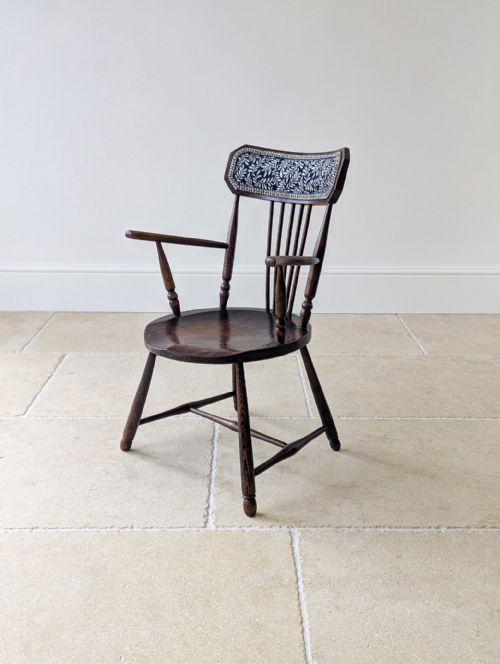
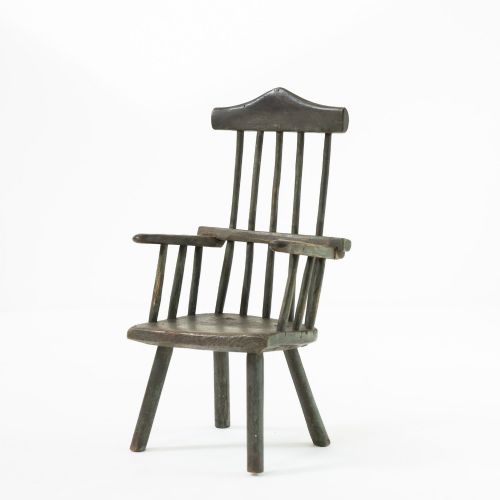
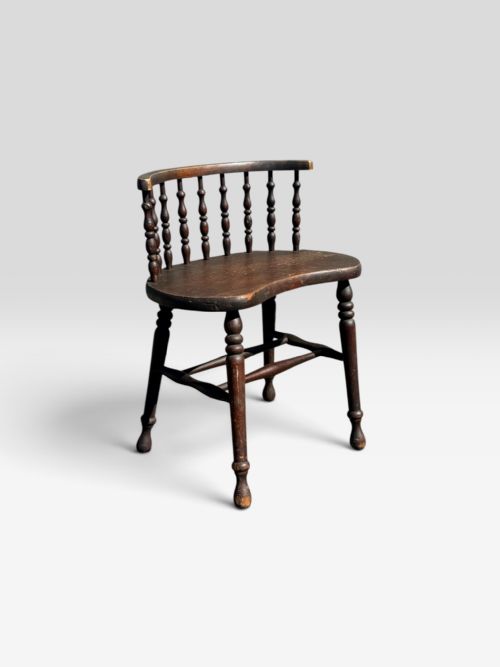
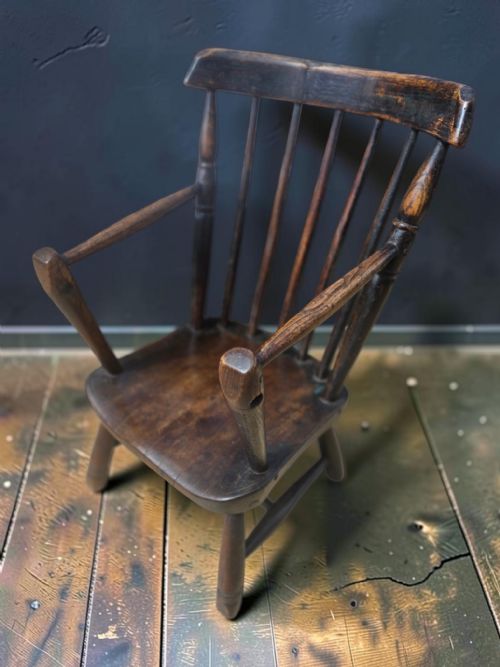
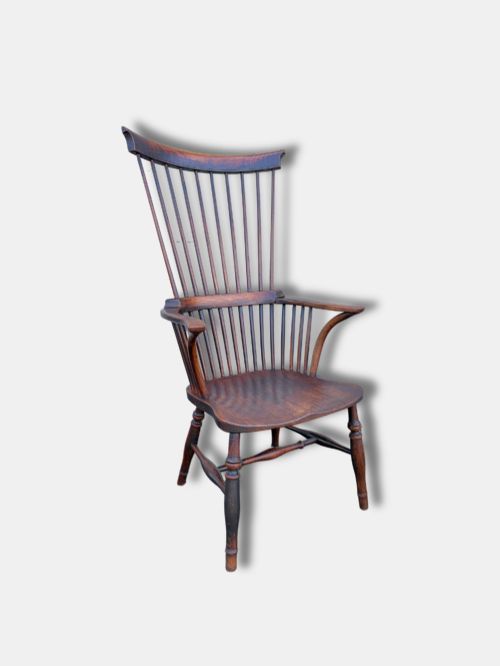
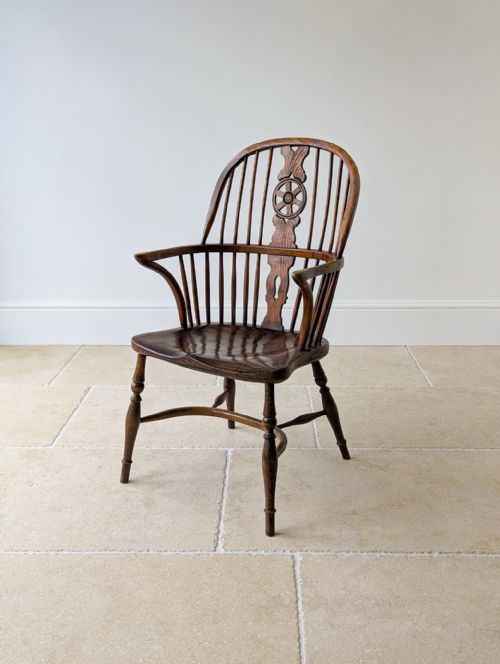
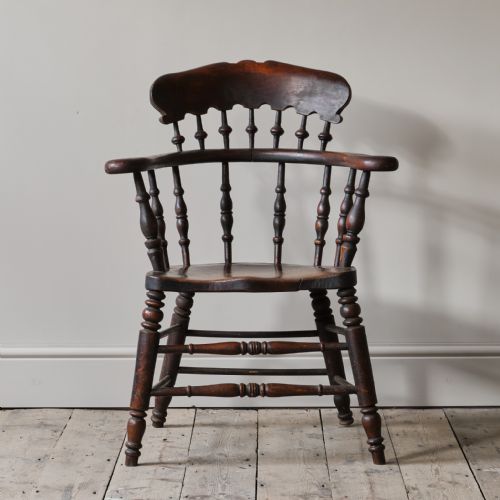
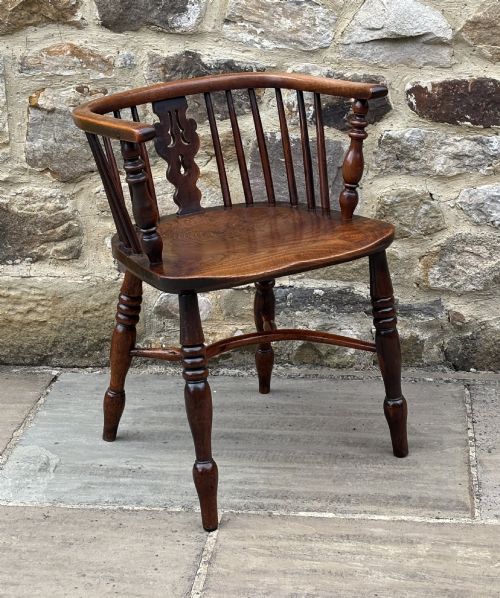
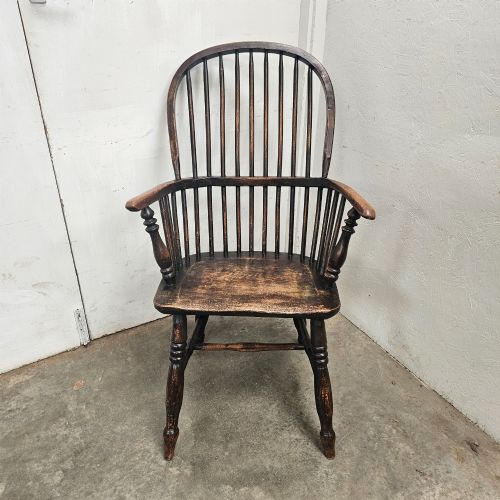
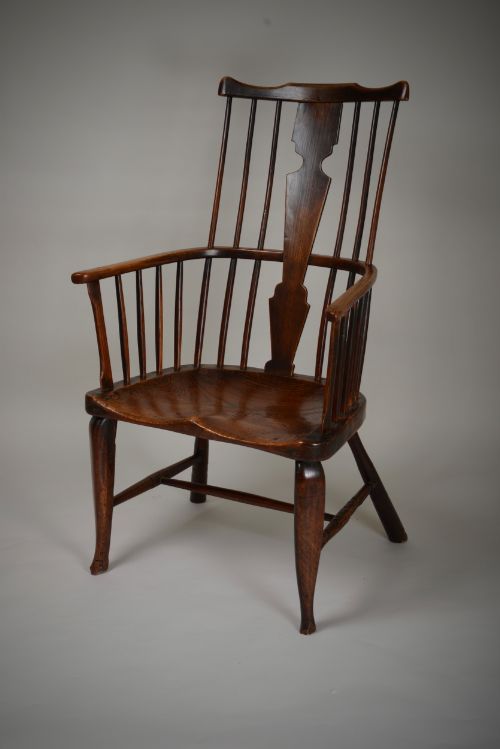
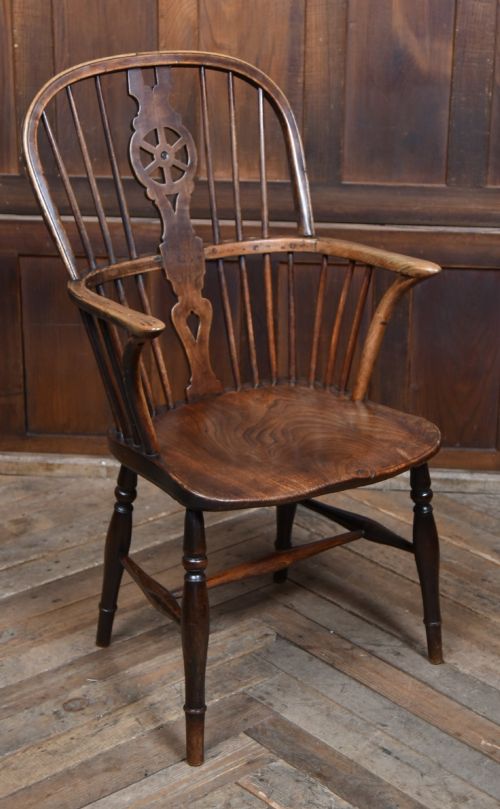
Dark Wood Windsor Armchair
A dark wood windsor armchair offers solid country seating, built from native timbers to last generations.
Dark Wood Windsor Armchair
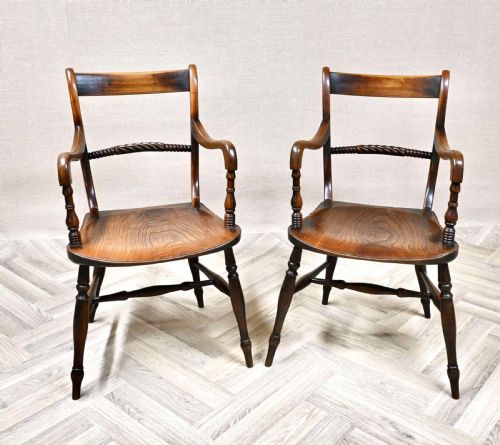
When you search for a dark wood windsor armchair, you encounter robust seating shaped by regional English vernacular traditions over three centuries. These chairs combine a solid saddle-shaped wooden seat with spindles and back bows inserted directly into the base.
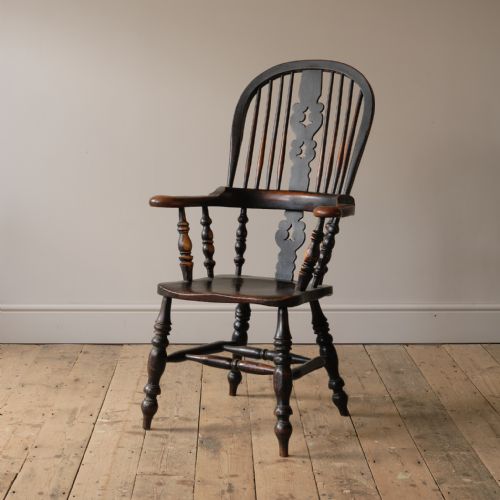
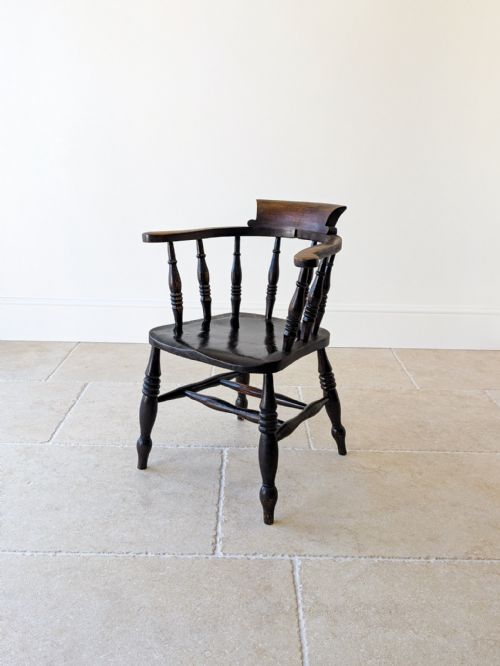
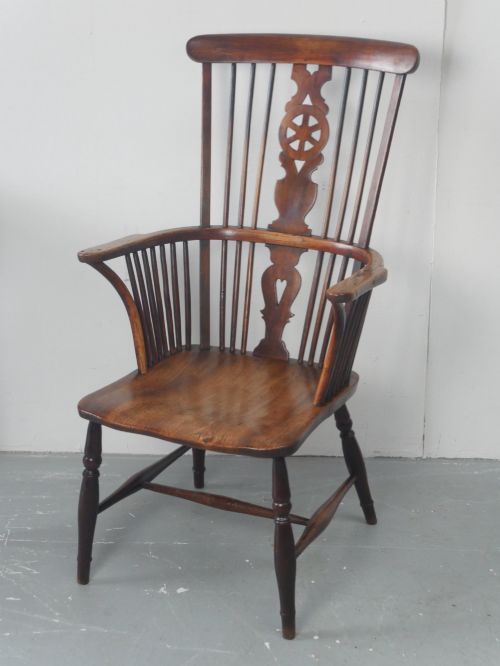
The versions most common on this page date from the eighteenth and nineteenth centuries, spanning Georgian, Victorian and Edwardian eras. They appear as high comb backs, low smokers bows, wheelbacks and hoop backs.
Makers utilised native hardwoods to build these pieces, creating seating suited to farmhouse kitchens, parlours and cottages. Regional variations emerge from places such as the Thames Valley, Wales and Scotland.
What varies in quality
Quality in these chairs rests upon the proportion of the turning, the depth of the sculpted seat and the balance of the overall frame. Better examples display slender, tapering spindles and elegantly curved arm bows that harmonize with the thickness of the seat.
The choice of timber heavily influences the character of the piece, with figured yew wood or well-grained elm commanding greater appreciation than plainer utility timbers. Grain movement and the natural patina developed over centuries distinguish superior survivals from standard workshop output.
Several examples on this page are scaled down as children's armchairs, proving that miniature country seating was built with the same care as adult versions.
John Brand of Sleaford·Duncan McKellar of Fenwick
The Dark Wood Windsor Armchair Glossary
- Comb back
- A Windsor chair style featuring a high backrest with vertical spindles topped by a horizontal headboard resembling the teeth of a comb.
- Smokers bow
- A low-backed Windsor armchair, often associated with Victorian pubs and captain's chairs, featuring a continuous curved arm rail.
- Wheelback
- A Windsor chair design incorporating a pierced wooden splat carved in the shape of a wheel within the centre of the backrest.
- Vernacular
- Objects designed and built by local craftspeople using regional traditions and native materials rather than adhering to formal metropolitan styles.
- Saddle seat
- A thick wooden seat base shaped with a hollowed-out contour for ergonomic comfort.
Dark Wood Windsor Armchair: Frequently Asked Questions
What is a dark wood windsor armchair?
A dark wood windsor armchair is a traditional form of seating characterised by a solid carved wooden seat into which independent legs and back spindles are wedged.
These chairs evolved through regional English woodworking traditions, utilising native timbers like elm, ash and yew to create sturdy, functional furniture for domestic and commercial use.
How do I tell an 18th century windsor from a 19th century one?
Eighteenth-century examples often exhibit broader proportions, deep comb backs and substantial native elm seats shaped entirely by hand tools. They frequently display simpler, more primitive joinery and regional vernacular traits unique to specific river valleys.
Nineteenth-century pieces tend toward standardised production methods, incorporating stylistic revivals such as Gothic tracery, wheelback splats or steam-bent hoops associated with Victorian and Edwardian manufacturing.
Where were windsor armchairs used?
Historically, these armchairs served as principal seating in farmhouse kitchens, cottages, country houses and rural inns. Their robust construction made them suitable for daily domestic life.
Later Victorian examples also found places in offices, libraries and smoking rooms, particularly in the lower-backed captain or smokers bow configurations.
How do I live with a windsor armchair?
Living with these chairs involves placing them away from direct heat sources and sudden temperature shifts to protect the historic timber and joints. Regular dusting and occasional feeding with suitable wax maintain the dry, honest finish.
Their sturdy build allows them to function as practical seating around a dining table or as a standalone accent chair in a hallway or study.