


Dark Wood Waterfall Bookcase
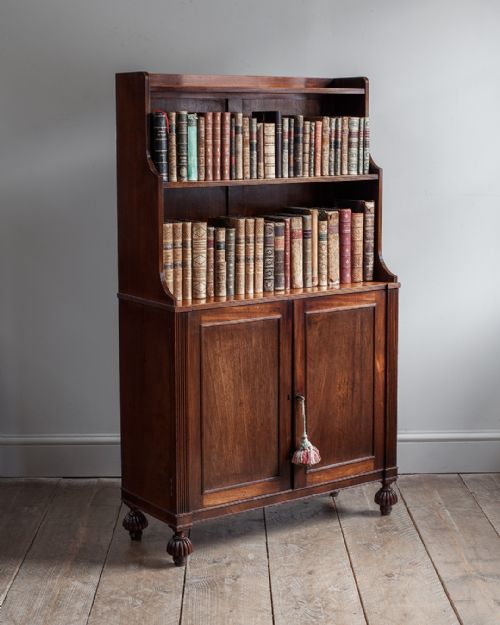
A dark wood waterfall bookcase brings graduated open shelves into a room, offering a tiered display for books and small objects.
Dark Wood Waterfall Bookcase
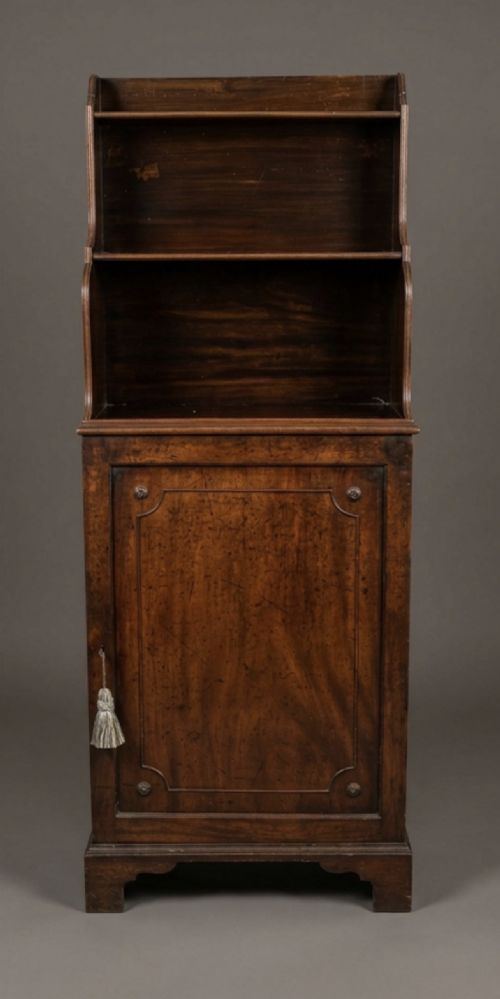
A dark wood waterfall bookcase presents tiered open shelves that step back from bottom to top, creating a cascading profile. The selection includes freestanding formats, wall shelves, and pieces incorporating lower cupboards.
Makers produced these storage units across several periods, with 19th Century and Regency examples appearing alongside Georgian, Victorian, and Edwardian interpretations. Variations range from compact dwarf bookcases to larger display units with brass inlays or side galleries.
The form suits studies, drawing rooms, and hallways, providing accessible surface space for volumes and ornaments without overwhelming smaller interiors. Pieces span simple utility items to elaborate revival designs.
Materials and construction methods
Cabinet makers utilised dense hardwoods such as mahogany and rosewood, frequently employing flame veneers to accentuate the grain on upright panels and shelf fronts. Selected examples feature pine carcasses or painted finishes alongside simulated rosewood surfaces.
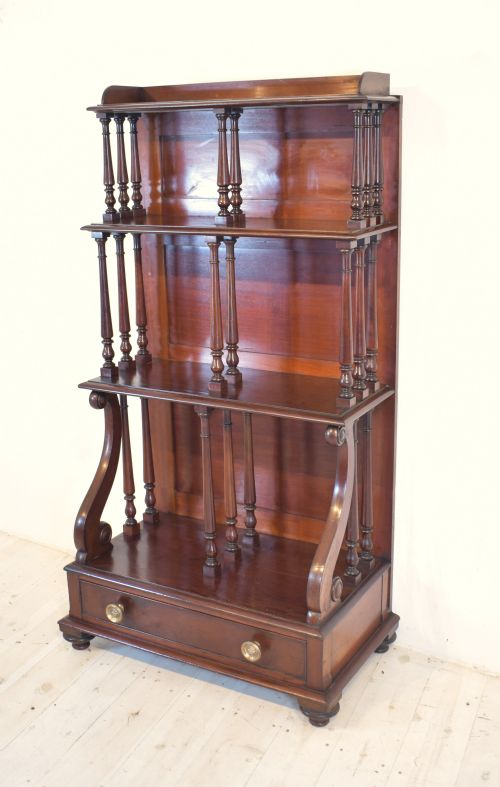
Structural detailing incorporates brass inlays, delicate satinwood stringing, and open fretwork galleries flanking the stepped tiers. Freestanding variations rest on plinth bases or slender supports, while wall-hanging formats utilise secure brackets.
One exceptional piece pairs Anglo-Indian craftsmanship with Regency style, proving that waterfall shelves travelled far beyond traditional English workshops.
Distinguishing quality in tiered shelving
Superior execution shows in the careful selection of timber figures, where book-matched veneers flow continuously across the graduated shelves and side panels. Lesser examples rely on plain timber without contrasting stringing or detailed edge moulding.
Joinery standards define durability, particularly in how the stepped shelves join the vertical supports and whether the backboards remain solid rather than ply. Finer pieces integrate brass mounts, turned galleries, or lower enclosed cupboards with working locks.
Shapland & Petter
The Dark Wood Waterfall Bookcase Glossary
- Waterfall bookcase
- A set of open bookshelves where each tier steps back progressively from the one below, forming a stepped profile resembling a cascade. The design gained popularity during the Regency period.
- Flame mahogany
- A timber veneer sliced from the fork of a mahogany tree where the branches meet the trunk, producing a distinctive flickering flame pattern. Cabinet makers used this to create decorative focal points on key surfaces.
- Dwarf bookcase
- A low-standing bookcase designed to sit beneath window height or picture rails, keeping the upper wall space clear. These pieces often feature graduated shelves or integrated lower cupboards.
- Etagere
- A piece of furniture consisting of a set of open shelves for displaying ornaments or books. Originating in France, these tiered stands appear frequently in rosewood and mahogany.
- Stringing
- A narrow strip of contrasting wood inlaid into the surface of a piece to form decorative borders and geometric outlines. This technique highlights the edges of shelves and cabinet doors.
Dark Wood Waterfall Bookcase: Frequently Asked Questions
How do I style one in a room?
Position a dark wood waterfall bookcase against a plain wall where the stepped profile and timber grain can stand out. Mix upright book rows with small decorative objects on the upper tiers.
Because the shelves decrease in depth toward the top, place smaller volumes and lighter items on the upper levels. Heavier books sit securely on the wider bottom shelf.
Are these bookcases sturdy?
Freestanding hardwood examples constructed from solid mahogany or rosewood offer stable support for heavy book collections. The wider base provides balance for the ascending steps.
Wall-hanging versions require secure fixing to solid walls to bear the weight of books safely. Check that the side panels and shelf joints remain firm before loading them.
How do I date a piece?
Dating relies on timber choice, construction techniques, and stylistic markers associated with specific eras like the Regency or Edwardian periods. Earlier pieces often show hand-cut dovetails and solid timber backs.
Later revival pieces and Edwardian interpretations may use machine-sawn elements or different secondary woods. Reference the listed period and material details to understand the age of the item.