


Dark Wood Vanity Desk
A dark wood vanity desk brings rich timber tones and practical compartments to a bedroom or dressing room.
Dark Wood Vanity Desk
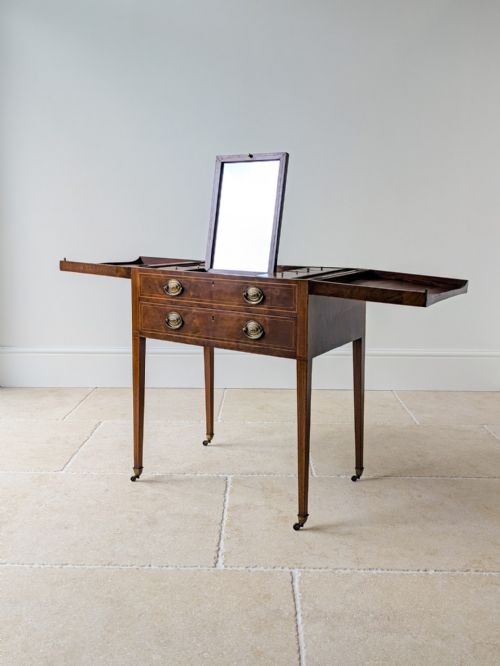
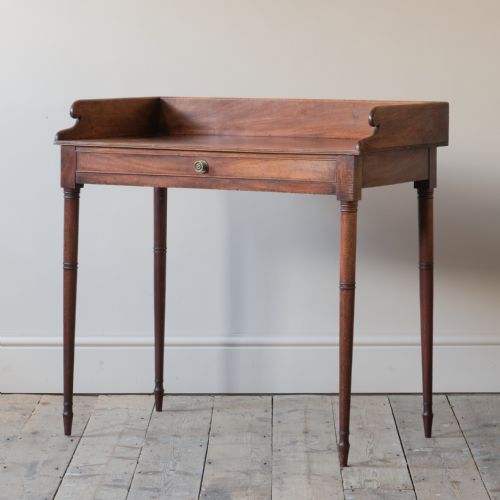
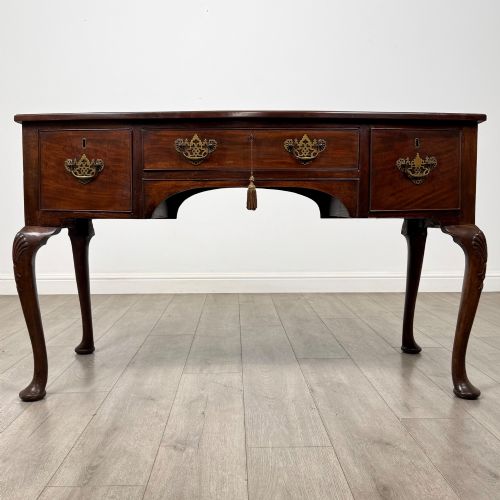
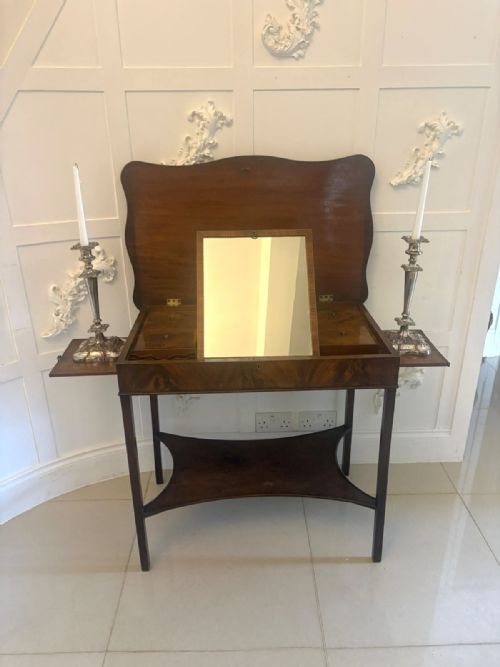
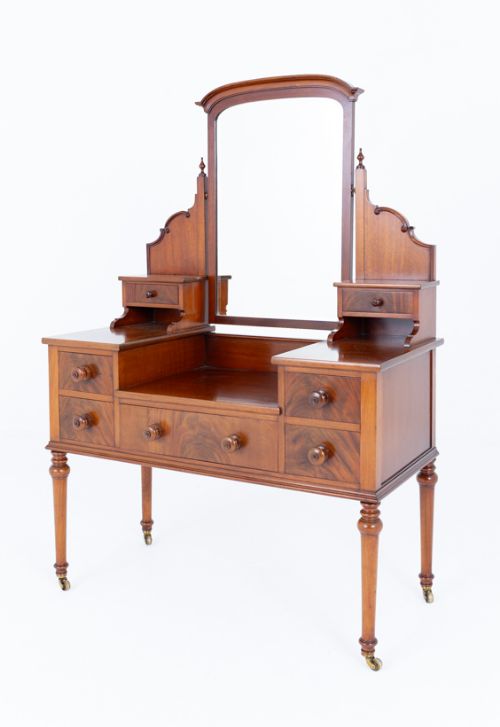
A dark wood vanity desk combines the surface utility of a writing table with the grooming provisions of a dressing station, often featuring integrated mirrors, drawers, or compartmentalised interiors. These pieces span multiple eras, including the Georgian, Victorian, and Edwardian periods.
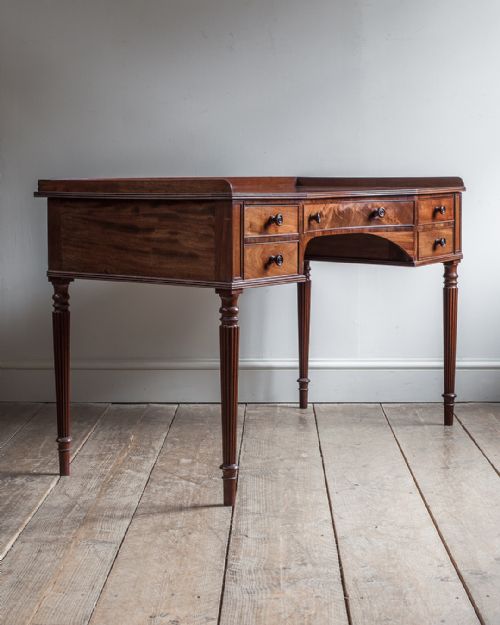
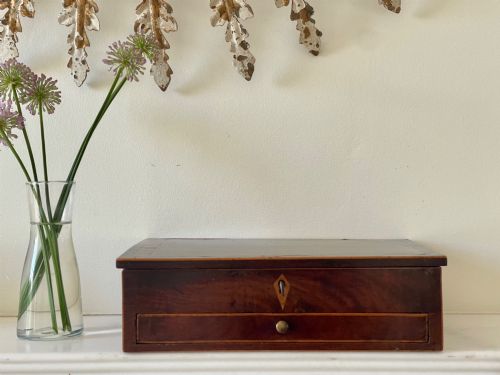
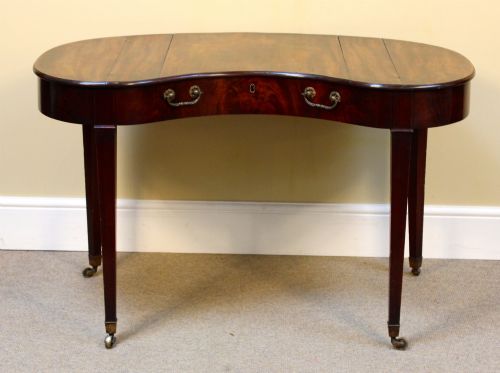
The version most commonly encountered on this page is constructed from mahogany, though examples in walnut, rosewood, and oak also appear. Forms range from compact kneehole desks and low boys to larger dressing chests with carved details.
Origins vary across English workshops, French ateliers, and Continental makers, reflecting diverse regional interpretations of domestic dressing furniture over several centuries.
Materials and Construction
Makers relied heavily on solid hardwoods like mahogany, walnut, and oak for structural integrity and richly grained drawer fronts. Cabinetmakers frequently incorporated secondary timbers for internal drawer linings and carcass backs.
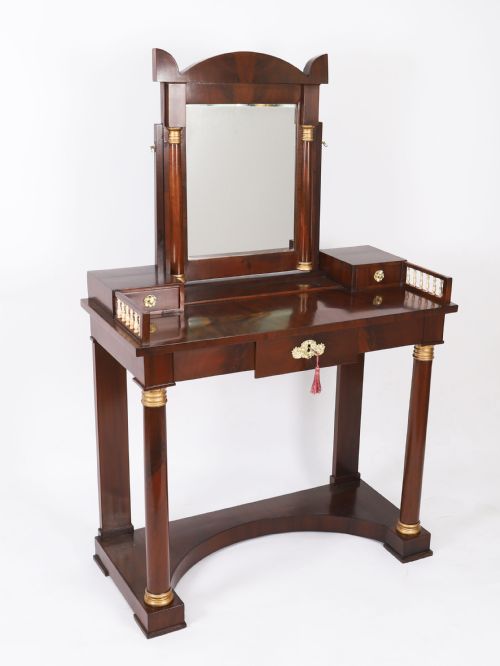
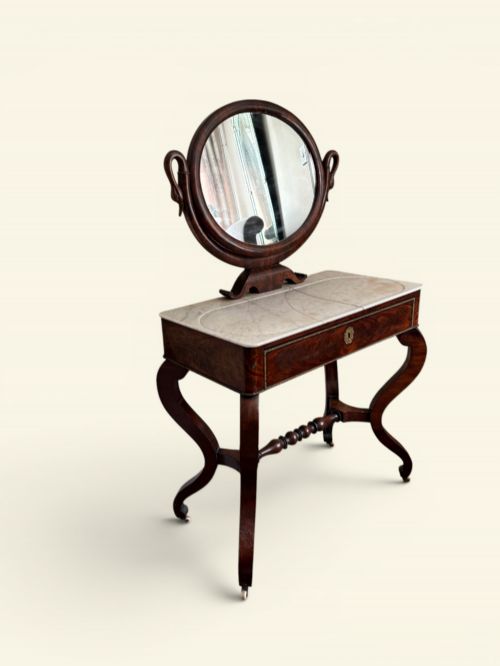
Surface ornamentation often included boxwood stringing, fine inlays, and hand-carved motifs. Glass elements, particularly mirror plates and marble tops, were integrated into dressing tables and French empire pieces to complete the functional design.
Listings feature pieces spanning from the 17th century through the Edwardian era, constructed primarily in mahogany, walnut, and oak.
Evaluating Quality
Quality rests on the selection of timber figures, such as flame mahogany or figured walnut, and the precision of the cabinet joinery, including dovetail construction in the drawers. Finer examples display meticulous attention to proportion, balanced grain alignment across drawer fronts, and original brass hardware.
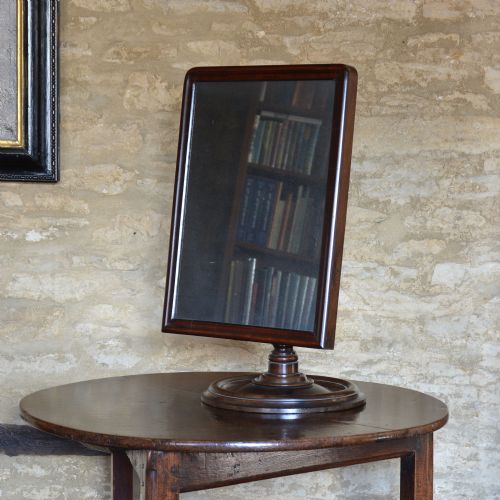
The integration of auxiliary components, such as swivelling table mirrors, fitted interior compartments, and complementary seating like slipper chairs, distinguishes workshop output. Pieces retaining their original finish and structural integrity command greater appreciation.
Edwards and Roberts
The Dark Wood Vanity Desk Glossary
- Dressing table
- A low table or chest equipped with drawers and often a mirror, designed for personal grooming and cosmetic storage. These pieces frequently double as writing surfaces.
- Kneehole desk
- A pedestal desk or dressing table featuring a central recess for the user's legs, flanked by banks of small drawers. This form allows the user to sit comfortably close to the surface.
- Poudreuse
- A French style of vanity table featuring a hinged top that opens to reveal a mirror and hidden compartments for cosmetics. The design originated in the eighteenth century for private boudoirs.
- Flame mahogany
- A veneer cut from the fork of a mahogany tree where the branches join the trunk, producing a distinctive, fiery pattern. Cabinetmakers used this timber on prominent drawer fronts to create decorative impact.
Dark Wood Vanity Desk: Frequently Asked Questions
What is a dark wood vanity desk used for?
These tables provide a dedicated surface for writing, correspondence, and personal grooming. Fitted drawers and compartments keep small personal items organised within easy reach.
Historically, they served in bedrooms and private boudoirs as multi-functional furniture for morning routines.
How do I identify a Georgian vanity desk?
Georgian pieces typically feature solid mahogany or flame mahogany timbers, straightforward proportions, and hand-cut dovetail joints in the drawers. Brass pull handles and bracket feet are common characteristics of this era.
Earlier examples may incorporate kneehole configurations or associated shaving mirrors rather than attached standing glass frames.
How should I care for antique dark wood?
Keep wooden surfaces away from direct sunlight and heat sources to prevent the timber from drying out or fading. Gentle dusting with a soft, dry cloth preserves the polished finish.
Avoid commercial silicone sprays and excess moisture, applying traditional beeswax polish sparingly only when the wood appears dry.