


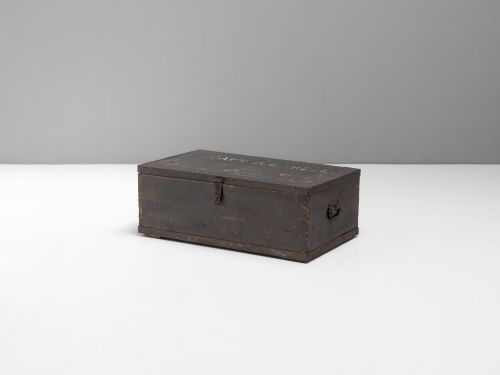
Dark Wood Trunk Chest
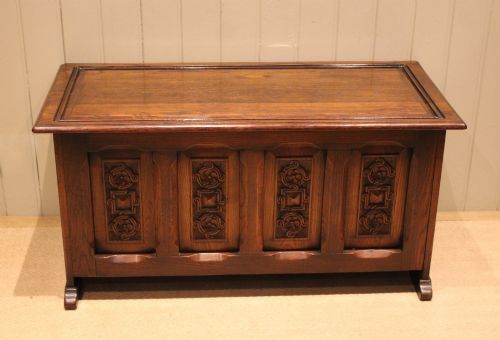
A dark wood trunk chest brings solid construction and historic storage into a room, spanning periods from the seventeenth century to the twentieth.
Dark Wood Trunk Chest
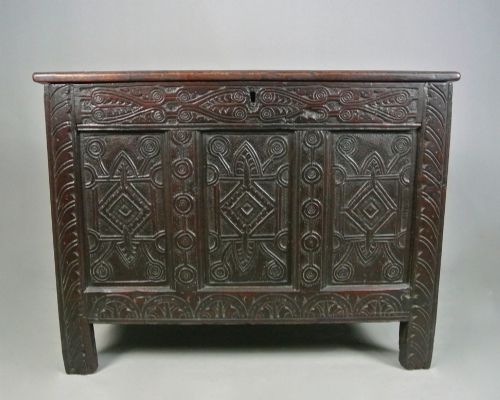
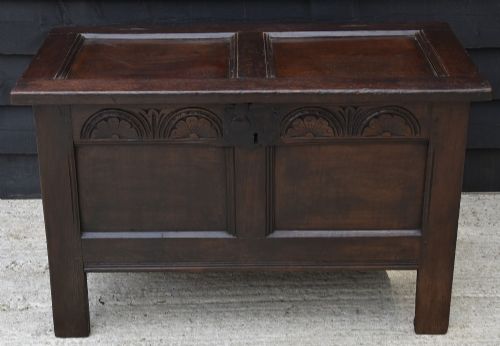
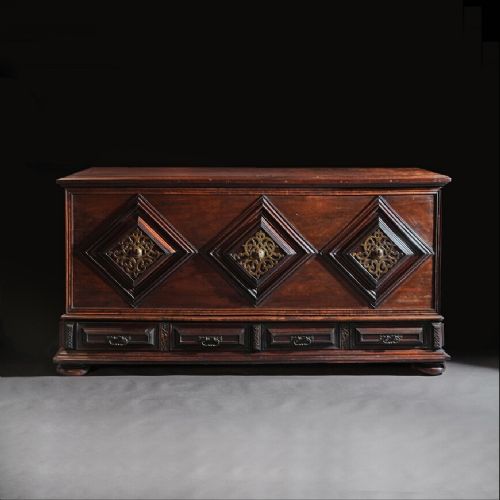
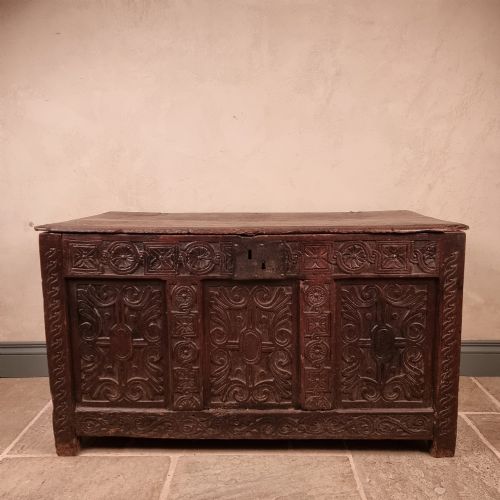
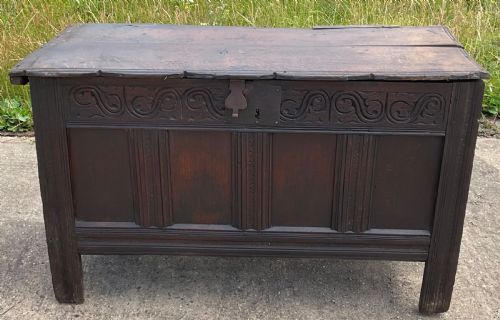
A dark wood trunk chest encompasses utilitarian storage vessels, heavy coffers, and mule chests designed for household goods and travel. The selection on this page ranges from seventeenth-century English oak pieces to nineteenth-century teak and painted Scandinavian examples.
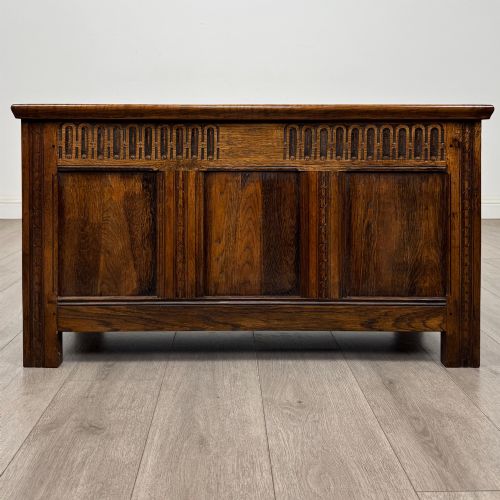
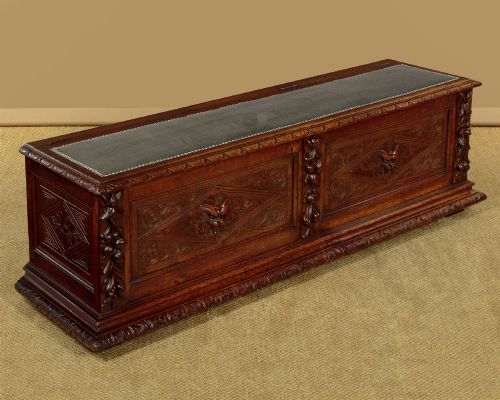
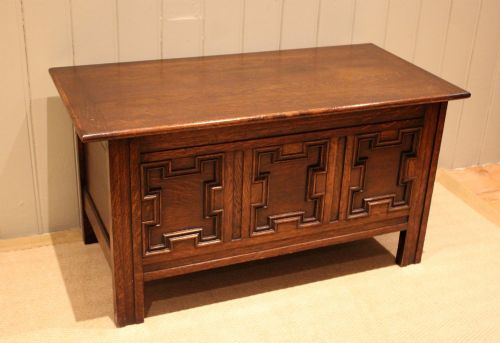
Buyers encounter forms such as six-plank coffers, panelled blanket boxes, and dowry chests constructed from native hardwoods and exotic timbers. These items served distinct domestic purposes, holding linens, documents, or personal belongings before functioning as interior furniture.
How they were made
Joinery relies on solid timber construction, utilising pegged mortise and tenon joints in early oak examples alongside hand-dovetailed corners in later boxes. Timbers such as oak, mahogany, teak, and pine form the primary structure depending on the origin and period.
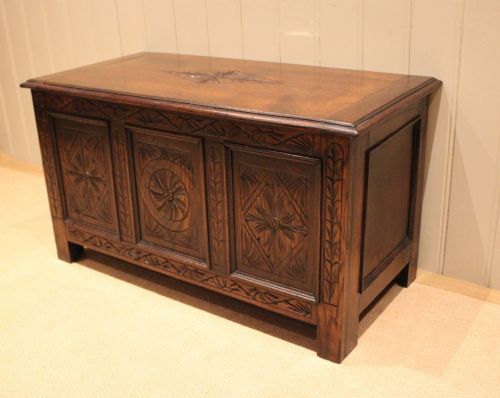
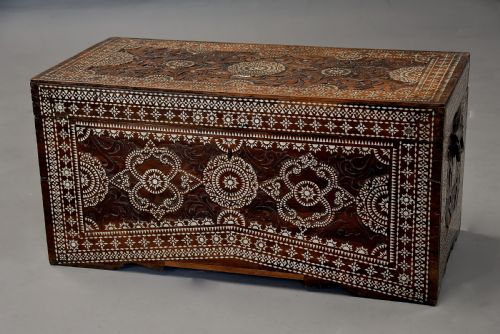
Metalwork provides both reinforcement and decoration, incorporating hand-forged iron hinges, wrought iron brackets, and heavy brass binding. Surface detailing ranges from carved panels and linenfold motifs to mother-of-pearl inlay and painted finishes.
One listed tool box survived active service with a French aviation engine company during World War One.
What varies in quality
The degree of hand-carving and the integrity of the original timber define the tier of a piece. Earlier examples show precise hand tool work and robust frame construction, while lesser items rely on simpler board assemblies or later alterations.
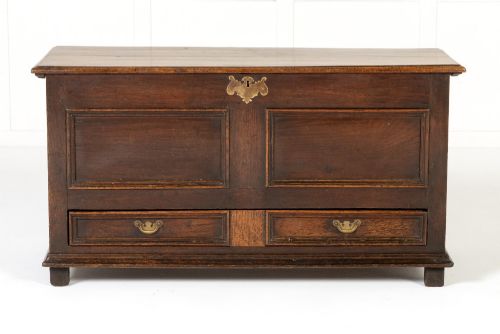
Hardware integrity and surface preservation dictate the standing of a trunk or chest. Retaining original brass mounts, iron locks, and untouched patination separates standard utility items from finer decorative works.
The Dark Wood Trunk Chest Glossary
- Coffer
- A heavy wooden box with a lid, traditionally used for storing valuables or dry goods. Early examples often feature panelled construction and hand-carved decoration.
- Mule chest
- A storage chest featuring one or more drawers at the base beneath the main compartment. This form bridges the gap between the traditional coffer and the modern chest of drawers.
- Linenfold
- A style of wood carving that imitates folded linen cloth. It appears frequently on panels of fifteenth and sixteenth-century style woodwork.
- Six-plank coffer
- A simple chest constructed from six individual boards joined at the edges. This represents one of the earliest and most straightforward methods of box-making.
- Dowry chest
- A household trunk prepared for a bride to hold her possessions before marriage. These often carry regional decorative motifs or specific regional painting.
Dark Wood Trunk Chest: Frequently Asked Questions
What is a dark wood trunk chest used for?
These pieces functioned historically to store textiles, valuable documents, and personal belongings in domestic settings or during transit. Today they serve as functional living room tables, bedroom storage, or hallway focal points.
Their robust timber construction allows them to support weight while keeping contents protected from dust and light.
How do I date a wooden coffer?
Dating relies on examining the joinery methods, timber species, and tool marks left by the maker. Hand-split boards, pegged joints, and wrought iron hardware generally indicate earlier centuries.
Later Victorian and Edwardian pieces often display machine-sawn timber, standardised screws, and different decorative carving styles.
Are these chests heavy?
Most examples constructed from solid oak, mahogany, or teak possess substantial weight due to dense native and exotic hardwoods. Iron or brass hardware adds further heft to the structure.
Moving them typically requires two people, particularly for seventeenth-century and colonial specimens.
What is the difference between a trunk and a coffer?
Coffers generally denote heavier, stationary storage furniture made of thick timber with rigid frame construction. Trunks often incorporate carrying handles, reinforced corners, and materials suited for travel.
Over time, the terms overlap considerably in historical listings.