


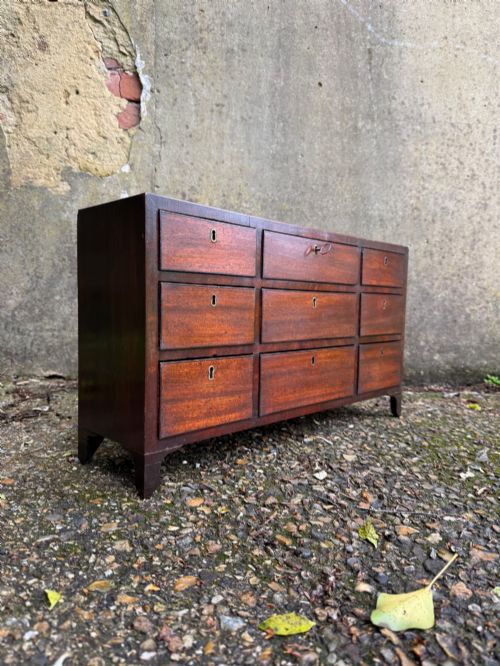


Dark Wood Trinket Chest
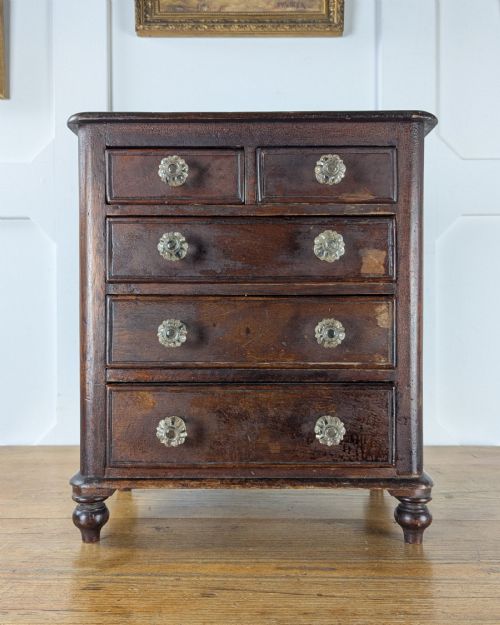
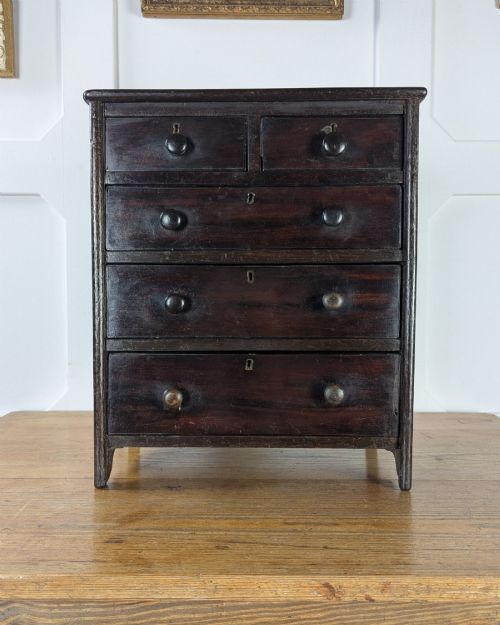
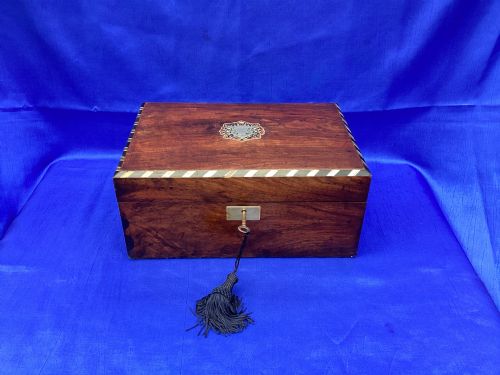
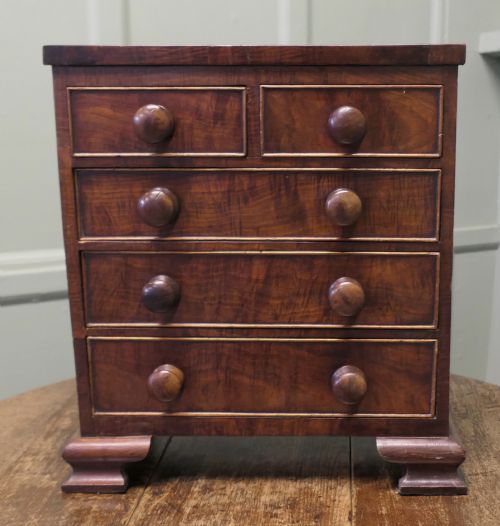
A dark wood trinket chest stores small valuables in dense timbers like mahogany, rosewood, and oak.
Dark Wood Trinket Chest
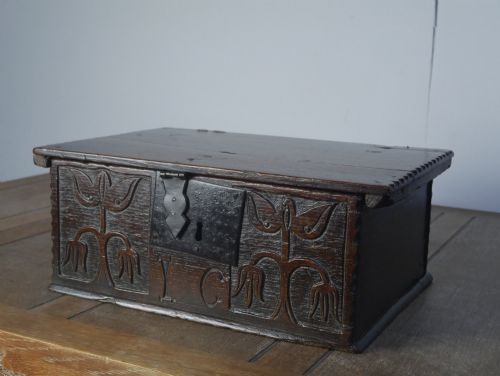
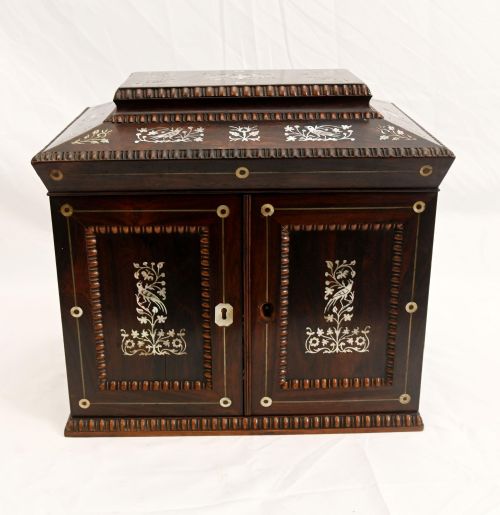
A dark wood trinket chest is typically a small container or miniature chest of drawers designed for holding jewellery, keepsakes, and small valuables. These items span periods from the seventeenth century through to the Edwardian era, encompassing diverse forms such as apprentice pieces, tea caddies, and jewellery cabinets.
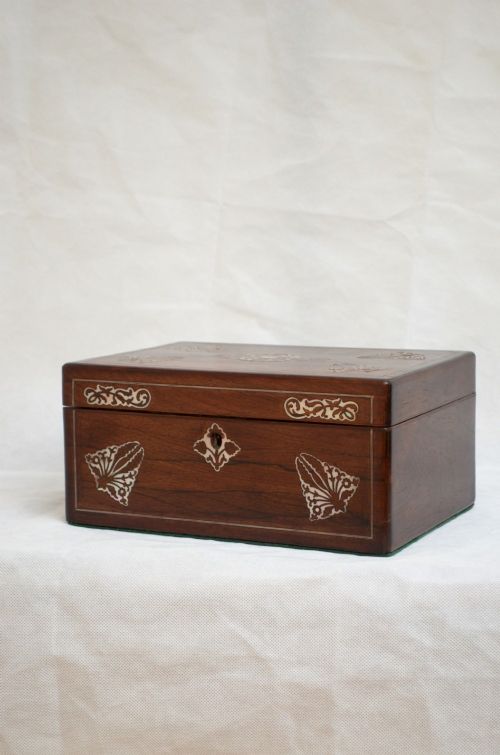
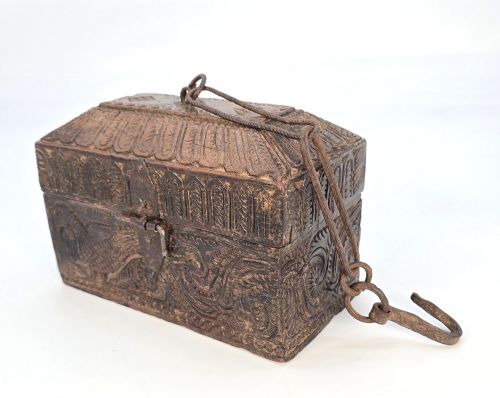
The version most commonly met on this page is the Victorian rosewood or mahogany box, often featuring fitted interiors, trays, or miniature drawers standing on turned feet. Georgian and Regency pieces also appear regularly, alongside occasional regional examples in oak, pine, and teak from seventeenth-century English, eighteenth-century Indian, and Scandinavian folk art traditions.
Functionally, these boxes served various domestic roles, from holding tea and spices to storing letters and personal ornaments on dressing tables. Their survival in compact forms reflects the high standard of cabinet-making applied to small-scale domestic items across multiple centuries.
Distinctions in craftsmanship and finish
The standard of a dark wood trinket chest is determined by the precision of its joinery, the selection of figured timber, and the execution of its decorative elements. Superior examples display tightly fitted mitres, smooth drawer operation, and harmonious grain alignment across all visible surfaces.
Secondary elements, such as the quality of internal fittings, the retention of original brass hardware, and the subtlety of mother-of-pearl or marquetry inlay, separate standard utility pieces from high-status cabinet work. A well-preserved original interior and a rich, deep patina indicate careful maintenance and superior original manufacture.
Listings feature items spanning the 17th century to the Edwardian period, utilising mahogany, rosewood, oak, and brass.
The Dark Wood Trinket Chest Glossary
- Apprentice piece
- A small-scale item of furniture demonstrated by a craftsman to prove skill before gaining guild admission. These frequently take the form of miniature chests of drawers.
- Tea caddy
- A box designed for storing loose tea leaves securely. They often feature internal lidded compartments and lockable lids.
- Marquetry
- The art of applying pieces of veneer to a structure to form decorative patterns. Craftsmen use varied timber tones to create pictorial or geometric designs.
- Pokerwork
- A method of decorating wood by burning designs onto the surface with a heated metal tool. It creates distinctive dark brown or black linear motifs.
- Patina
- The deep gloss and surface alteration acquired by timber over decades through handling, polishing, and natural oxidation.
Dark Wood Trinket Chest: Frequently Asked Questions
What were dark wood trinket chests used for originally?
These chests served multiple domestic purposes, primarily holding precious items such as jewellery, loose tea, spices, and personal documents. Their compact scale allowed them to sit securely on dressing tables, writing desks, or sideboards.
Many included specialised interior compartments, trays, or secret drawers to separate different classes of valuables. Over time, their utility shifted as household habits changed, turning them into purely decorative receptacles for keepsakes.
How do I date a wooden trinket chest?
Dating relies on examining the construction methods, timber choices, and decorative styles characteristic of specific periods. For instance, Regency pieces frequently employ brass inlay and rosewood, while seventeenth-century examples typically feature solid English oak.
Hardware such as locks, hinges, and drawer pulls also provide chronological clues. Dovetail joints cut by hand rather than machinery point towards eighteenth and nineteenth-century manufacture.
How should I care for antique rosewood and mahogany?
Maintain the timber by keeping it away from direct sunlight and sudden temperature changes, which can cause the wood to split or warp. Dust gently with a dry, soft cloth and avoid modern silicone-based polishes.
Occasional application of traditional wax helps preserve the moisture and natural sheen of the surface. Ensuring stable indoor humidity protects both the outer wood and any delicate internal fabric linings.