




Dark Wood Treen Box
These dark wood treen box pieces are small turned and carved domestic items holding snuff, spices and string from past centuries.
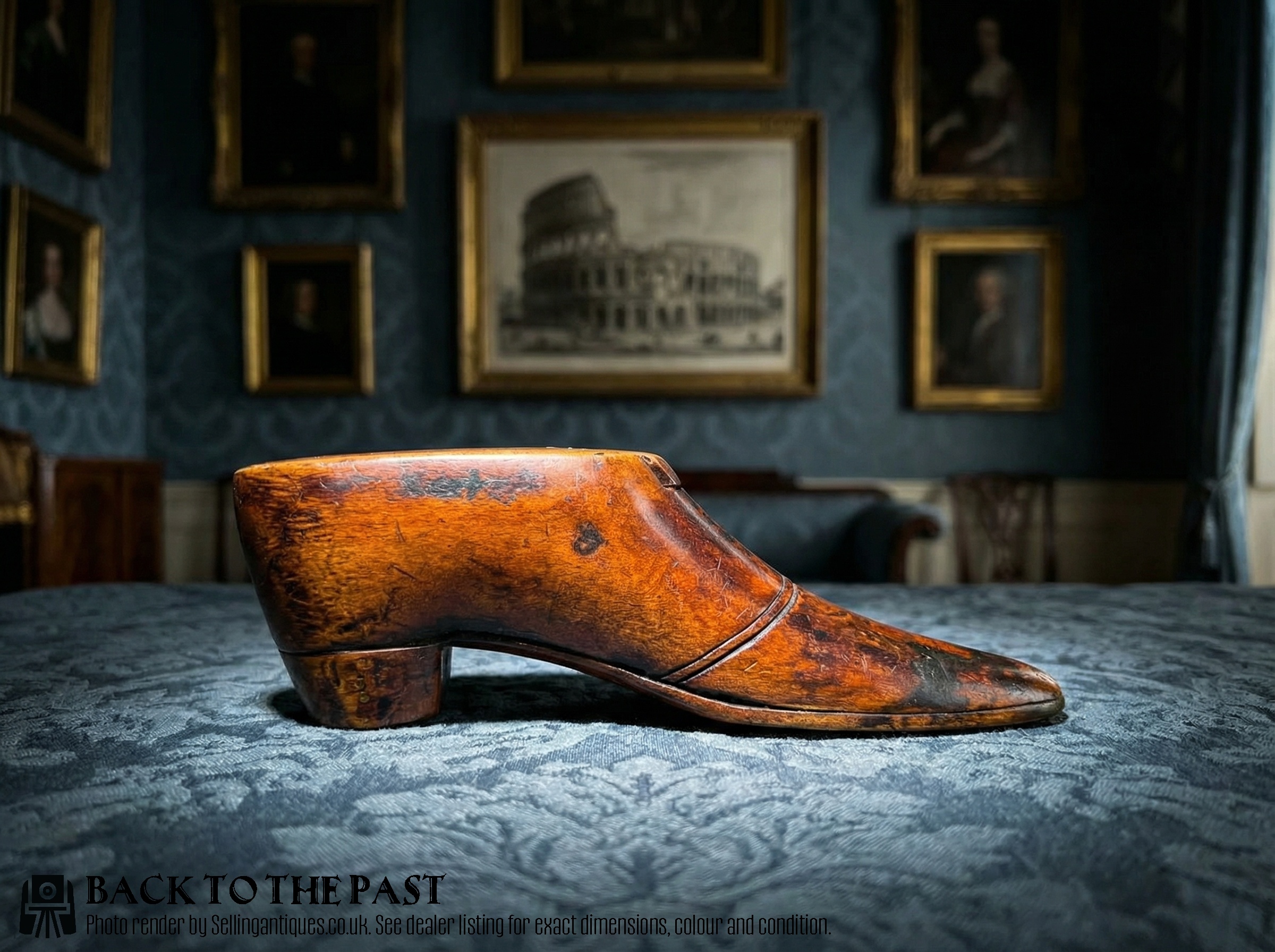
Dark Wood Treen Box
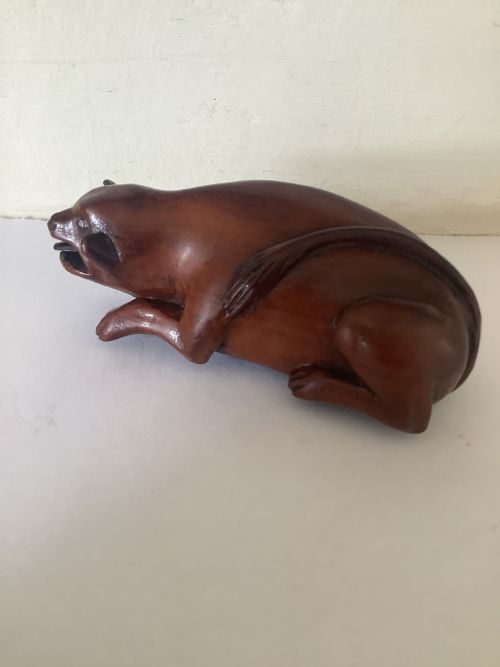
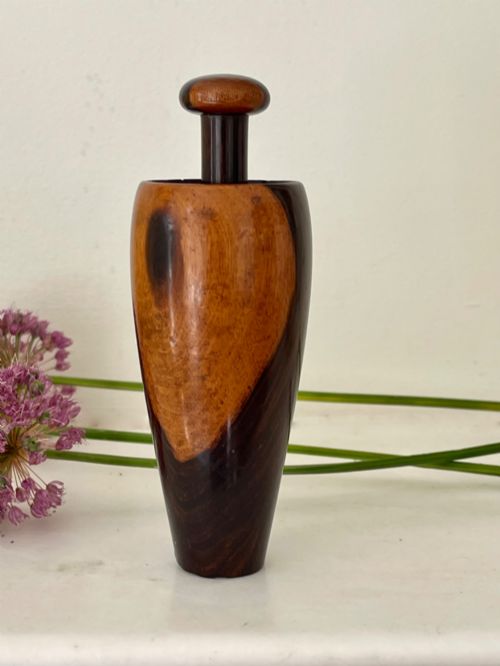
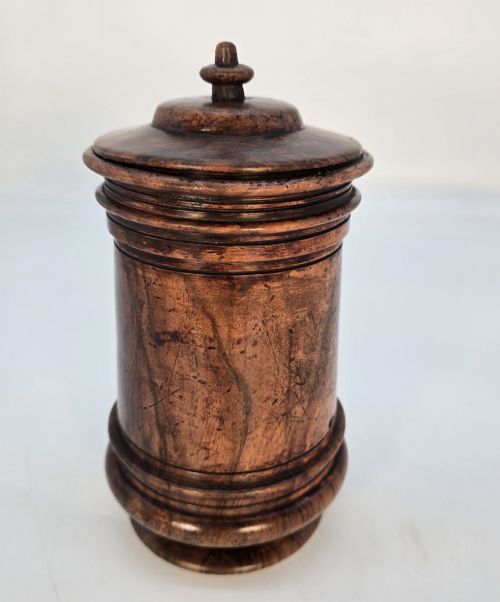
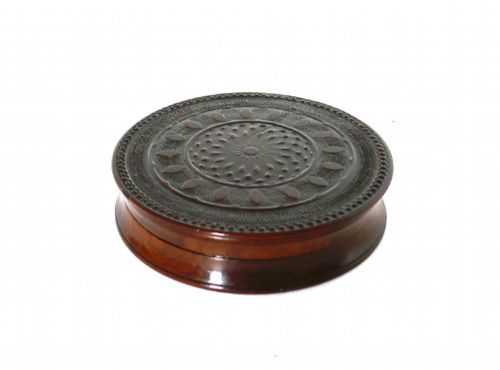
A dark wood treen box encompasses small domestic wooden objects designed for everyday use, specifically taking the form of snuff boxes, tobacco jars, spice towers, and string barrels. These pieces emerge from the Georgian and Victorian eras, carrying the marks of hand turning and traditional carving.
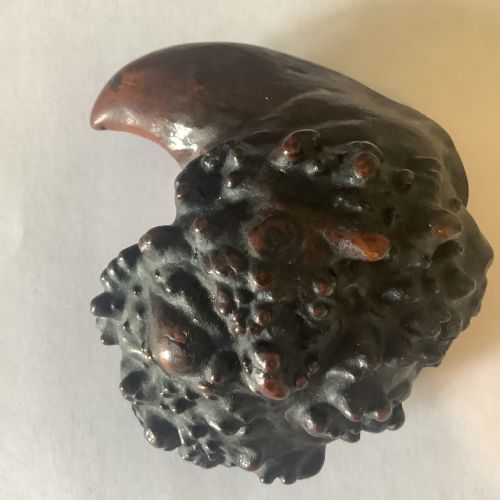
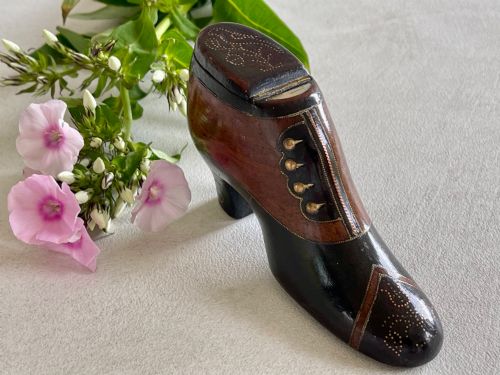
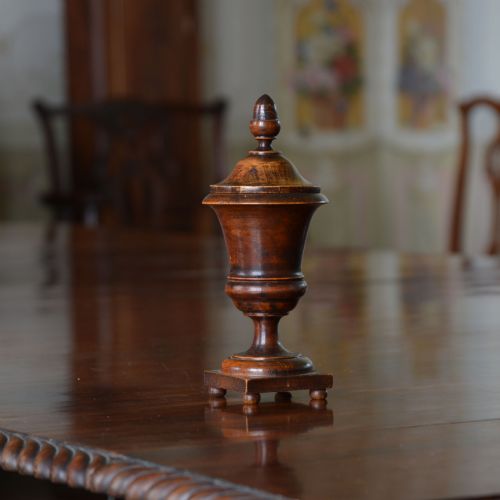
The selections available here lean heavily into nineteenth-century and eighteenth-century examples, including naive folk art pieces and Welsh chip-carved designs. You will encounter curious shapes such as shoes, books, and campana urns alongside standard turned circular vessels.
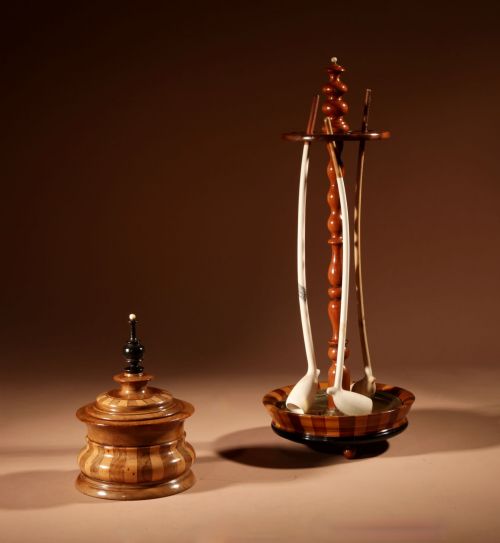
Most items serve specific utilitarian functions from domestic life, ranging from nutmeg graters to mortar and pestle sets and pipe stands. The timber selection focuses on dense dark woods and fruitwoods rather than lighter plain materials.
How they were made
Craftsmen utilised dense hardwoods such as lignum vitae, mahogany, walnut, and fruitwoods like laburnum, turning them on lathes to create precise hollow vessels and containers. Engine turning added geometric surface decoration to cylindrical pieces.
Hand carving defined the folk art items, featuring chip carving, inlaid hearts, and figural shapes like ladies' shoes with open-toed details. Coopered construction appeared on larger tobacco boxes and pipe stands using tight stave assemblies.
Some nineteenth-century carvers spent hours shaping solid timber into detailed ladies' shoes just to hold someone's tobacco.
What varies in quality
The calibre of a dark wood treen box rests upon the sharpness of the original turning and the depth of the carving. Crisp detail on chip-carved surfaces and well-defined figural forms separate superior workshop output from simpler domestic items.
Material choice dictates distinction, with heavy, figured timbers like lignum vitae, burr walnut, and laburnum commanding greater visual presence than plain utility woods. Original patination and intact surface wear also determine desirability.
The Dark Wood Treen Box Glossary
- Treen
- Small handmade wooden objects for domestic use. The term covers everything from kitchenware to personal accessories.
- Lignum Vitae
- An exceptionally dense and heavy dark hardwood used frequently for turned objects and string barrels. Its natural oils produce a distinct polished finish.
- Chip Carving
- A woodworking technique where chips are removed from a single piece of wood with gouges and knives to create geometric patterns.
- Snuff Box
- A small container designed to hold powdered tobacco. Examples often took imaginative forms including books and shoes.
- Campana Urn
- A classical vessel shape resembling an inverted bell on a pedestal base. These decorative items served ornamental purposes in period interiors.
Dark Wood Treen Box: Frequently Asked Questions
What were dark wood treen boxes used for?
These wooden containers held personal commodities like snuff, tobacco, and nutmeg for daily domestic routines. Other forms stored string or served as kitchen mortars.
Their varied shapes reflect the specific social habits and domestic tasks of Georgian and Victorian households.
How do I care for antique treen?
Keep wooden objects away from direct sunlight and sudden temperature shifts to prevent timber splitting. Gentle dusting maintains the surface.
Avoid liquid cleaners and modern polishes that can alter the historic patina built up over centuries.
Are shoe snuff boxes English?
Shoe and boot-shaped snuff boxes appear across British folk art traditions, particularly from Welsh and English workshops. Carved details often include inlaid hearts and date markers.
They represent a playful branch of nineteenth-century treen carving.
What is the difference between fruitwood and lignum vitae?
Fruitwoods like laburnum and pear offer warm tones and take fine engine-turned decoration. Lignum vitae is substantially heavier and darker with a dense grain.
Both materials suit precision turning on a lathe.