


Dark Wood Single Bed
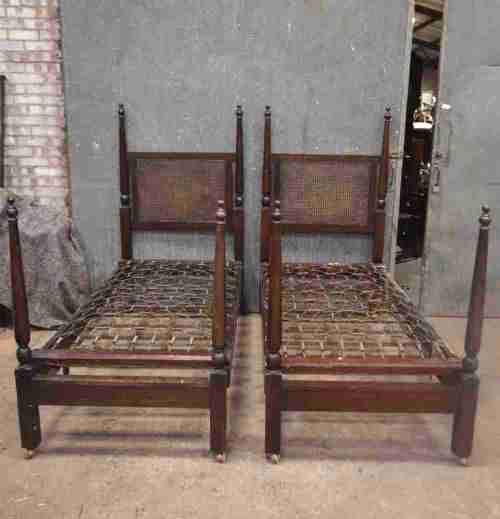
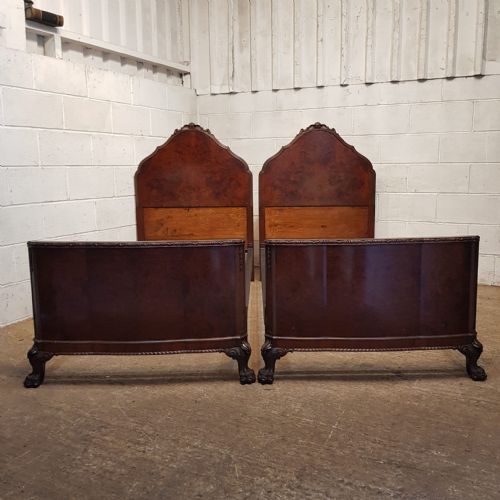
These dark wood single bed frames span the eighteenth century to the nineteen-twenties, offering sturdy proportions and rich timber grain for compact guest rooms.

Dark Wood Single Bed
A dark wood single bed provides a compact sleeping platform fashioned from timber tones ranging from deep mahogany and rosewood to figured burr walnut and golden oak. Buyers searching this phrase encounter substantial four-poster structures, low daybeds, and matched pairs dating from the Georgian, Victorian, and Edwardian eras.
The selection on this page leans heavily toward nineteenth-century mahogany frames and matching nineteen-twenty pairs, alongside occasional side tables and daybeds grouped under the wider bedstead category. These items suit smaller bedrooms where rich dark timber adds grounding weight without overwhelming the floor plan.
How they were made
Cabinetmakers constructed these frames using dense hardwoods like mahogany, oak, and walnut, often accentuating the natural grain with turned spiral posts or applied cane panels. Metal components such as brass fittings provide structural reinforcement at the joints, while calico upholstery appears on related daybed variants.
Joinery methods rely on traditional framing techniques to support standard single mattresses, integrating carved decorative elements directly into the timber uprights and headboards.
Object forms span full four-poster single beds, matching pairs, daybeds, chaises, and associated side tables.
What varies in quality
The distinction between standard production and finer workshop output rests on timber selection and the crispness of carved details, such as spiral twist posts or panel mouldings. Matched pairs command attention when the grain patterns flow consistently across both headboards and footboards.
Construction depth also dictates standing quality, separating simpler turned-leg frames from sophisticated four-poster examples featuring integrated tester structures and balanced proportions.
Heal And Son
The Dark Wood Single Bed Glossary
- Bergere
- A closed-arm upholstered chair or bed panel featuring woven cane work. This technique uses split rattan threaded through frame drillings.
- Four poster
- A bed with four vertical columns supporting an upper canopy or tester frame. These towering structures project a formal architectural presence.
- Burr walnut
- Timber taken from the warted excrescence on a walnut tree, yielding swirling, knotty grain patterns. Cabinetmakers prize this veneer for decorative focal points.
- Spiral carved
- A decorative woodworking technique producing a twisted rope effect along furniture legs or bed posts. Craftsmen turned these profiles by hand on pole lathes or using specialised chisels.
Dark Wood Single Bed: Frequently Asked Questions
Do these antique beds take standard single mattresses?
Many older frames feature internal dimensions slightly different from modern standard single mattresses. Custom or adjustable mattress sizing may be necessary for older timber rails.
Checking the exact rail lengths and internal widths before purchase ensures a proper fit for modern bedding components.
How do I care for dark wood bed frames?
Polishing timber surfaces with traditional beeswax maintains the moisture balance and sheen of mahogany and walnut. Avoiding direct sunlight prevents fading across prominent headboards.
Regular dusting with a soft, dry cloth protects delicate carved details and cane panels from abrasive particle buildup.
Are slats included with these antique bed frames?
Listing details vary regarding internal support systems, with some incorporating modern bed bases alongside the historic framework. Reviewing individual item descriptions clarifies whether wooden slats or modern base units arrive with the timber.
Additional supportive battens can be fitted discreetly inside the side rails to accommodate contemporary mattresses securely.
How do I distinguish Edwardian beds from Georgian pieces?
Georgian frames display restrained classical proportions and dense mahogany construction reflecting eighteenth-century design philosophies. Edwardian examples often incorporate revival styles with lighter internal framing and softer edgings.
Examining the underside joinery and the depth of the timber patina helps reveal the true manufacturing period.